







The Prehistoric Purse
A remarkable fusion of ancient biology and modern luxury has materialized in the form of a handbag constructed from lab-grown leather, which developers
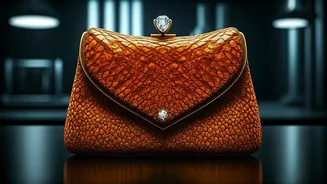
claim is derived from collagen originating from Tyrannosaurus rex fossils. This striking teal-colored accessory is currently exhibited at Amsterdam’s Art Zoo museum, where it is displayed within a T. rex replica enclosure. The bag is slated for auction, with initial bids expected to surpass half a million dollars. The innovative material was reportedly engineered by integrating ancient protein fragments, extracted from dinosaur remains, into the cells of an unidentified animal. This process facilitated the production of collagen, which was subsequently transformed into leather. The project represents a significant technological undertaking, involving a collaborative effort between genomic engineering specialists, a creative agency, and a lab-grown leather company. This endeavor pushes the boundaries of material science, positioning ethical, synthesized alternatives as potentially more desirable than traditional animal hides, thereby redefining the concept of ultra-luxury in fashion.
Bridging Science and Art
This avant-garde handbag is more than just a fashion statement; it's a testament to innovative design and advanced scientific techniques. The team behind this creation, a consortium of three distinct firms, aimed to demonstrate the potential of next-generation materials by tapping into the distant past. Their work builds on previous collaborations, including the creation of a mammoth-DNA meatball. The lead designer emphasized that this project is not solely about developing eco-friendly leather alternatives but about achieving a 'technological upgrade' in material science. By marketing the T. rex leather as an ultra-luxury item, they seek to prove that ethically produced, lab-grown materials can rival, and even surpass, the desirability of conventional leather goods. This bold approach challenges traditional notions of luxury and sustainability, offering a glimpse into a future where the extraordinary can be synthesized from the remnants of prehistory, thereby generating significant discussion and fascination within both the design and scientific communities.
Scientific Skepticism Arises
Despite the impressive claims, the creation of a handbag from T. rex collagen has encountered significant skepticism from segments of the scientific community. Paleontologists have raised valid concerns regarding the feasibility of extracting sufficient intact collagen from fossilized dinosaur bones to produce a material like leather. Experts point out that only fragmented traces of collagen are typically preserved, which is generally insufficient for complex applications such as creating skin or leather. Furthermore, any collagen identified in T. rex fossils is believed to originate from within the bone structure, not the skin itself. Even if a precise protein match were possible, the structural organization required to replicate the tactile and physical properties of actual leather would likely be absent. While the creators acknowledge the criticism as a natural part of groundbreaking innovation, these scientific counterpoints cast doubt on the direct derivation of the handbag's material from authentic T. rex biological structures.