




Next-Gen Space Computing
In a significant stride for space exploration, NASA has joined forces with a leading technology firm to engineer a novel generation of processors destined
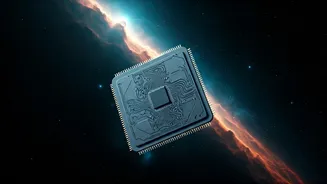
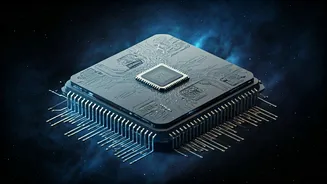
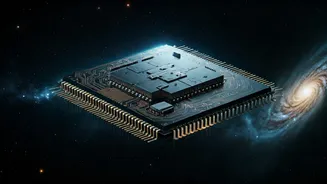
for spacecraft. These advanced chips are projected to deliver a computational capability that is a staggering 100 times greater than what current space systems can achieve. The overarching objective behind this development extends beyond mere acceleration of mission timelines; it aims to empower spacecraft with a far higher degree of self-governance. By integrating various functionalities onto a single chip, this initiative seeks to streamline operations, reduce the sheer number of individual components required on a spacecraft, and consequently, lower manufacturing costs and simplify assembly. Furthermore, this consolidated design is expected to lead to more efficient energy utilization, a critical factor for long-duration space missions where power conservation is paramount. This represents a paradigm shift in how we approach the onboard intelligence of our exploratory vessels.
Bridging Speed and Reliability
Historically, the selection of electronics for space missions has been heavily skewed towards robustness over raw performance. The harsh environment of space, characterized by intense radiation, poses a significant risk to delicate electronic components, capable of causing irreparable damage and potentially jeopardizing entire missions. Given that repairs are virtually impossible once a spacecraft is in orbit or beyond, space agencies have traditionally favored older, proven technologies known for their extreme reliability, even if they meant sacrificing processing speed. This new chip, however, represents a concerted effort to strike a crucial balance between these two vital aspects. It aims to leverage the stability of hardened systems while incorporating the computational power necessary for more sophisticated tasks, addressing the long-standing trade-off between mission longevity and advanced functionality.
Tailored for Cosmic Journeys
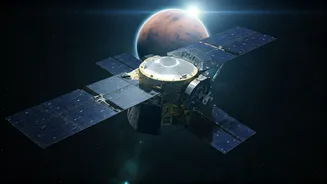
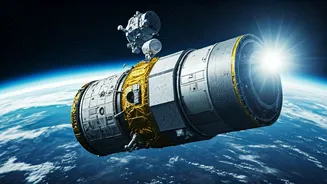
NASA is developing this innovative chip in two distinct variations, meticulously engineered to cater to the specific demands of different space environments. One version is a highly radiation-hardened variant, specifically designed for the rigors of deep space exploration, including missions to the Moon and Mars where prolonged exposure to cosmic radiation is a certainty. This variant prioritizes unwavering reliability for extended missions. The second version, while still robust, is classified as radiation-tolerant, making it suitable for deployment in satellites operating in closer proximity to Earth, such as those in low Earth orbit. This latter iteration is also geared towards broader commercial applications. Beyond enhanced speed, the most transformative upgrade offered by this technology is its capacity for greater autonomy. These chips will enable spacecraft to independently analyze incoming data, such as visual imagery, make critical navigation decisions on the fly, and adapt their operational parameters without requiring constant real-time commands from mission control on Earth.
Adaptive and Scalable Design
A particularly groundbreaking attribute of this new processor is its inherent scalability and adaptability. Operators will possess the capability to selectively deactivate specific processing units when they are not actively engaged, thereby conserving precious energy resources. This concept of power management through component deactivation is not entirely new; NASA has employed similar strategies even on the venerable Voyager 1 spacecraft, where instruments were powered down to extend its operational lifespan over nearly five decades. However, this next-generation system integrates this flexibility directly into the hardware's architecture. Furthermore, the chip is engineered for exceptional scalability across an entire spacecraft's networked systems. Multiple units can be interconnected using advanced, space-grade networking protocols, effectively pooling their computational power to create a distributed processing network. This interconnectedness unlocks the potential for more complex missions, sophisticated onboard data analysis, and a significantly reduced dependence on ground-based infrastructure. As missions venture farther and become increasingly intricate, the level of onboard intelligence this technology fosters is no longer a luxury but an essential prerequisite for success.