





Physics of the Waddle
That characteristic side-to-side movement isn't just for laughs; it's a brilliant demonstration of physics for energy conservation. Penguins, with their
short legs and dense bodies, employ a 'pendulum' action. As they walk, they shift their weight from one leg to the other, creating a sway that stores and then releases energy. This mechanism efficiently propels them forward with each step, minimizing the caloric expenditure needed to navigate icy terrains. It's a perfectly optimized gait for a bird built for aquatic life but requiring terrestrial movement, ensuring they don't deplete their vital energy reserves unnecessarily.
Internal Salt Filter
Surviving in the vast, salty ocean presents a significant hydration challenge. Penguins overcome this by possessing a remarkable internal 'desalination plant.' Located above their eyes, a specialized supraorbital gland meticulously filters excess salt directly from their bloodstream. The highly concentrated saline byproduct is then expelled from their body through a unique 'salt sneeze' from their beaks. This essential biological process prevents dehydration and maintains the delicate balance of their internal systems, allowing them to thrive in a marine environment without access to freshwater sources.
Pebble Proposal Economy
In the colonies of Gentoo and Adélie penguins, nesting grounds are fiercely competitive, making smooth stones incredibly valuable. Pebbles serve a crucial purpose: they elevate nests, protecting precious eggs from the freezing ice. This necessity has fostered a unique 'pebble economy,' where male penguins embark on diligent searches for the most attractive stones to present as gifts to potential mates. This system also fuels a notable 'crime rate' within the colony, as opportunistic males often pilfer choice pebbles from unattended nests, highlighting the significance of these simple stones in penguin courtship and nest building.
Diverse Habitats Explored
The popular image of penguins exclusively inhabiting frigid Antarctic landscapes is far from complete. While many species thrive in icy realms, others have adapted to remarkably different climates. The Galapagos penguin, for instance, resides near the equator, demonstrating an incredible ability to survive in tropical heat. These penguins cool themselves by panting, similar to dogs, and seek refuge in the cold waters of the Cromwell Current. This geographical range underscores their status as highly adaptable marine birds, capable of colonizing environments from the extreme south to warmer, equatorial regions.
Countershading for Survival
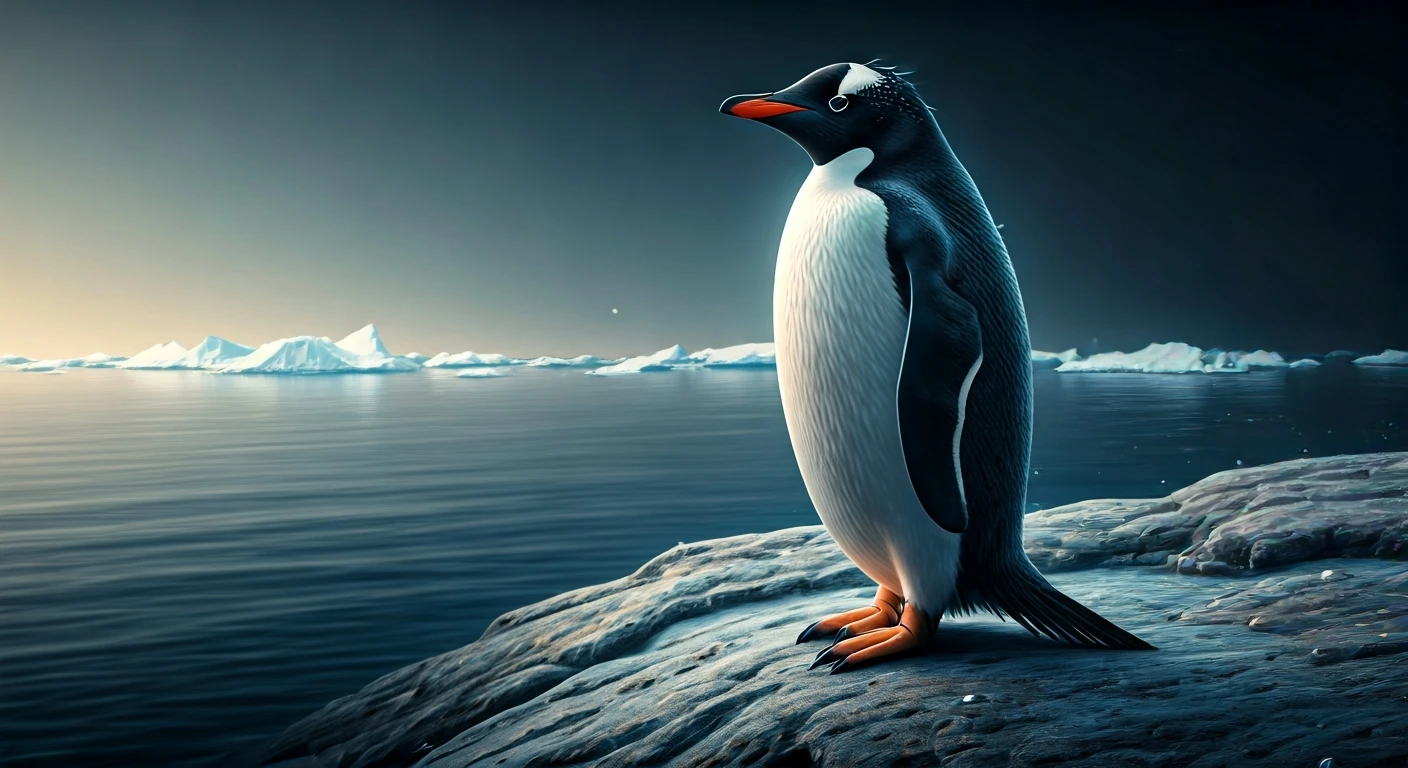
The distinctive black and white plumage of penguins is not merely for aesthetic appeal; it's a sophisticated survival mechanism known as countershading. This coloration provides exceptional camouflage in the water. When viewed from below by aquatic predators like leopard seals, their white undersides blend seamlessly with the bright surface of the water. Conversely, when observed from above by aerial predators, their dark backs merge with the dark depths of the ocean. This dual-purpose camouflage makes them virtually invisible from both directions, a crucial advantage for avoiding predation in their dynamic environment.
Ancestral Giants Revealed
While Emperor Penguins are renowned for their size, they are diminutive compared to their ancient ancestors. Fossil evidence, particularly from New Zealand, has unearthed the remains of species like Kumimanu biceae. These prehistoric penguins were colossal, standing nearly 5 feet 11 inches tall and weighing over 100 kilograms. These findings paint a picture of a lineage that once included true giants, vastly different from the penguins we observe today, showcasing a long evolutionary history with significant shifts in physical characteristics.