



Mission Launch Details
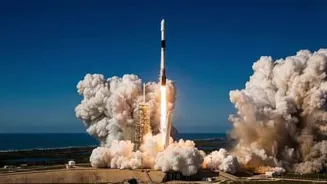
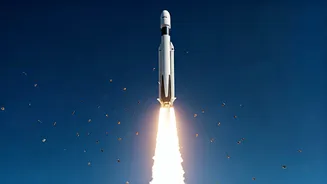
On March 30th, a Falcon 9 rocket ascended from Vandenberg Space Force Base in California at precisely 7:02 a.m. Eastern Time, initiating the Transporter-16
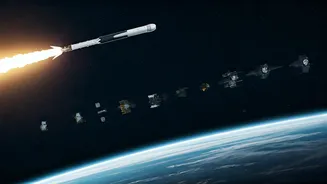
mission. This dedicated rideshare flight was engineered to ferry a substantial number of payloads into a sun-synchronous orbit. Approximately two and a half hours post-liftoff, SpaceX confirmed the successful completion of all payload deployments from the rocket's upper stage. The mission's manifest included a total of 119 payloads, encompassing satellites that were directly released, as well as hosted payloads and specialized tugs designed for subsequent satellite deployments. This operation underscores SpaceX's capacity to facilitate the delivery of numerous small satellites for a variety of clients in a single launch event.
Diverse Payloads Onboard
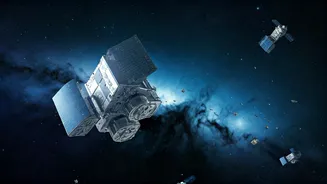
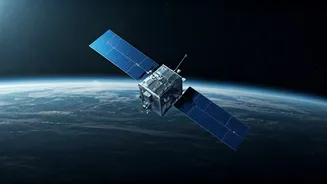
Transporter-16 carried a rich assortment of payloads, including Gravitas from K2 Space, which represented the largest single payload on the mission. This spacecraft is currently undertaking a demonstration mission funded by the U.S. Space Force and marks the debut of K2 Space's 'Mega class' of satellites, capable of generating 20 kilowatts of power. The company has secured substantial funding to accelerate the production of these large spacecraft, intending to serve satellite operators like SES. Furthermore, the mission welcomed both established and new clients, with companies such as Capella Space, HawkEye 360, Iceye, Satellogic, Spire, and Unseenlabs expanding their existing satellite constellations. SatVu, a British firm focused on thermal infrared imaging, deployed its HotSat-2, replacing a previous unit. Sierra Nevada Corp. also launched three of its Vindlér radiofrequency-intelligence spacecraft, manufactured by Muon Space, highlighting the mission's broad appeal across different space technology sectors.
Orbital Transfer Vehicle Role
The Transporter-16 mission also integrated several orbital transfer vehicles (OTVs) tasked with carrying satellites or hosted payloads. Momentus relaunched its Vigoride tug, Vigoride-7, carrying 10 demonstration payloads, marking a return to flight for the company after a hiatus. D-Orbit contributed its latest Ion vehicle, while Exotrail deployed its second spacevan vehicle. These OTVs were designed to provide a 'last-mile' delivery service, offering the theoretical capability to move satellites from the rideshare mission's orbit to their specific, desired orbital planes. This concept of combining low-cost rideshare missions with OTVs had previously raised questions about the business viability of dedicated small launch vehicles, as OTVs could theoretically offer more flexibility.
Evolving OTV Market
Despite the initial promise of orbital transfer vehicles augmenting rideshare missions, the market demand has not fully materialized as anticipated. Industry experts suggest that the economics and physics involved present significant challenges. For instance, Rocket Lab's vice president of global launch services noted that OTVs integrated onto rideshare missions, often using a standardized ESPA ring, can typically achieve only about a one-degree change in orbital inclination. This limitation means they cannot facilitate drastic orbital shifts, such as moving from a sun-synchronous orbit to a mid-inclination orbit. Consequently, the added capability doesn't justify the cost, which often equates to that of a dedicated small launch. While some niche applications for OTVs, like transitioning between low and medium Earth orbits or interplanetary journeys, may persist, the widespread adoption envisioned by some has not yet occurred.