
Aroma and Smell
The first step in assessing jaggery's purity involves a sensory evaluation of its aroma. Pure jaggery, crafted from sugarcane, naturally boasts a sweet
and appealing scent. This fragrance is a direct reflection of its unadulterated composition. However, the absence of this characteristic aroma, or the presence of an off-putting or unnatural smell, can indicate that the jaggery has been tampered with. These altered scents may be due to the incorporation of chemicals or excessive sugar to enhance the product's appearance or sweeten it unnaturally. If the jaggery's smell raises any suspicion or if it seems artificially produced, it's wise to avoid consuming it. Always look for that natural, inviting fragrance that signifies genuine jaggery.
Check The Color
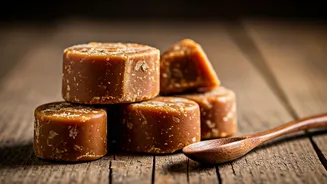
Color is a crucial visual cue when evaluating jaggery. Authentic jaggery typically exhibits a light brown hue, which is a natural consequence of the sugarcane processing. In contrast, adulterated jaggery often showcases a yellow or very dark brown color. This alteration is often due to the addition of chemicals or colorants used to enhance the visual appeal of the jaggery, making it more attractive to consumers. To avoid potentially consuming jaggery that contains harmful additives, it is advisable to be wary of those that appear overly shiny or have a highly polished finish. These characteristics might suggest the use of artificial enhancements that compromise the jaggery's purity and safety. Prioritize jaggery that maintains its natural color and avoids artificial enhancements for a safer consumption experience.
Water Test Explained
The water test provides a simple yet effective method to assess the purity of jaggery. This test involves a cup of warm water and a small piece of the jaggery being examined. When pure jaggery is dropped into the water, it slowly dissolves, leaving the water clear. This slow dissolving process is a key indicator of its genuine composition. Conversely, if the jaggery is adulterated, the water will change color rapidly. This rapid color change is due to the presence of added substances, which dissolve more quickly than the natural components of pure jaggery. This easy, at-home test helps consumers quickly differentiate between genuine and adulterated products. It ensures that the product you are using is pure and free from additives.
Texture Examination Method
Examining the texture of jaggery is another practical way to detect adulteration. To perform this test, take a small piece of jaggery and rub it between your fingers or on your palm. Pure jaggery has a soft texture and easily crumbles. In contrast, adulterated jaggery tends to be hard and sticky. If the jaggery feels unusually sticky or has a plastic-like texture when handled, it suggests that the product is not safe to consume. This observation is a signal that there might be unwanted additives or substitutes present. Always choose jaggery that has a natural, soft texture, indicating that the product is pure and free from artificial modifications. By checking the texture, consumers can be more certain about the quality of the jaggery they use.
Taste Test Insight
The taste test is the final sensory evaluation to ensure the purity of jaggery. Real jaggery has a mild, natural sweetness that is pleasant and not overpowering. Fake jaggery, however, often tastes excessively sweet and artificial. These artificial sweeteners can result in an unusually strong flavor. In some cases, consuming adulterated jaggery can result in an unpleasant aftertaste or an unusual sensation in the throat. If you notice an unusual feeling in your mouth or throat after eating the jaggery, this may indicate that the product is impure. Therefore, paying attention to the taste of jaggery provides valuable insights into its purity. Always choose jaggery that offers a natural and pleasant taste profile.