




Date's Sweet Essence
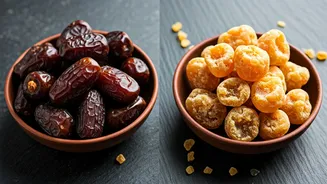
For generations, dates have been a cornerstone of sweetness in both Indian and Middle Eastern culinary practices. Whether in syrup form or as a powdered
sugar, dates impart a deep, satisfying sweetness perfect for confections, morning porridges, and special celebratory dishes. Their natural sugars offer a rich flavour profile that's hard to replicate, making them an excellent choice for those seeking wholesome alternatives to processed sugars. This ancient fruit continues to be a versatile ingredient, lending its unique character to a wide array of recipes, from simple everyday meals to elaborate festive treats. The subtle complexity of date sugar adds a depth that enhances both sweet and, surprisingly, some savory applications, demonstrating its enduring appeal across diverse culinary landscapes. It's a testament to the wisdom of ancient kitchens that still resonates today.
Honey's Golden Touch
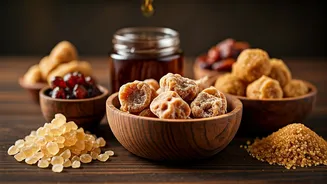
Raw, locally sourced honey has been an integral part of the Indian diet and Ayurvedic medicine for millennia. Its inclusion in daily life goes beyond mere sweetening; it brings a nuanced floral depth to beverages like tea and kadhas, as well as to desserts. Often chosen for its perceived health properties, honey is a preferred natural sweetener in home remedies and traditional preparations. The diverse floral sources across India mean that honey itself offers a spectrum of flavours, from delicate to robust, each adding a unique dimension to dishes. This liquid gold is not just a sweetener but a potent ingredient that has been revered for centuries for its flavour, versatility, and beneficial qualities. Its ability to blend seamlessly into both hot and cold preparations makes it a staple, offering a healthier and more flavourful alternative to conventional sweeteners.
Jaggery's Richness
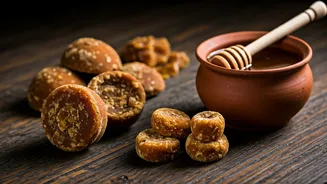
Jaggery, known as Gur or Gud, is a traditional unrefined sugar produced by concentrating sugarcane juice or palm sap until it solidifies. Unlike highly processed white sugar, jaggery retains valuable natural minerals, contributing to its distinctive deep, caramel-like flavour. This rich, earthy sweetness makes it a ubiquitous ingredient in Indian sweets, teas, and even certain savory dishes, adding a layer of complexity that refined sugar cannot match. Its presence is felt across the subcontinent, from humble home kitchens to bustling street food stalls. The process of making jaggery is a testament to traditional wisdom, preserving nutrients and flavour that are lost in industrial refining. Its versatile nature allows it to be used in myriad ways, enhancing the taste and character of countless recipes, and it remains a beloved staple for its wholesome appeal.
Coconut Sugar's Nuance
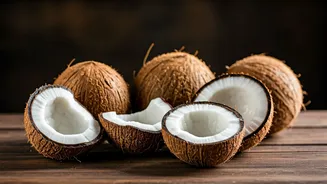
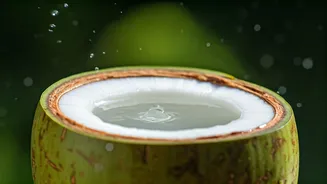
Derived from the sap of coconut palm blossoms, coconut sugar offers a subtle caramel note and has gained traction as a popular sugar alternative in contemporary Indian kitchens, particularly in urban settings. Its mild flavour profile makes it an adaptable ingredient, blending seamlessly into desserts, coffee, and modern interpretations of Indian cuisine. This sweetener provides a sophisticated sweetness that doesn't overpower other flavours, making it ideal for delicate pastries and beverages. Its increasing popularity reflects a growing awareness of healthier dietary choices and a desire for natural ingredients that offer both taste and functionality. Coconut sugar represents a fusion of traditional ingredients with modern culinary trends, offering a delightful and versatile option for everyday use.
Khandsari's Earthy Charm
Khandsari sugar represents a less refined variety of cane sugar, meticulously produced through age-old, traditional techniques. It possesses a granular texture similar to regular sugar but crucially retains its molasses content, lending it a gentle, earthy sweetness. This unique characteristic makes Khandsari an excellent choice for Indian baking and beverages, where its subtle flavour enhances rather than dominates. It offers a more complex sweetness compared to white sugar, providing a depth that is both comforting and distinctive. The traditional production methods ensure a more natural product, appealing to those who value authenticity and wholesome ingredients. Khandsari sugar is a perfect example of how traditional food processing can yield superior flavour and a more natural product.
Palm Jaggery's Depth
Palm jaggery, referred to as Tadgud or Karupatti, is a treasured sweetener derived from the sap of palm trees, distinguished by its darker hue and more intense, richer flavour profile compared to standard jaggery. This potent sweetener is particularly cherished in the southern regions of India and along its coastal areas. It is frequently incorporated into traditional desserts and beverages, imparting a distinctive taste that is deeply rooted in regional culinary heritage. The robust flavour of palm jaggery adds a unique character to dishes, offering a taste experience that is both authentic and deeply satisfying. Its widespread use in traditional preparations highlights its significance in preserving the culinary identity of these regions, making it a vital ingredient in authentic South Indian cooking.