
Crew-10 Arrives
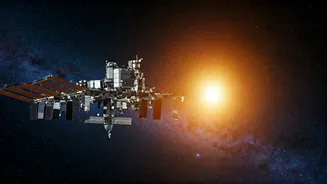
On March 16, 2025, Crew-10 successfully docked with the ISS, marking an important moment for space exploration. Following docking, the crew transitioned
out of their spacesuits, commenced cargo preparations, and opened the hatch to the ISS's Harmony module at 10:35 a.m. IST. This arrival temporarily increased the number of astronauts on the ISS to eleven. The new crew joined NASA astronauts Nick Hague, Sunita Williams, Butch Wilmore, and Don Pettit, along with Roscosmos cosmonauts Aleksandr Gorbunov, Alexey Ovchinin, and Ivan Vagner. The overlap between Crew-9 and Crew-10 was scheduled to facilitate a handover, allowing Butch Wilmore and Sunita Williams to brief the new crew on station operations before their departure.
Sunita Williams' Return
The focus of current missions includes the homecoming of Sunita Williams and Butch Wilmore, who have been stationed on the ISS since June of the previous year. Originally, the return was to be facilitated by SpaceX's Crew-9 mission. However, SpaceX had to delay the launch due to a launchpad issue. The original plan was for SpaceX to launch the next crew on an older Dragon capsule on March 12, allowing for the safe return of the stranded astronauts. This delay has caused significant shifts in the schedule, underscoring the complexities inherent in space travel and the reliance on meticulous planning and execution.
Mission Delays and Issues
The Crew-10 launch faced an unexpected setback when SpaceX had to cancel it. There was no immediate clarification on when the next flight would be. The situation exemplifies how crucial it is to address technical problems before launch to ensure the safety of astronauts and the integrity of the missions. The incident serves as a reminder of the inherent risks associated with space travel and the meticulous planning and coordination involved. The delays also highlight the importance of thorough checks and contingency plans to mitigate potential disruptions.
Overlapping Missions
NASA's decision to overlap Crew-9 and Crew-10 was critical to allow Wilmore and Williams to brief the new crew on the operational nuances of the station before their departure. This overlap would have provided a smooth transition. It was essential for ensuring that new crew members were fully prepared to manage and maintain the ISS. The handover process is carefully designed to include briefings, training, and knowledge transfer to maintain the functionality of the ISS and continue ongoing scientific research.
Scientific Insights
Beyond crew movements, the article touches upon several scientific observations. One such discovery is the breathtaking ‘diamond ring’ effect captured by the Blue Ghost lander, which was photographed in Mare Crisium, a vast lunar basin in the Moon’s northern hemisphere. The Blue Ghost is a compact yet robust four-legged lander. Furthermore, the discussion includes findings on the potential impact of a lack of germs on astronaut health, drawing attention to how sterile environments can affect human physiology in space. These findings demonstrate the vast array of investigations conducted on the ISS, aimed at enhancing comprehension of space travel effects on humans.