







Orbital AI Powerhouse
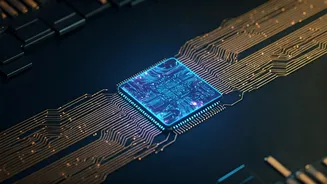
Nvidia has unveiled the Vera Rubin chip, a significant advancement engineered to power data centers in orbit and facilitate complex computational tasks
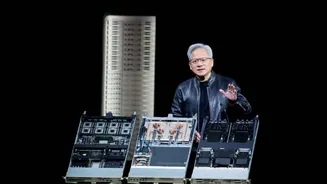
beyond Earth. This chip is a core component of the larger Pod Seven system, which integrates seven Vera Rubin GPUs across five rack-scale systems to form a formidable AI supercomputer. The entire architecture is meticulously designed to address the unique and demanding requirements of computers operating in space, ranging from sophisticated analysis of satellite imagery to enabling autonomous navigation and operations for spacecraft. Interestingly, despite the exotic environment of space, the fundamental challenges encountered are remarkably similar to those faced by data centers on Earth. Issues such as maintaining power efficiency, managing heat dissipation effectively, and ensuring unwavering reliability are critical hurdles that echo terrestrial struggles. Nvidia's CEO, Jensen Huang, has openly acknowledged these persistent difficulties, yet he expressed strong confidence in the company's engineering prowess, stating that their teams possess the capability to resolve complex problems regardless of whether they are on Earth or operating in orbit. This highlights Nvidia's strategic intent and capability to adapt its cutting-edge technology for extreme environmental conditions.
Expanding AI Dominance
The introduction of the Vera Rubin chip is a clear manifestation of Nvidia's overarching strategy to extend its leadership in AI chip technology into entirely new and promising territories, specifically the domain of space-based AI. The company views AI capabilities in space as absolutely crucial for a variety of applications, including real-time processing of data from satellites, enhancing defense capabilities, and improving global communication networks. By establishing a strong first-mover advantage, Nvidia aims to capture significant market share from entities such as government agencies, aerospace corporations, and emerging private space exploration ventures. This strategic move by Nvidia also occurs at a time when its main competitors, including AMD and Intel, are actively exploring the development of specialized chips tailored for edge computing and aerospace applications. The specifications of the system are impressive, featuring 1,152 Vera Rubin GPUs distributed across 40 racks, offering a staggering 60 exaflops of compute power and a bandwidth of 10 PB/s for exceptionally rapid data transfer. The system is built upon the third-generation Nvidia MGX rack architecture, emphasizing scalability and performance.
Specialized Rack Systems
The Vera Rubin chip is integrated into a series of specialized rack systems, each optimized for distinct high-performance computing tasks. The NVL72 Compute Rack houses 72 Rubin GPUs alongside 36 Vera CPUs, specifically engineered for mixture-of-experts (MoE) models and large context inference, boasting up to a 10x improvement in inference performance per watt compared to the Blackwell architecture. For low-latency inference, the Groq 3 LPX Rack is equipped with 256 LPUs (Language Processing Units) per rack, designed to handle trillion-parameter models with extensive context lengths and offering a remarkable 35x more tokens and a 10x greater revenue opportunity than Blackwell. The Vera CPU Rack features 256 CPUs, supporting over 22,500 concurrent reinforcement learning environments, and is presented as twice as efficient and 50% faster than conventional CPU racks. For data management, the BlueField-4 STX Storage Rack offers AI-native storage with its CMX context memory platform, offloading KV cache for massive context handling and delivering 5x higher tokens per second with 5x better power efficiency. Finally, the Spectrum-6 SPX Networking Rack utilizes silicon photonics for its networking infrastructure, providing a 102.4 Tb/s switch bandwidth with 200 Gb/s optics to ensure minimal latency, robust resilience, and synchronized workload execution.
Energy, Cooling, Scale
Addressing the critical aspects of energy management and cooling in these advanced systems, Nvidia has implemented several innovations. 'Dynamic Power Steering' intelligently directs power to the components that require it most, optimizing resource allocation. 'Rack-Level Energy Storage,' utilizing capacitors, helps to smooth out power fluctuations, leading to a reduction in peak current by 25%. 'Intelligent Power Smoothing' stabilizes workloads effectively without the need for massive battery packs. Furthermore, the system supports liquid cooling at 45°C, which enables cost-efficient free cooling strategies and significantly boosts performance per watt. Scalability is a key design principle, with NVL72 racks capable of scaling up to NVL576 configurations, featuring an all-to-all NVLink topology for maximum interconnectivity. Future 'Kyber' NVL1152 racks are planned to double the GPU domains, facilitating extreme-scale AI deployments.