





Expressway's Economic Impact
The Ganga Expressway is rapidly emerging as a pivotal artery for Uttar Pradesh's economic advancement, particularly in the real estate sector. This expansive
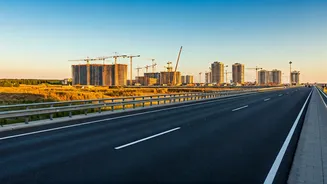
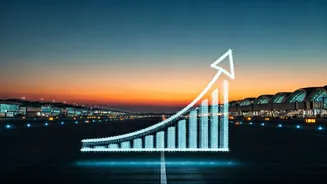
594-kilometer greenfield corridor, designed for speeds of 120 kmph and expandable from six to eight lanes, is envisioned to be much more than a transportation route. It's being meticulously developed as a comprehensive economic zone, integrating industrial parks, extensive warehousing facilities, and advanced logistics infrastructure. Industry experts are projecting a substantial increase in property values, estimating a rise of 12% to 15% within the next 12 to 18 months across cities situated along its path. This forecast is driven by the anticipated surge in connectivity, which will naturally attract new investments and stimulate development in both Tier-2 and Tier-3 cities, transforming them into dynamic economic hubs and creating a ripple effect of growth that extends well beyond mere transportation.
Real Estate Boom Predicted
Real estate professionals are highlighting the Ganga Expressway's potential to generate substantial new demand across various property segments, including residential housing, commercial spaces, and plotted developments. The areas strategically located near interchanges and established industrial zones are expected to experience the most significant appreciation in land values. Projections suggest that property prices in many cities directly benefiting from the expressway's connectivity could escalate by 12% to 15% in the near future. Furthermore, there's a strong anticipation for robust demand in plotted developments and mid-income housing solutions. Experts also foresee organized real estate activities potentially doubling or even tripling in specific micro-markets over the coming years. A key factor driving this optimism is the comparative advantage of lower land costs when contrasted with the National Capital Region (NCR), making these Uttar Pradesh locations increasingly attractive for both investors and developers looking for high-growth opportunities and better returns.
Investment & Land Allocation
The significance of the Ganga Expressway for the real estate market extends beyond its physical structure; it represents a strategic vision for economic corridor development. The Uttar Pradesh government is actively backing this initiative, with over Rs 47,000 crore in investment proposals already associated with the corridor. To facilitate this industrial growth, approximately 6,500 acres of land have been designated for the development of industrial zones and warehousing facilities. This dedicated land allocation is expected to foster sustained, long-term demand for a wide array of property types. The anticipated needs include substantial growth in residential housing to accommodate a growing workforce, increased demand for rental properties, expansion of commercial projects to support economic activity, development of sophisticated warehousing and logistics parks to streamline supply chains, and a rise in hotels and hospitality businesses to cater to increased business and tourist traffic. This integrated approach aims to create a self-sustaining economic ecosystem along the expressway.
Cities Set to Thrive
Several cities across Uttar Pradesh are strategically positioned to reap significant benefits from the Ganga Expressway's development. Meerut, due to its advantageous proximity to the NCR, is anticipated to be a major beneficiary, experiencing growth in residential projects, warehousing, logistics, and export-oriented industries, alongside commercial real estate. Improved connectivity could also lead to an influx of housing demand spilling over from the NCR. Hapur and Bulandshahr, already recognized as industrial extensions of Delhi-NCR, are poised for further enhancement of their logistics parks, warehousing hubs, manufacturing units, and overall real estate demand. Hardoi, situated strategically between Lucknow and central UP, is expected to see its industrial corridor expand, fostering growth in warehousing, commercial activities, and housing. Shahjahanpur is likely to undergo rapid transformation with new industrial zones, food processing units, and storage facilities, leading to a sharp rise in land demand. Prayagraj, a major cultural and administrative center, will likely see growth in tourism, hospitality, better transport services, and educational institutions, with religious tourism also receiving a boost. Bareilly's traditional industries, such as textiles, furniture, and agro-trade, are expected to gain from reduced logistics costs and faster transportation, alongside an increase in retail and urban infrastructure development.
Expressway's Advanced Features
The Ganga Expressway is engineered with state-of-the-art infrastructure to support future growth and development. Key features include its impressive 594-kilometer length as a greenfield project, with a primary six-lane configuration designed to be expandable to eight lanes, accommodating high traffic volumes. Its design speed of 120 kmph ensures efficient and rapid transit. Uniquely, the expressway incorporates a 3.5-kilometer emergency airstrip, intended for defense operations and fighter jet landings, highlighting its strategic importance. To facilitate connectivity and manage water crossings, it includes multiple bridges over the Ganga and Ramganga rivers. The project also integrates essential transportation support systems such as flyovers, numerous interchanges for easy access, and service roads for local traffic. Future-ready amenities like EV charging stations and food plazas are planned, along with dedicated facilities for both passenger convenience and logistics operations, underscoring a holistic approach to infrastructure development that supports economic activity and connectivity across the region.