







Cannonball Tree Wonders
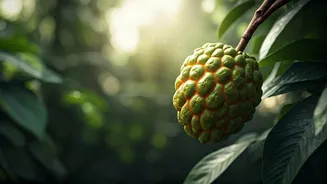
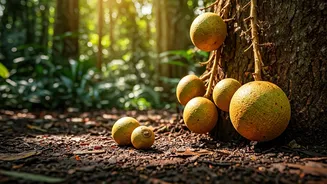
Prepare to be amazed by the Cannonball Tree, a true spectacle of nature found in Sri Lanka and southern India. This dramatic tree is renowned for its colossal,
rust-colored fruits that hang directly from its trunk, resembling heavy cannonballs and often weighing several kilograms. In southern India, this magnificent tree holds significant cultural reverence and is known locally as the 'Nagalingam' tree, adding a layer of spiritual significance to its striking appearance and unique fruiting habit, making it a must-see for botanical enthusiasts exploring these regions.
Miracle Fruit Magic
Experience a taste transformation with the Miracle Fruit, native to West Africa and a true marvel of natural science. While it resembles a small lemon, its taste is astonishingly sweet, thanks to a unique protein called miraculin. This compound temporarily alters your taste buds, making sour foods intensely sweet for a short period. Botanical travelers can seek out this fascinating fruit in dedicated farms across Ghana, Japan, and parts of Florida, where tasting sessions are increasingly popular for curious visitors.
Jabuticaba's Bark Bounty
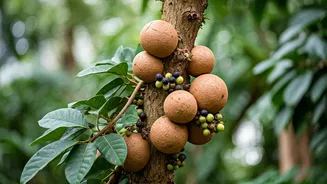
The Jabuticaba tree offers a truly otherworldly sight, with its dark purple fruits appearing to be directly attached to the tree's bark, creating an unusual, almost alien landscape. Originating from Brazil, particularly the states of Minas Gerais and São Paulo, these fruits deliver a surprisingly sweet flavor, reminiscent of grapes and lychees. Many travelers describe their first encounter with a Jabuticaba tree as a surreal experience, highlighting its unique growth pattern and delightful taste as a standout botanical discovery.
Durian's Divisive Aroma
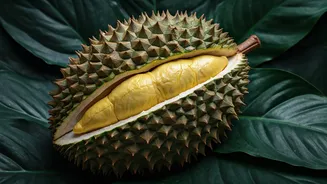
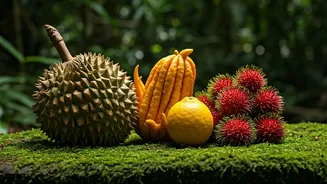
Known globally as the 'smelliest fruit in the world,' Durian is a polarizing yet fascinating tropical treasure. Its spiky exterior gives way to a creamy, custard-like flesh that elicits extreme reactions: some find it heavenly, while others compare its potent aroma to something far less pleasant. The towering durian tree itself is an impressive sight. This iconic fruit is widely cultivated and enjoyed in Thailand, Malaysia, Singapore, and Indonesia, making it a quintessential experience for those exploring Southeast Asian flora and culture.
Sausage Tree Curiosities
Africa's Sausage Tree is a visual marvel, characterized by its large, sausage-shaped fruits that hang directly from thick, rope-like stems. These fruits can grow to astonishing lengths, sometimes exceeding two feet, and are a common sight across savannas and riverbanks. While not typically eaten fresh, they are a distinctive feature of the landscape. Travelers on safari in Kenya, Tanzania, and South Africa will easily encounter these remarkable trees, often found near rivers and within wildlife reserves, adding an exotic flair to the African wilderness.
Buddha's Hand Citrus
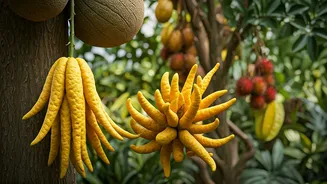
The Buddha's Hand citrus presents a truly unique appearance, resembling an octopus more than a typical fruit with its finger-like segments. This peculiar citrus variety is notable for containing very little juice, unlike its more common lemon relatives. Despite its unusual form, it holds cultural significance and can be found in temple gardens and bustling fruit markets throughout China and Japan, offering a distinctive visual and aromatic experience for those exploring these regions.
Baobab's Majestic Presence
The Baobab tree is an iconic and ancient species, often described as looking like it's planted upside down due to its distinctive silhouette. Its velvety, gourd-like fruit encases a pulp that is remarkably rich in vitamins and nutrients, widely utilized in African beverages and snacks. The most breathtaking encounters with these majestic trees are in Madagascar, particularly along the world-renowned Avenue of the Baobabs, a truly photogenic road lined with these magnificent specimens.
Ackee's Jamaican Charm
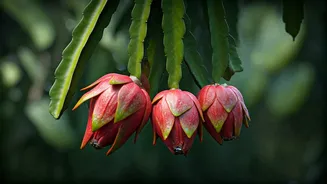
Ackee, the national fruit of Jamaica, is a vibrant red fruit that naturally splits open when ripe, revealing a creamy, yellow-fleshed interior surrounding shiny black seeds. While a culinary staple, it requires careful preparation as unripe ackee is toxic. Travelers visiting Jamaica often immerse themselves in local culture through food tours, where they can learn about the proper handling and preparation of this distinctive fruit, understanding its significance in Jamaican cuisine and heritage.
Mangosteen's Royal Taste
Often overshadowed by its more pungent counterparts, the Mangosteen is truly the 'Queen of Tropical Fruits.' This exquisite fruit boasts a deep purple rind that opens to reveal segments of sweet-and-tangy white flesh, offering a delightful flavor profile. The slow-growing Mangosteen tree thrives in humid tropical climates, and travelers can savor this delicacy in Southeast Asia, particularly in Thailand and Vietnam, often during the monsoon season when it is at its peak.
Snake Fruit's Scaly Appeal
Among the most intriguing tropical fruits, Snake Fruit, also known as Salak, gets its name from its distinctive reddish-brown scaly skin that remarkably resembles snake leather. These fruits grow in clusters at the base of palm trees, and their cream-colored flesh offers a crunchy texture with a flavor often compared to a delightful blend of apple, pineapple, and banana. Travelers in Indonesia, especially in Bali, Java, and Yogyakarta, can easily find and enjoy this unique and strangely appealing tropical treat.