
Economy's Astronomical Rise
The global space economy has surged, reaching an impressive valuation of $626 billion. This marks a significant phase of expansion, fueled by advancements
in technology, increased private sector involvement, and international collaborations. This growth indicates a robust and dynamic industry that is continually pushing boundaries and exploring new frontiers. The space sector's expansion highlights its increasing influence on global economies and technological innovation. It reflects growing investments and a wider range of space-related activities, ranging from satellite manufacturing and launch services to space exploration and scientific research. This burgeoning sector signifies both the ongoing technological progress and the escalating economic importance of space-related activities worldwide.
Mission Success in Orbit
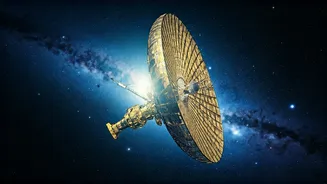
A pivotal achievement was the successful in-orbit deployment of the Oxford Space Systems Wrapped Rib Antenna on the CarbSAR mission. This deployment is a testament to the advancements in space technology and engineering. The success signifies advancements in satellite communication and earth observation capabilities, crucial for various applications, including disaster management, environmental monitoring, and scientific research. Such technological triumphs underscore the space industry's capacity to innovate and contribute to solving global challenges. This event also highlights international collaboration and the effectiveness of combining resources and expertise to achieve ambitious space exploration goals. Such missions highlight the global cooperative spirit that drives the sector forward.
Solving Space Debris
The Saudi Space Agency played a key role in fostering solutions for space debris, announcing the winners of the global ‘DebriSolver’ competition at a Space Debris Conference. Space debris presents a growing threat to active satellites and future space missions, necessitating innovative solutions. The competition aimed to encourage the development of technologies and strategies to mitigate the risks associated with space debris. By recognizing and rewarding groundbreaking ideas, the conference fueled advancements in debris removal, orbital management, and the design of more resilient spacecraft. It also highlighted the international commitment to creating a sustainable space environment, crucial for long-term exploration and utilization.
Varda's Successful Landing
The W-5 mission from Varda made a successful landing in Australia, representing another significant achievement in the space sector. Such missions provide valuable insights into materials processing in microgravity and offer potential for advanced manufacturing in space. This successful landing underscores the increasing diversity of space activities, with private companies playing an increasingly important role in space exploration and industrialization. Varda's successful mission highlights the sector's evolving technological capabilities, opening doors to new scientific discoveries and commercial opportunities. It also highlights the growing participation of diverse players, driving further innovation and growth within the industry.