







Accelerating Earth Science
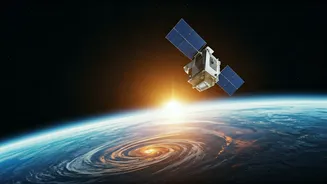
NASA is embarking on an ambitious path to accelerate its Earth science endeavors with two novel mission concepts, EAGLE and FALCON. These initiatives aim
to address key research imperatives outlined in the latest decadal survey, but with a distinct departure from traditional, time-consuming development cycles. The agency's objective is to expedite the deployment of observational tools, seeking to achieve multiple mission objectives within a significantly shorter timeframe, ideally within two to three years. This approach, driven by a desire to "get more shots on goal," is intended to prepare the agency for future scientific priorities, aiming to clear the way for the next decadal survey by the end of the current decade. Karen St. Germain, the head of NASA's Earth science division, articulated this strategic shift, emphasizing the need for agility and efficiency in acquiring critical data about our planet.
EAGLE: Dual-Purpose Earth & Space Science
The EAGLE mission, an acronym for Explorer for Artemis Geology Lunar and Earth, represents a visionary approach to Earth observation with inherent extraterrestrial applications. At its core, EAGLE will deploy a sophisticated hyperspectral instrument designed to conduct surface biology and geology observations, fulfilling essential recommendations from the decadal survey. However, the innovation lies in its adaptability. The same instrument capable of detailed Earth analysis can be repurposed for lunar and Martian exploration, assisting in the identification of vital resources and the selection of suitable landing sites. This cross-utilization of technology aligns with NASA's broader vision of an integrated agency mission, seeking synergistic opportunities across various scientific domains. EAGLE will first demonstrate its capabilities in Earth orbit, paving the way for potential future missions orbiting the Moon or Mars, showcasing a truly integrated approach to scientific discovery.
FALCON: Collaborative Atmospheric Study
FALCON, or Fleet for the Atmosphere Linking Commercial Observations with NASA, is the second proposed mission, focusing on atmospheric research through collaborative efforts. This mission will carry NASA-developed lidar and radar instruments to meticulously study clouds, convection, and the broader atmosphere. A key feature of FALCON is its open invitation to the commercial sector. NASA is actively seeking industry partners to develop their own spacecraft equipped with radiometers, which would complement the data gathered by NASA's instruments. This request for information highlights a broader strategy by NASA to engage commercial capabilities across various scientific disciplines, including heliophysics and astrophysics, under a "science as a service" model. The agency is keenly interested in how industry can contribute to scientific objectives, ensuring that missions, especially those that don't require highly specialized or unique designs, are developed more efficiently and economically.
Cost, Schedule, and Future Vision
The proposed EAGLE mission is slated for a three-year development timeline with an estimated cost of $310 million. While cost and schedule targets for FALCON are still under development, these missions embody NASA's commitment to pragmatic and efficient scientific exploration. The agency has recently released a request for information regarding industry participation in its "science as a service" initiative, seeking input on how commercial capabilities can be integrated into heliophysics and astrophysics missions, in addition to Earth science. This outreach has been met with a positive initial response, indicating a strong interest from the private sector in contributing to scientific endeavors. NASA aims to strike a balance, ensuring that while unique and challenging "big, exotic missions" will always have a place, routine scientific objectives can be achieved through more streamlined, collaborative, and cost-effective means, making science more accessible and broadly impactful.