





Electric Dances Above
Astronauts aboard the International Space Station have a unique vantage point, often capturing breathtaking views of atmospheric phenomena far above the familiar
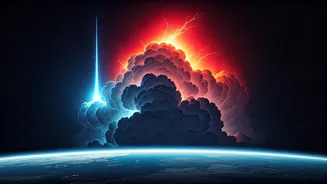
storms on Earth. These spectacular displays, known as Transient Luminous Events (TLEs), are fleeting, colorful bursts of electrical activity that occur in the upper atmosphere, typically above powerful thunderstorms. Unlike the lightning we see from the ground, these events unfold silently, resembling vibrant, electric dances. While once considered mere anecdotal accounts or rare photographic curiosities, the frequent documentation from the ISS now offers scientists a wealth of data. These upper-atmosphere sparks, though brief, have been shown to have significant effects, including the potential to disrupt radio communications, pose safety risks to aircraft, and influence the chemical composition of our atmosphere.
Sprites and Jets Unveiled
Among the most striking TLEs are red sprites and blue jets. Red sprites, often described as resembling 'upside-down jellyfish,' dangle in the mesosphere for mere milliseconds, appearing as diffuse red glows. In contrast, blue jets are more directed, shooting upwards from clouds towards the stratosphere in a silent, bluish beam. The European Space Agency's Atmosphere-Space Interactions Monitor (ASIM), a sophisticated instrument mounted on the ISS since 2018, is specifically designed to capture these ephemeral events. Using high-speed cameras and photometers, ASIM tracks phenomena that are incredibly small and fleeting – 'smaller than a fingernail and shorter than a heartbeat.' Data from ASIM has revealed how powerful electrical discharges from thunderclouds can inject substantial energy into the ionosphere. This process can create expansive ELVES (Emission of Light and Very Low frequency perturbations due to Electromagnetic Pulse Sources) rings that span hundreds of miles, potentially interfering with long-distance radio transmissions. The detailed footage and data collected are crucial for understanding these complex atmospheric interactions.
Risks and Research
The study of TLEs extends beyond pure fascination, as these events carry tangible risks and provide vital insights into atmospheric processes. Certain intense lightning strikes are known to trigger terrestrial gamma-ray flashes, which can expose aircraft to radiation doses comparable to a chest X-ray. To better map these hazards, Japan's Light-1 CubeSat, deployed from the ISS, works in conjunction with ground-based networks to create a three-dimensional atlas of these dangers over equatorial storms. Beyond radiation concerns, TLEs have a demonstrable impact on radio communications, particularly for submarines and aircraft that rely on ionospheric signal propagation. Furthermore, these electrical discharges facilitate the transfer of chemicals like nitrogen oxides between atmospheric layers. This chemical exchange can influence ozone levels and contribute to a more nuanced understanding of climate change dynamics, improving the accuracy of climate warming predictions.