
Sugarcane's Arrival
The journey of jaggery commences with the arrival of sugarcane at the factory. These stalks, cultivated under the sun, are the raw material that holds
the potential to become sweet, solid jaggery. The initial stage involves rigorous washing and cleaning of the sugarcane. This is a critical step to remove any dirt or impurities that might be present on the stalks. Cleanliness is paramount for ensuring the purity and quality of the final product. The washing process is typically automated, with machines using high-pressure water to effectively remove any contaminants. This meticulous cleaning guarantees that only the purest sugarcane juice will proceed further into the process, laying the foundation for high-quality jaggery.
Extracting the Juice
Once the sugarcane is thoroughly cleaned, the next procedure is the extraction of its juice. Powerful machines are used to crush the sugarcane. These crushers are designed to extract the maximum amount of juice from the stalks. The sugarcane is fed through a series of rollers that apply immense pressure, squeezing out the sweet liquid. This extracted juice is the lifeblood of jaggery, the essential ingredient that will be transformed into the finished product. The efficiency of the juice extraction process is vital. It influences the yield of jaggery and also affects its taste and texture. The juice, at this stage, carries the essence of the sugarcane, ready to embark on its transformation into the delicious sweet.
Clarification and Heating
The extracted sugarcane juice, while sweet, contains impurities that must be removed. The clarification process is designed to eliminate these contaminants and to prepare the juice for the next stage. The juice is often filtered to remove solid particles, such as pieces of sugarcane stalk and other debris. Following filtration, the juice is heated. This heating is done in large vats or pans. The heat helps to coagulate any remaining impurities, which then rise to the surface as foam or scum. This scum is carefully skimmed off, leaving behind a clearer juice. The heating process is controlled precisely to ensure the juice does not burn or caramelize prematurely. This careful control is important for the final taste of the jaggery.
Concentration and Crystallization
After clarification, the juice goes through a process of concentration. This is done by continued heating and evaporation. The goal is to remove excess water, thereby increasing the concentration of the sugar. As the water evaporates, the juice thickens, and the sugar molecules begin to come closer. This thickening is monitored carefully. Once the juice reaches the required consistency, it is transferred to another area where crystallization takes place. The thickened, concentrated syrup is poured into molds or vats. Here, the cooling process prompts the sugar to crystallize and solidify. The rate of cooling affects the texture and hardness of the final jaggery. This step is a critical part in shaping jaggery into the familiar blocks or forms that we are used to.
Molding and Cooling
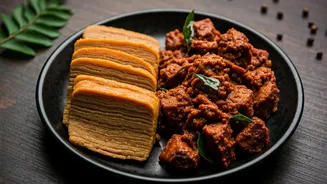
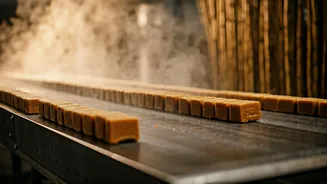
The hot, concentrated jaggery syrup is now ready for molding. The syrup is poured into molds of various shapes and sizes. These molds are typically made of stainless steel or other food-grade materials. The shapes can vary, often including rectangular blocks, round discs, or even irregular shapes. The molding process ensures uniformity and makes it easier for packaging. After the syrup is poured, it is allowed to cool and solidify completely within the molds. Cooling is usually done at room temperature or in a controlled environment. The cooling period allows the jaggery to set and harden. The slower the cooling process, the smoother and more uniform the texture of the jaggery will be. Once completely cooled and solidified, the jaggery is ready for the final stages before it can be sent to the consumer.
Packaging and Distribution
The final stage involves packaging and distributing the jaggery. Once the jaggery has cooled and solidified, it is removed from the molds. It is then inspected for quality and any imperfections. The jaggery pieces are cleaned and prepared for packaging. Packaging is essential for protecting the jaggery from moisture, air, and contamination. Various packaging materials are used, including plastic wrappers, cardboard boxes, and sealed containers. The packaging keeps the jaggery fresh and preserves its flavor and texture. After the packaging is done, the jaggery is ready for distribution. It is shipped to retail outlets, markets, and consumers across various regions. This step ensures that jaggery, the traditional sweetener, reaches its final destination: the kitchens and homes of people everywhere.