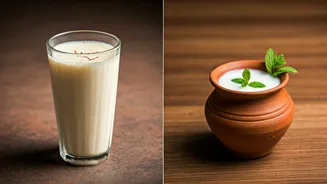







Compositional Differences
When the mercury climbs alarmingly high, exceeding 40°C, the decision between two beloved Indian beverages, buttermilk (chaas) and lassi, becomes more
than a matter of taste; it's about physiological response. While both originate from curd, their fundamental makeup dictates how effectively they combat extreme heat. The primary distinction lies in their consistency and added ingredients. Buttermilk is typically thinned out with water, rendering it a lighter beverage that facilitates quicker hydration. This higher water content enables the body to absorb fluids more rapidly, which is crucial for efficient internal temperature regulation during a heatwave. In contrast, lassi is prepared as a thicker concoction, often enriched with sugar or even cream. This addition makes lassi a more substantial drink, requiring a longer period for the digestive system to process, thus potentially hindering its immediate cooling effect.
Digestive Impact
The efficiency of your digestive system significantly influences how 'cool' you perceive yourself to be during sweltering conditions. Buttermilk, with its less viscous nature and minimal fat content, presents an easier task for digestion. Your body expends less energy processing it, allowing more resources to be allocated towards cooling itself down. This ease of digestion is paramount when the body is already under stress from high temperatures. Sweet lassi, conversely, is richer in calories and can sometimes induce a feeling of heaviness or lethargy rather than providing the desired sense of refreshment. This makes buttermilk a more beneficial choice for immediate relief and sustained comfort when facing extreme heat, as it doesn't burden the digestive system.
Electrolytes and Energy
Beyond their base ingredients, the flavourings added to buttermilk and lassi further differentiate their roles in extreme weather. Buttermilk is frequently enhanced with salt and various spices. This seasoning is not just for taste; it plays a vital role in replenishing essential electrolytes that are lost from the body through profuse sweating in the heat. This replenishing action is key to preventing dehydration and maintaining bodily functions. Lassi, particularly the sweetened variety, often incorporates sugar. While sugar can provide a fleeting surge of energy, it can also paradoxically lead to increased fatigue and a dip in energy levels later on, especially in the intense heat. Therefore, buttermilk's formulation makes it a more functionally superior option for managing the physiological demands of a heatwave.
Hydration and Cooling Power
The primary objective during extreme heat is rapid rehydration and efficient cooling. In this regard, buttermilk emerges as the definitive frontrunner. Its inherently light texture, coupled with a greater proportion of water and a balanced profile of electrolytes, makes it exceptionally well-suited for immediate relief. It efficiently quenches thirst and helps the body recover lost fluids and minerals quickly. While lassi does offer its own set of advantages, such as providing beneficial probiotics and a more sustained release of energy, its impact on cooling is generally more gradual. Its denser consistency and higher caloric value mean it's better suited for situations where a more filling beverage is desired, rather than as the principal strategy for combating a severe heatwave. For quick, effective hydration and cooling, buttermilk is the undisputed champion.