






Journey Revolutionized
The much-anticipated Delhi-Dehradun Expressway is poised to fundamentally change how people travel between these two important cities. Currently, the road
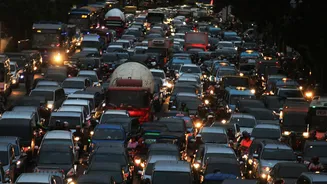
trip can take a substantial 6.5 hours, but this new infrastructure, inaugurated by Prime Minister Narendra Modi on April 14, 2026, will shrink that duration to an incredibly efficient 2.5 hours. This substantial reduction in travel time will not only benefit individual commuters but also contribute to easing the persistent traffic congestion within Delhi. By diverting traffic, it will alleviate pressure on the Delhi-Meerut Expressway and other key routes within the National Capital Territory.
Distance & Destinations
Beyond just saving time, the new expressway thoughtfully redesigns the route, shortening the physical distance between Delhi and Dehradun from 235 kilometers to 210 kilometers. This re-engineering of the path offers immediate relief for frequent travelers. The expressway's journey commences near the iconic Akshardham Temple in Delhi and strategically winds its way through several key towns in Uttar Pradesh, including Baghpat, Baraut, Muzaffarnagar, Shamli, and Saharanpur, before finally culminating in Dehradun, making the entire region more accessible.
Enhanced Connectivity Hub
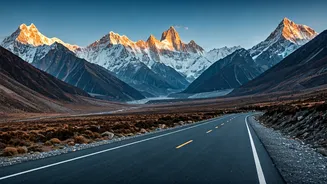
The benefits of the Delhi-Dehradun Expressway extend far beyond a faster commute. This ambitious project is designed to significantly boost regional connectivity, acting as a vital artery for further development. Importantly, the expressway includes a dedicated spur that branches off towards Haridwar. This connection integrates seamlessly with the Char Dham Highway network, thereby simplifying and expediting access to numerous revered religious sites and picturesque mountain towns located in both Uttarakhand and Uttar Pradesh, further solidifying its role as a crucial transport link.
Modern Infrastructure Investment
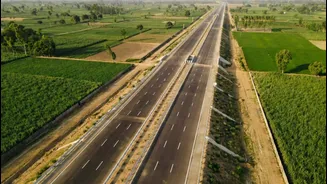
This monumental infrastructure project, the Delhi-Dehradun Expressway, represents a significant investment of approximately ₹12,000 crore. It is constructed as a state-of-the-art six-lane facility, meticulously engineered to provide a superior travel experience. The expressway is equipped with an impressive array of modern amenities, including seven strategically placed interchanges for smooth transitions, two essential railway overbridges, ten bridges to cross various water bodies and terrains, and fourteen wayside amenities designed for traveler convenience and safety. The entire corridor is optimized for high-speed travel, with a design speed limit of a minimum of 100 kilometers per hour, ensuring efficiency and a seamless journey.