








The AI Revolution
The landscape of professional work is undergoing a seismic shift, largely driven by advancements in Artificial Intelligence. AI systems are now capable
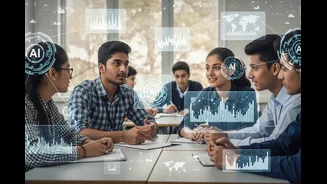
of performing tasks that were once the exclusive domain of human white-collar workers, ranging from intricate legal analysis to complex financial data processing and even creative content generation. This rapid evolution has sparked widespread concern among students and parents alike about the future job prospects associated with traditional career paths. The familiar anxiety surrounding board examinations is now compounded by questions about whether the chosen academic stream – Science, Commerce, or Humanities – will adequately prepare students for a workforce increasingly influenced by intelligent machines. The traditional notion of a stable, lifelong career is being challenged, emphasizing the need for a more dynamic and adaptable approach to education and skill development in the face of unprecedented technological change. Experts suggest that while AI may automate certain tasks, it also presents opportunities for those who can leverage it effectively.
Rethinking Stream Choices
In the era of AI, the significance of choosing an academic stream for Class 11 is evolving from a rigid career path determinant to a foundational element for a flexible and adaptable future. The debate surrounding Science, Commerce, and Humanities has gained a new existential weight as students consider how these foundational subjects align with a world where algorithms can execute many entry-level professional tasks with remarkable speed and efficiency. The core question for today's students is no longer simply 'Which stream guarantees a job?' but rather 'Which skills and knowledge base will remain valuable and in demand as AI continues to advance?' This shift in perspective underscores the importance of developing transferable skills, such as critical thinking, problem-solving, and digital literacy, irrespective of the chosen stream. The goal is to equip students with the ability to pivot and evolve within their careers as industries transform, ensuring their long-term relevance and success.
Science Stream's Evolution
The Science stream, traditionally perceived as the most secure path towards professions like engineering and medicine, continues to hold significant relevance in the age of AI, provided it is approached with a forward-thinking perspective. Beyond conventional Physics, Chemistry, and Mathematics (PCM) or Physics, Chemistry, and Biology (PCB) combinations, success now hinges on integrating emerging disciplines and skills. Experts emphasize that a Science background, particularly with a strong foundation in Mathematics, opens doors to rapidly growing fields such as data science, artificial intelligence development, robotics, and biotechnology. However, simply enrolling in Science subjects is insufficient. Students must actively cultivate adaptability, embrace interdisciplinary learning, and develop competencies in coding, advanced statistics, computational thinking, and robust research methodologies. This expanded approach ensures that Science graduates are not just technically proficient but also agile enough to contribute to and thrive in AI-driven industries.
Commerce for Digital Business
The Commerce stream is undergoing a significant transformation, moving beyond traditional accounting and manual spreadsheet management to embrace the data-driven future of business. With the advent of financial technology (fintech) and AI-powered analytical tools, future professionals in this field must develop a dual proficiency in both financial principles and algorithmic understanding. A Commerce background, especially when combined with Mathematics, provides a powerful foundation for roles in fintech, business analytics, and digital business management. The integration of automation is reshaping finance, making it imperative for accountants and analysts to grasp how algorithms work alongside numerical data. This evolution ensures that Commerce graduates are well-equipped to navigate and innovate within the increasingly digitized global economy, leading to enhanced opportunities in areas that blend financial acumen with technological insight.
Humanities' Rising Value
Contrary to outdated perceptions, the Humanities stream is poised to gain substantial importance in the AI-dominated era, especially in areas demanding nuanced human understanding and judgment. Fields such as psychology, law, advanced communication strategies, public policy, and ethical frameworks cannot be easily replicated by artificial intelligence. While AI can analyze patterns and process information, it lacks the capacity for moral reasoning, cultural interpretation, and genuine empathy. As organizations increasingly grapple with the ethical implications of AI deployment and the creation of responsible policy guidelines, professionals with a strong foundation in Humanities disciplines will become indispensable. Their ability to understand human behavior, societal dynamics, and ethical considerations provides a critical human edge that complements technological capabilities, making these fields more relevant than ever.
Entrepreneurship: A Universal Path
Regardless of the academic stream chosen, entrepreneurship is emerging as a highly sought-after career path that transcends traditional subject divisions. Experts highlight that a Science background fosters innovation in product development, Commerce equips aspiring founders with essential financial literacy, and Humanities cultivates crucial communication and behavioral understanding – all vital components for successful entrepreneurship. Beyond the specific stream, however, are fundamental skills such as robust problem-solving capabilities, digital fluency, data interpretation, design thinking, and effective negotiation. Exposure to real-world projects, practical internships, and entrepreneurial ideation holds more weight than adherence to rigid academic labels. In an AI-driven economy, entrepreneurs who can identify genuine societal problems and leverage technology as a solution, rather than merely following trends, are the ones most likely to thrive.
Navigating Common Pitfalls
In the midst of widespread anxiety about AI's impact on jobs, students often make ill-advised choices when selecting their academic stream. A prevalent mistake is opting for a stream based on fleeting trends, peer influence, or perceived future earnings, rather than genuine aptitude and interest. Many students gravitate towards Science, mistakenly believing it's an automatic guarantee of success in the AI age without assessing their comfort with mathematics or their analytical depth. Conversely, some prematurely dismiss Humanities or Commerce, underestimating their evolving relevance. Another significant misconception is the fear that AI will entirely eliminate jobs, leading students to believe that only programming roles will survive. In reality, AI is poised to transform, rather than erase, most professions, making continuous learning and adaptability far more critical than the chosen stream label.
AI Literacy vs. Human Skills
The crucial dialogue surrounding future careers centers not solely on academic streams but on achieving a harmonious balance between AI literacy and essential human skills. While it is imperative for students to develop a functional understanding of data, automation, and digital tools, experts emphasize that AI serves as an amplifier of human capabilities rather than a replacement. Skills such as leadership, empathy, ethical reasoning, profound creativity, and exceptional communication will increasingly differentiate individuals in the professional sphere. Machines excel at processing information, but humans are unique in their ability to build trust, articulate vision, and foster organizational culture. Therefore, the objective should be to become 'AI-literate' – understanding how AI works and how to leverage it – rather than becoming 'AI-dependent,' ensuring that decision-making and ultimate responsibility remain firmly in human hands.
Industry Shifts and Opportunities
Automation is undeniably set to reshape certain industries, particularly those involving routine, process-driven tasks. Roles in administration, basic accounting, customer support, and repetitive IT functions are likely to see a reduction, with back-office operations and low-level data entry positions being especially vulnerable. However, this transformation is also catalyzing the emergence of entirely new professional domains. Emerging fields include AI management and ethics, advanced cybersecurity, digital consulting, sustainability initiatives, healthcare innovation, and intricate human-machine collaboration. Projections indicate significant growth in sectors like healthcare, education, sustainable technologies, cutting-edge research, and a broad spectrum of digital services. The overarching advice from experts is consistent: cultivate transferable skills. Critical thinking, effective communication, digital competence, and a commitment to continuous learning are the cornerstones that will enable individuals to adapt and thrive as industries evolve.
Actionable Steps for Success
For Class 11 students poised at the critical juncture of stream selection, strategic planning and proactive engagement are paramount. Experts recommend several actionable steps to future-proof their academic and career trajectories. This includes actively building real-world projects and developing a robust portfolio that showcases practical application of knowledge. It's essential to move beyond simply using AI tools to understanding the fundamental principles of how AI operates. Pursuing online courses in areas like coding, data analytics, or digital design can provide valuable supplementary skills. Seeking out internships or hands-on work experience early in their academic careers offers invaluable practical insights. Crucially, students should focus on developing essential soft skills, such as interpersonal communication and emotional intelligence, which are increasingly vital in an AI-augmented professional landscape.