





Shrinking Space Explained
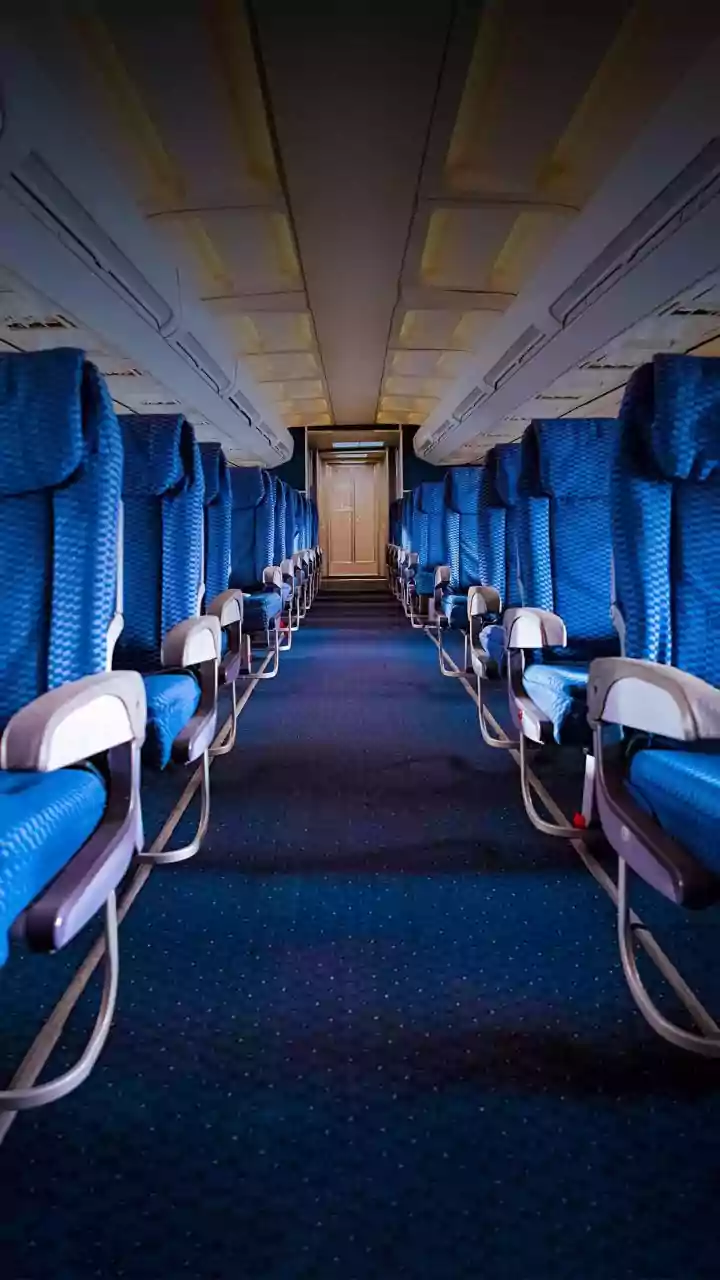
Airlines are increasingly prioritizing revenue maximization, leading to a noticeable reduction in the space allocated to economy class passengers. This
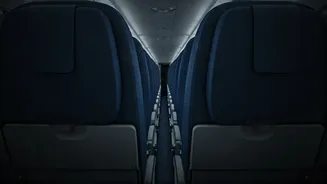
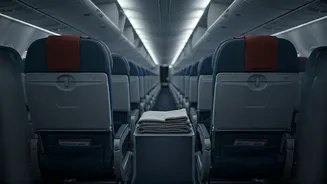
strategic shift involves reconfiguring cabins to accommodate a greater number of seats within the same aircraft fuselage. Consequently, travelers are experiencing less legroom and a diminished sense of personal space during flights. To further facilitate this seat density increase, some airlines are even removing in-flight amenities, such as seat-back entertainment systems, to reclaim valuable space. This ongoing trend is a direct response to the industry's need to boost earnings and control operational expenses. The average seat width has seen a reduction of approximately one inch over the past decade, paralleled by a decrease in legroom. These changes are largely attributed to the escalating costs of aviation fuel and the imperative for airlines to maintain a competitive edge in a challenging market. As a result, many passengers are finding themselves compelled to explore premium economy or business class options, which offer enhanced comfort and space, though at a significantly higher price point. This complex issue presents a difficult balance for airlines between financial imperatives and the fundamental need to ensure passenger satisfaction and a comfortable travel experience.
The Premium Cabin Race
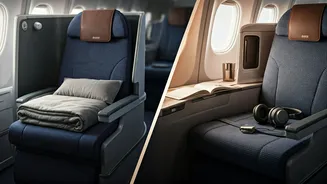
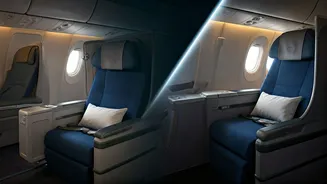
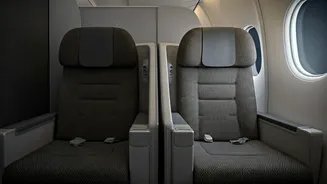
Airlines are actively redesigning their aircraft, either through retrofitting existing planes or purchasing new ones, to feature a larger proportion of premium seating. The primary objective behind this strategy is to generate more revenue from each available seat by catering to a growing segment of travelers willing to pay extra for enhanced features like lie-flat seats and significantly more legroom. Major carriers such as Delta Air Lines and United Airlines have been progressively increasing their premium seat offerings on flights over the last ten years. Even budget-friendly carriers, including Southwest Airlines, Spirit, and Frontier, are introducing seats that provide passengers with minor but appreciated perks like a few extra inches of leg space. Data from aviation analytics firm Visual Approach Analytics indicates that since January 2020, the number of scheduled business and first-class seats on domestic flights has surged by 27%. This growth rate is nearly three times that of scheduled economy seats, which have only increased by 10% during the same period. Premium economy seats, as highlighted in a report from the Global Tourism Forum, can be priced at a minimum of double that of standard economy seats while occupying only slightly more cabin space. For larger airlines, expanding their premium sections also aids in subsidizing economy class fares, allowing them to remain competitive against low-cost carriers. For instance, Delta reported that in the fourth quarter, revenue from premium ticket sales, which grew by 9%, surpassed revenue from their main cabin, where sales declined by 7%. Similarly, United observed its premium revenue outperforming basic economy sales in 2025, contributing to their higher profitability compared to industry peers. Cultivating customers who can afford these enhanced services has become a cornerstone of Delta's operational strategy, with executives noting that in 2024, households earning over $100,000 annually constituted 75% of all leisure airline spending.
Aircraft Evolution and Passenger Choice
Airlines are strategically integrating new aircraft and updating existing fleets to accommodate a more pronounced premium cabin experience, directly influencing the available space in standard economy. Delta, for example, has committed to augmenting its first-class and Delta One Suite offerings, its international business-class product featuring lie-flat seats. The company's Chief Executive has indicated that nearly all of its planned seat expansion for the current year will be concentrated in these premium sections, with no growth anticipated in the main cabin. This strategy is exemplified by Delta's order of at least 30 Boeing 787-10 Dreamliner jets, which are designed with considerably larger premium cabins than their predecessor aircraft utilized for long-haul international routes. These Dreamliners are poised to replace older Boeing 767-400s, which already dedicate over a third of their cabin space to premium seating. Delta's Chief Commercial Officer has lauded the 787 as a 'financially great plane' and a 'powerful change and a step function improvement in [profit] margin.' Furthermore, modern aircraft typically offer superior fuel efficiency, enhancing the economic viability of flight operations. In parallel, Delta is also receiving Airbus jets like the A330-900neo and A350-900, which average 40% premium seating. These acquisitions are part of a broader initiative to replace Delta's existing Boeing 767-300ER jets, where premium seats currently occupy between 30% and 32% of the cabin. United Airlines is also introducing a revamped version of its Boeing 787-9 Dreamliner with an 'elevated interior,' where standard economy seats will constitute only about 40% of the total, a reduction from the 58% found on the current iteration of the aircraft. This new configuration includes distinct business-class, premium economy, and economy-plus sections. American Airlines has consistently operated more premium seats than its domestic rivals since 2020, according to data from Cirium. The airline introduced premium economy seats on domestic routes in late 2016 and has since invested in new aircraft with a higher density of premium seats, alongside redesigning older planes. Over the past decade, American Airlines has increased its premium seat offerings by over 34%. The company's chief commercial officer remarked that the industry has transitioned from a simple point-to-point service model to a far more complex one. Analysts suggest these revised cabin layouts are effectively compressing the standard economy section and establishing a tiered revenue system that adapts to diverse consumer spending habits. Passengers in basic economy can opt for upgrades during periods of strong spending, while business-class travelers might 'trade down' to premium economy when their budgets are tighter. An analyst from Raymond James noted that the perception of an airline seat as a homogenous commodity is diminishing, emphasizing that it is no longer simply a basic service.
Passenger Perspectives
Travelers are increasingly noticing and reacting to the shrinking dimensions of economy class seating. Individuals like Luke Vanderberg, who stands at 6 feet 3 inches, find it difficult to comfortably fit in standard economy seats. Consequently, he often chooses to pay for extra legroom or premium economy seats, which he terms 'the previous business class,' especially for day flights to Europe. His decision to upgrade further, for instance, to business class for longer journeys, hinges on a cost-benefit analysis, where he weighs the expense against potential purchases like a new laptop. He ponders whether enduring 10 hours of discomfort is a worthwhile trade-off for such a purchase. This highlights a growing segmentation in air travel where passengers with greater financial resources can opt for comfort, while others are faced with increasingly cramped conditions. The airlines' strategy of optimizing cabin configurations for revenue generation, while understandable from a business perspective, directly impacts the passenger experience, leading to a disparity between those who can afford a more pleasant journey and those who must endure a less comfortable one. This trend suggests a future of air travel that may further differentiate passengers based on their ability to pay for comfort, making the simple act of flying a more stratified experience.