


An Accidental Discovery
The author's first encounter with the Centovalli Railway was an unplanned detour, a happy mistake that led to the discovery of a continent's most picturesque
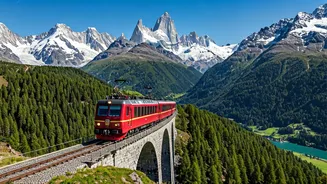
rail lines. Traveling through Europe, an incorrect boarding at a European station unexpectedly placed them on this route. From the cozy confines of the train's cream and blue carriages, a world of mesmerizing sights unfolded. Witnessing cascading waterfalls that resembled bridal veils, observing cable cars suspended mid-air, and marveling at stone bridges gracefully spanning deep ravines, the experience was instantly captivating. By the conclusion of this two-hour journey, a firm resolve was made to return for a more in-depth exploration, seeking to uncover the treasures hidden within the "hundred valleys" that define this region.
Embracing Slow Travel
A year later, the author returned, driven by a passion for trains and a desire to fully immerse themselves in the Centovalli experience. With approximately 15 daily departures connecting the Italian town of Domodossola with the Swiss city of Locarno, the railway offers an ideal framework for a hop-on, hop-off adventure across its 33 stops. The strategy was to disembark spontaneously, allowing the spirit of exploration to guide the journey, and to spend nights in local accommodations. The plan also included venturing onto well-marked trails, leading through ancient chestnut groves and serene beech forests, embracing a leisurely pace to truly appreciate the "hundred valleys" that lend this part of Europe its distinctive name.
Domodossola Departure
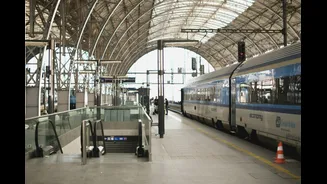
The journey commenced at the impressively designed station in Domodossola, where an early arrival secured a prime seat on the 10:26 a.m. departure. A significant part of the Vigezzina-Centovalli Railway's allure lies in the unpredictable nature of the trains themselves. Some carriages evoke a bygone era with their vintage compartments and characteristic squeals, reminiscent of Agatha Christie novels. Others, introduced to celebrate the railway's centennial in 2023, boast expansive windows, dedicated bicycle storage, and a polished aesthetic akin to Swiss timepieces. On this particular morning, a modern, trapezoid-shaped train named the Vigezzo Vision arrived, and the author secured a coveted front-row seat beside the conductor's cabin, setting the stage for an extraordinary travelogue.
Alpine Ascent Views
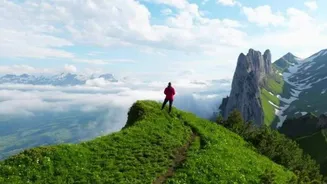
With a gentle hum, the four-car train set off from the station, initiating its winding ascent into the Lepontine Alps, a mountain range shared by Italy and Switzerland. The passage through tunnels, the first of 31 along the route, was illuminated by sparks from the overhead wires, casting light on the stone walls. Glancing back, a vibrant rainbow arched over the steeples of Domodossola. Soon, the train was traversing delicate steel bridges that spanned rushing streams, their waters agitated by recent heavy rainfall. Traveling at an average speed of 17 miles per hour, the Centovalli Railway allowed ample time to appreciate the details outside, such as trellised grapevines adorning traditional stone-roofed farmhouses, providing a picturesque glimpse into rural life.
Santa Maria Maggiore Charm
After traversing eight stations and covering approximately 45 minutes of travel, a conductor in a blue uniform announced the next stop: Santa Maria Maggiore. Situated at an elevation of 2,743 feet, this village marked the highest point on the route and the author's first planned excursion. As they walked towards the central square, distinctive inky-black palm prints were visible on numerous stone houses. These cheerful markings are remnants of an annual chimney-sweep festival, a tradition honoring the valley's historical profession and the migratory workers who carried this trade across Europe. At the museum, housed in a historic stone villa adjacent to a medieval bell tower, the author learned about the demanding nature of this work and the frequent reliance on young boys from these valleys.
Journey Along Melezza
Opting for a more immersive experience, the author decided to walk alongside the tracks for about half an hour, moving past verdant meadows and alongside flowing rivers, until reaching the subsequent stop at Malesco. This village is particularly recognized for its characteristic stone roofs. Arriving at 2:56 p.m., they encountered one of the line's most vintage trains: a 1959 model, affectionately known as the ABe 8/8, complete with distinctive cream-colored racing stripes and comfortably worn upholstery. The subsequent segment of the journey followed the Melezza River, the primary Alpine watercourse connecting the Swiss and Italian valleys. Below, turbulent rapids carved through sheer rock faces, while above, clouds drifted through beech trees clinging precariously to the mountainsides. Occasionally, in open clearings, the sight of shepherd's shelters appeared, linked to both sides of the gorge by cable and pulley systems designed for transporting supplies across the river.
Crossing Borders to Rasa
Just prior to reaching the small hamlet of Camedo, the international border between Italy and Switzerland was crossed. The shift in station building colors, from a light yellow to a pale terra-cotta, served as the subtle indicator of this transition into Switzerland. Disembarking two stops later in Verdasio, the author discovered a village offering a cable car connection to Rasa, a car-free haven nestled on Monte Gridone. Joining a pair of hikers and their Pomeranian, they boarded an eight-person gondola and ascended nearly 3,000 feet to a mountain settlement that felt frozen in time. Narrow footpaths wound between stone dwellings encircling an 18th-century church. Inaccessible by road, it was the kind of tranquil place where bread is still baked in a communal oven, and the only sounds are the gentle chime of church bells.
Hiking Downhill Trails
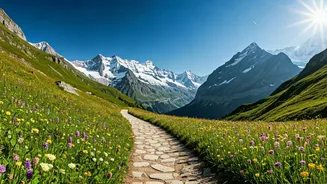
To further appreciate the Alpine scenery, the author chose to hike down the mountain rather than return via the gondola. The steep trails of the Centovalli, originally designed for shepherds and their mules, presented a challenging trek for hikers with backpacks. During the descent, the author encountered mushroom foragers who proudly displayed their finds – large, yellowish boletes, some the size of grapefruits. By this point, heavy rain had begun, and upon reaching the railroad 90 minutes later, the author was thoroughly soaked, feeling unsteady, and eager for a warm meal and respite.
Intragna's Culinary Stop
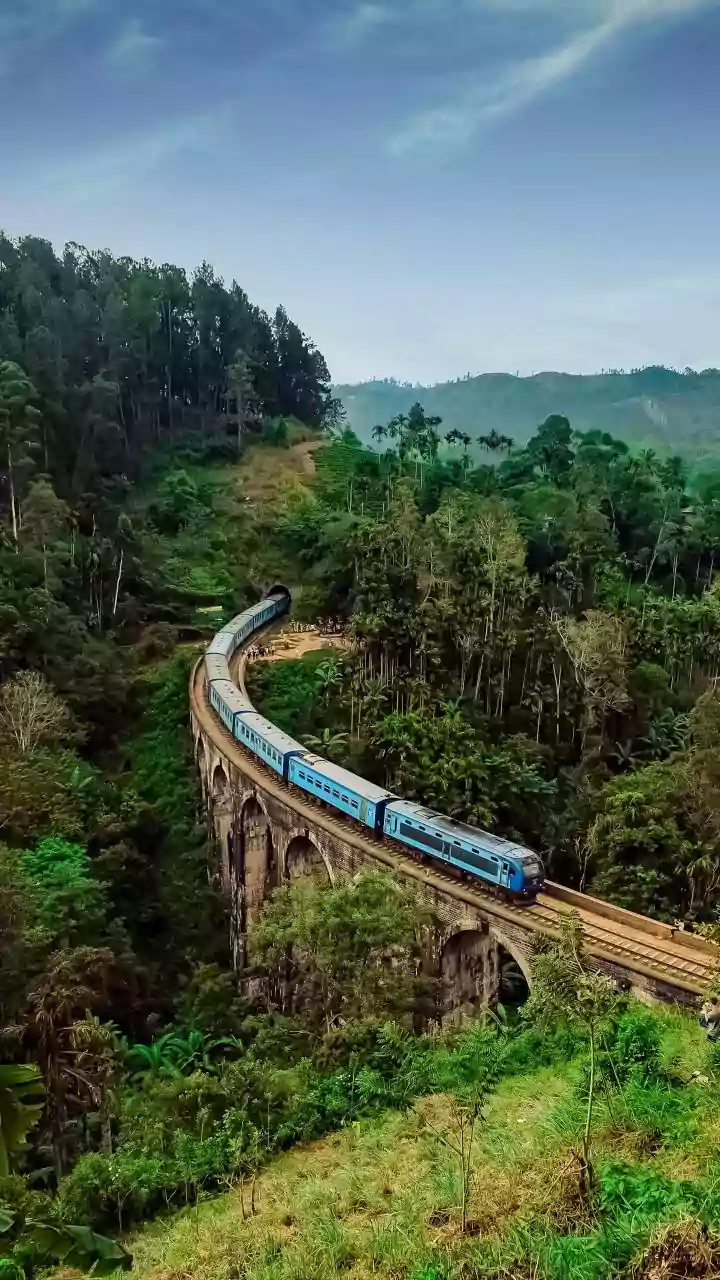
Fortunately, a welcome meal awaited at the next stop: Intragna. This village, situated at the convergence of the Melezza and Isnoro Rivers, is distinguished by its church tower and an impressive 262-foot-high viaduct. Notably, the French high-wire artist Philippe Petit found this gorge so dramatic that he performed a tightrope walk across it in 1980. Across from the station, the author found a restaurant where they savored a tasting menu featuring venison, lake perch, Alpine cheeses, and freshly gathered mushrooms. Conveniently located above the restaurant was an inn, providing comfortable lodging. After a satisfying dinner, the author retired to their cozy room upstairs, ready to rest after a day of exploration and challenging hikes.
Locarno Arrival and Fun
The following morning, a modern Swiss-made Stadler train arrived punctually at the platform. Although the final 1.5 miles of the track lay within a tunnel, emerging at Locarno's end-of-the-line station revealed brilliant sunshine. Locarno, with its promenade along Lake Maggiore lined with Chusan palm trees, presents itself as the most Mediterranean of Swiss cities. To conclude the journey, a lemon gelato was purchased, and the author found a bench to observe the leisurely pace of people strolling along the lakefront. The accommodation for the night was at a hillside property within a 15th-century aristocratic manor. While trying to figure out transportation to the hotel, a sign for a funicular caught their eye. The backpack was placed into a boxy blue cable car, a wonderfully vintage conveyance reminiscent of a Wes Anderson film, and was smoothly pulled uphill by the straining cables of the incline railway, providing a perfect, charming conclusion to the trip.