






The Grid's Core Function
Electricity powers our modern world, and the sun offers an abundant, clean source for its generation. Photovoltaic cells, commonly known as solar panels,
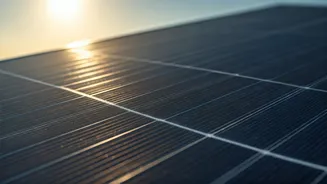
are ingeniously designed to capture this solar energy and transform it into electricity. A common question for those considering solar installation is the significance of the white grid lines visible on the panel's surface. Far from being mere decoration, these lines play an indispensable role in the entire energy conversion process. They are an integral part of the panel's design, facilitating the transfer of harvested solar energy to your home's electrical system. Understanding their purpose illuminates how solar technology effectively harnesses the sun's power.
Fingers and Busbars Explained
At the heart of a solar panel lie numerous solar cells, typically constructed from thin silicon wafers. These silicon sheets are embedded with elements like boron and phosphorus, and sandwiched between conductive materials. On the surface of these cells, a network of grid lines exists, distinguished by their thickness. These are known as 'fingers' and 'busbars.' The thinner lines are the fingers, acting as microscopic pathways for electrons to flow. Electrons, energized by sunlight hitting the silicon, move through these fingers. Subsequently, these electrons reach the thicker grid lines, the busbars, which are responsible for collecting the gathered electrical current. This entire grid system is fundamental to the photovoltaic effect, enabling the energy generated by sunlight to be efficiently channeled.
From DC to AC Power
When sunlight strikes the silicon within a solar cell, photons are absorbed, triggering the photovoltaic effect and producing energy as direct current (DC). This generated DC electricity then travels along the solar cell's grid lines. The thin 'fingers' guide the electrons, and the thicker 'busbars' aggregate this current. The collected energy is then transmitted to an inverter. The inverter's critical task is to convert this DC electricity into alternating current (AC), which is the standard form of electricity used in most homes and compatible with everyday appliances. Without these grid lines, the captured solar energy would remain in its raw, unusable DC form, unable to power the devices we rely on daily. It's important to note that what might appear as thicker lines are often simply the gaps between individual solar cells within the panel.