






Gypsum False Ceiling: An Overview
Gypsum false ceilings have emerged as a highly popular choice for contemporary Indian homes, offering a blend of style and functionality. These ceilings are
constructed using gypsum boards, which are known for their versatility and ease of installation. They provide an excellent canvas for various aesthetic treatments, allowing homeowners to infuse their personal style into their living spaces. Beyond just aesthetics, gypsum false ceilings offer practical benefits such as improved acoustics and fire resistance. While they are a favored material over traditional Plaster of Paris (POP) for many modern applications due to their consistency and finish, understanding their advantages and potential drawbacks is crucial for making an informed decision. The ease with which they can be shaped and integrated with lighting solutions makes them a cornerstone of modern interior design, promising to be a significant trend in 2026.
Advantages & Disadvantages
Opting for a gypsum false ceiling presents a range of compelling advantages. They are notably cost-effective and remarkably easy to install, making them an accessible choice for many homeowners. Their inherent fire-resistant properties add a crucial layer of safety to any dwelling. Furthermore, gypsum boards offer superior sound insulation, helping to create quieter and more private interiors. However, there are also certain considerations. Their durability can be a concern, as they are susceptible to damage. Applying them to curved surfaces can also be challenging. When it comes to maintenance and repairs, replacing a section often means addressing a larger area rather than just a single board. While generally considered more expensive than POP due to potential wastage from standard board sizes, their aesthetic and functional benefits often outweigh these considerations for many.
Installation Reality Checklist
Ensuring a successful gypsum false ceiling installation requires meticulous planning and adherence to a practical checklist to preempt common issues. Before commencing, thorough preparation of the existing ceiling is paramount. This includes meticulously inspecting for any signs of water leakage, damp spots, or crumbling plaster, as moisture can severely compromise gypsum boards. The electrical wiring must be fully complete, and the precise locations for all light fixtures and air conditioning vents confirmed. Crucially, one must verify the available vertical clearance, understanding that the false ceiling system will typically reduce the room's height by 4 to 8 inches. During the installation process, attention must be paid to the quality of materials, such as ensuring metal frames are robust and screws are rust-proof, and that frame spacing, alignment, and joint finishing are executed with precision. This proactive approach helps mitigate future problems like cracks, sagging, or moisture damage, saving on costly repairs.
Top 25+ Gypsum Design Ideas
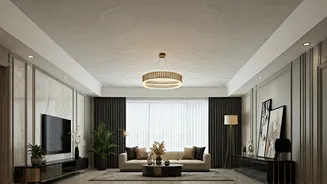
The array of design possibilities for gypsum false ceilings is vast, catering to diverse aesthetic preferences. For those who appreciate understated elegance, coffered designs, featuring recessed panels arranged in geometric patterns like squares or rectangles, offer timeless appeal. Incorporating LED lighting into any design is a modern staple, allowing for customizable mood lighting in various shapes and colors. Vibrant multi-color and multi-shaped designs can inject energy into a room, particularly ideal for children's spaces. Circular motifs, whether as standalone elements or part of a larger pattern, add structural beauty. Troffer lighting, with its professional, grid-like rectangular fixtures, lends a sophisticated touch to hallways or home offices. Traditional floral motifs, adapted for modern appeal, can be painted in various hues to evoke different moods. Symmetrical patterns are excellent for larger spaces, creating a visually balanced and elegant look. For a minimalist approach, subtle wavy patterns provide a contemporary and eye-catching effect. Intricate geometric patterns, such as squares within squares, create a 'wow' factor. Simple line and light combinations offer a cozy, homey feel. For a grander statement, combining intricate patterns with chandeliers adds a royal ambiance. Unique designs like wavy nest patterns or semi-circles can offer distinct visual interest. Even simple sunken designs with perimeter lighting can give a small room a modern, spacious feel. Modern chandeliers and abstract patterns, incorporating curves and lights, create dramatic and artistic ceilings. Neon lights can add a vibrant, futuristic touch. The concept of a 'continuum' ceiling, where the design extends seamlessly into other areas, creates an illusion of larger space. Futuristic designs with light strips and sophisticated halogen spotlights offer cutting-edge aesthetics. For a celestial ambiance, the 'Night Sky' design, featuring embedded LED lights mimicking stars, is particularly enchanting for bedrooms. Incorporating mirrors can enhance the sense of space and add glamour, especially when paired with a chandelier. A blend of wood and gypsum offers a natural, sophisticated feel that complements various decor styles. Wavy designs provide a captivating 3D effect suitable for contemporary homes. Finally, intricate patterns, whether floral or geometric, carved into metal or wood, add unparalleled beauty and depth.
Choosing the Right Design
Selecting the ideal gypsum false ceiling design involves careful consideration of several key factors to ensure it complements your home's overall aesthetic and functional requirements. The size and height of the room are primary determinants; lighter colors and simpler patterns tend to make smaller rooms feel more expansive, while larger spaces can accommodate more elaborate designs. The intended purpose of the room also plays a crucial role; a bedroom might benefit from calming, softer lighting and patterns, whereas a living room or entertainment area could accommodate more dramatic or vibrant designs. The existing decor and color palette of the space should be considered to ensure the false ceiling integrates harmoniously. For instance, traditional homes might lean towards classic white or grey, while modern interiors can embrace bolder colors like blue or red. Lighting is another critical element; the type, placement, and intensity of lights (such as cove lighting, recessed lighting, LED strips, or chandeliers) can significantly impact the mood and visual appeal of the room and should be planned in conjunction with the ceiling design. Budget constraints are also a practical consideration, as more complex designs or the inclusion of premium lighting might increase the overall cost. Ultimately, the best design will be one that balances aesthetic appeal with practical functionality and personal preference.
Maintenance and Longevity
To ensure your gypsum false ceiling remains a beautiful and functional element of your home for years to come, regular maintenance is essential. Routine cleaning, including dusting and wiping down surfaces, helps prevent the accumulation of grime and dust, which can dull the finish over time. It is crucial to address any minor cracks or damages promptly, as these can worsen and lead to more extensive repair needs. When cleaning, it's advisable to avoid using excessive water, as gypsum is susceptible to moisture damage. For more significant issues or if water leakage occurs, immediate professional attention is required. Custom-designed and high-quality gypsum false ceilings, when properly maintained under normal conditions, can last for over two decades. However, their lifespan can be significantly reduced if exposed to harsh environments, such as constant dampness or structural stress. Therefore, addressing potential problems like moisture buildup or structural integrity issues early on is key to preserving the longevity and appearance of your false ceiling.