


The Dravidian Duopoly
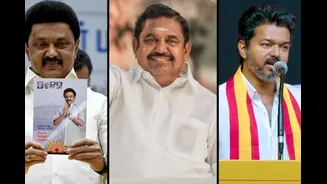
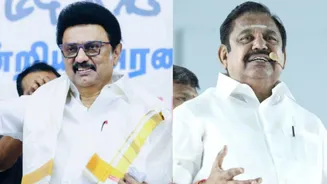
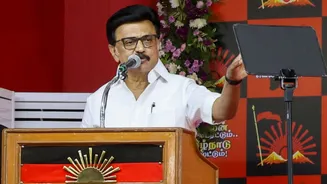
Tamil Nadu's political narrative has long been dominated by two formidable Dravidian parties: the DMK and AIADMK. The DMK, established in 1949 by C.N.
Annadurai, emerged as a powerful counter-force to the Congress, championing social justice, secularism, and Tamil pride. Its subsequent offshoot, the AIADMK, was founded in 1972 by the iconic actor M.G. Ramachandran following a significant rift with the DMK. Since 1967, these two parties have largely dictated the state's governance, leveraging welfare programs, developmental initiatives, and a profound connection with Tamil identity to maintain their stronghold, leaving little room for alternative political forces to gain substantial traction and often engaging in fierce, yet predictable, rivalries.
MGR's Blueprint for Power
M.G. Ramachandran's foray into politics and the subsequent launch of the AIADMK in 1972 was more than just a political manoeuvre; it was a carefully crafted ideological strategy. Rooted in the principles of 'Annaism,' as envisioned by C.N. Annadurai, the AIADMK advocated for social justice, secular ideals, rationalism, and a socialist outlook, all while upholding national unity. MGR's vision extended to fostering a classless and casteless society, emphasizing individual dignity, justice across caste lines, and a blend of Tamil cultural pride with humanistic values. The party's platform promoted inclusivity and equal opportunities, resonating with a broad spectrum of society and laying the groundwork for its enduring influence by successfully merging cinematic charisma with a compelling political ideology.
Vijay's TVK Emergence
In 2024, a new political force emerged with the launch of Tamilaga Vettri Kazhagam (TVK) by celebrated actor Vijay. This move signifies a direct challenge to the long-standing dominance of the DMK and AIADMK. TVK is positioning itself as a fresh alternative by capitalizing on widespread sentiment against corruption and dynastic politics, which have become hallmarks of the established parties. Vijay's campaign consciously invokes and honors foundational figures of Tamil Nadu's political and social reform movements, including Periyar and Ambedkar, alongside other cultural icons. This approach aims to craft an inclusive political narrative, questioning the established discourse of the Dravidian parties while seeking to redefine Tamil cultural identity and offer a distinct vision for governance, drawing heavily on his immense popularity and a dedicated fanbase.
Stardom and Political Timing
MGR's electoral success in 1977, where the AIADMK secured over 30% of the vote and more than 130 seats, was significantly propelled by a fragmented political landscape and anti-incumbency sentiment, proving that star power could translate into tangible political victories. Today, Vijay is leveraging a similar dynamic, appealing to a vast and dedicated fanbase, particularly among the youth, amidst growing disillusionment with existing political structures due to welfare fatigue and corruption allegations. While pre-poll surveys suggest TVK could capture 9-15% of the vote, projecting a substantial number of seats, the established DMK alliances are projected to hold a commanding 40-45% share. Both MGR and Vijay share the ability to disrupt established political duopolies through a potent combination of charisma, nuanced ideological positioning, and strategic timing.