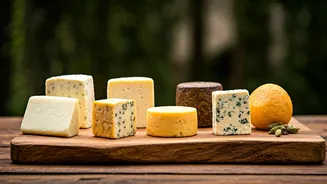

Beyond Paneer: A Journey
India's cheese scene offers a lot more than just the ubiquitous paneer. This exploration ventures into a realm of regional cheeses, each holding its own
unique narrative, with influences ranging from Tibetan traditions to Portuguese legacies. These cheeses, born from necessity and nurtured by generations, stand as testaments to the ingenuity of local communities and their methods of preserving milk. These cheeses are not widely available in commercial markets; therefore, they remain a well-kept secret within specific geographical areas. These cheeses reflect the diverse culinary landscape of India, from the high altitudes of the Himalayas to the coastal regions. This article will help you discover the hidden gems of Indian cheese culture, giving you a wider appreciation of this significant aspect of Indian cuisine.
Kashmir's Kalari: Mozzarella
Kalari, often likened to the mozzarella of Kashmir, provides an approachable starting point in the world of unique Indian cheeses. This cheese originates from the Dogra community within the Udhampur district of Jammu and Kashmir. Produced from cow, buffalo, or sometimes goat milk, Kalari offers a stretchy and gooey texture, making it a versatile ingredient. When fried, Kalari transforms, developing a golden, crispy exterior while retaining a soft, melted interior. Its taste profile is characterized by a slightly salty, mild, and milky flavor, which intensifies with frying, becoming richer and almost buttery. Commonly enjoyed as a street food, Kalari Kulcha showcases fried Kalari stuffed into kulcha bread, complemented by chutney. Moreover, it can be used in a kalari sandwich with tamarind chutney, eaten plain with salt and chili powder after frying, incorporated into burgers, or added to a spiced yogurt gravy known as kalari da saloona. Beyond its delightful taste, Kalari also provides several health benefits, including being high in protein and calcium, rich in healthy fats, containing vitamin B12, and being easier to digest due to the fermentation process.
Himalayan Chhurpi's Endurance
Chhurpi, a cheese with a remarkable ability to endure, stands as a testament to Himalayan ingenuity. This cheese is not just known for its unique flavor profile, but also for its exceptionally long shelf life, capable of lasting for up to 20 years. This longevity allowed it to be a key source of nutrition for people in remote, mountainous regions, where access to fresh food was often limited. Produced using the milk of yaks or cows, Chhurpi undergoes a specific process to achieve its preservation properties. The cheese is traditionally made by boiling the milk, then separating the curds and whey. The curds are then compressed and dried, forming hard, yellowish blocks. This drying process is what helps Chhurpi to withstand extreme conditions, allowing it to remain edible for extended periods. As a result, this cheese has become a staple in many Himalayan cultures and a key element of their culinary practices. Its ability to last for years makes it an invaluable food source for people who live in isolated areas. The cheese also plays an important role in cultural ceremonies and rituals.
Bandel's Portuguese Influence
Bandel cheese, representing a unique blend of cultures, carries the legacy of Portuguese influence in Bengal. This cheese, arriving in India during the colonial era, stands out from other Indian varieties due to its distinct production methods and flavor profile. Bandel cheese is typically made with cow's milk and is often smoked, which gives it a complex, smoky flavor. The cheese is produced using a specific method, which includes curdling the milk, pressing the curds, and then either drying or smoking them. These methods, brought by the Portuguese, reflect their cheesemaking traditions and have been adapted to suit local resources and tastes. This blend of techniques has resulted in a cheese that is unique to the Indian landscape. Today, Bandel cheese continues to be produced in Bengal and is enjoyed for its distinctive taste. Its production is a testament to the lasting impact of cultural exchange and the adaptability of culinary traditions.
Kalimpong Gouda's Flavors
Kalimpong cheese stands as the Indian equivalent of Gouda. Located in the picturesque hills of West Bengal, this cheese offers a rich, smooth flavor profile. This cheese is made using methods inspired by Dutch Gouda-making traditions, having been introduced during colonial times, then adapted to use local resources and processes. The resulting cheese, crafted from cow's milk, is characterized by its semi-hard texture and mild, slightly nutty flavor. The making of Kalimpong cheese is a labor-intensive process that involves several stages, including curdling the milk, pressing the curds, and aging the cheese. The aging process is a key step, allowing the flavors to develop and deepen over time. Kalimpong cheese has grown to be a staple in the local cuisine, often enjoyed on its own or used in various dishes. The cheese's success showcases the integration of foreign influences into Indian culinary practices, creating a unique product that showcases the region's cultural richness. The local community takes immense pride in their cheese-making traditions and continues to preserve this unique art form.
Parsi Topli na Paneer
Topli na Paneer presents a unique Parsi take on the more well-known paneer, showcasing another variation within Indian cheese. This creamy cheese, a staple in Parsi cuisine, is made using cow's milk and boasts a soft, slightly tangy flavor. The production of Topli na Paneer involves a unique process, which includes adding a curdling agent to the milk, separating the curds, and then shaping the cheese. This cheese has been passed down through generations, making it a cultural element of the Parsi community. The cheese is versatile in its uses, often featured in traditional dishes or consumed on its own. Topli na Paneer reflects the Parsi community's distinct cultural identity and culinary heritage. This cheese is not widely available outside of Parsi communities, adding to its exclusivity and cultural value. The taste and texture of this cheese, coupled with its cultural significance, offers a unique opportunity to explore the diverse cheese-making practices throughout India.
Qudam: Kashmir's Gem
Qudam, a rare cheese from the valleys of Kashmir, is one of the more elusive items in this collection. The cheese is produced by the nomadic communities in the region. The methods used to create this cheese are rooted in age-old traditions, reflecting the resourceful spirit of the local community. The flavors and textures of Qudam are a reflection of the varied environments in which it is made. This cheese is typically produced in limited quantities, often within family units, and is rarely found outside of the immediate geographical area. The Qudam cheese is usually made from cow's milk. Qudam embodies the unique characteristics of its place of origin, revealing a deep connection between food production and the environment. This cheese is not simply food, but also a symbol of tradition and cultural heritage, representing the skills and customs passed down through generations. Finding and tasting this cheese is a rare experience. This cheese is a valuable reminder of the diverse and sometimes-hidden culinary treasures that India has to offer.