




Aurora Activity Outlook
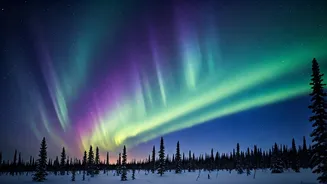
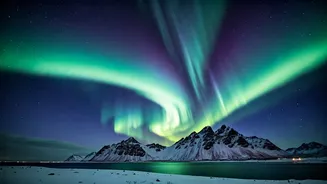
The night sky will largely remain tranquil with occasional glimpses of aurora activity, primarily confined to higher latitudes. While significant geomagnetic
storms are not anticipated in the immediate forecast, subtle shifts in solar wind conditions could present fleeting opportunities for aurora sightings, especially in northern regions. Observers should remain vigilant as minor storming is a possibility, particularly during the weekend. The ebb and flow of solar winds and coronal hole activity are key indicators to watch for any potential enhancements in aurora displays.
Geomagnetic Storm Watch
Currently, major geomagnetic storming is not on the horizon, meaning widespread auroral displays reaching mid-latitudes are unlikely. However, the space weather landscape is dynamic. Minor geomagnetic storm potential exists, which could lead to a more active aurora for those situated at higher latitudes. The influence of fast solar wind streams, originating from coronal holes, plays a crucial role in these minor events. While a powerful G4 or G3 storm is not predicted, even a G1 or G2 level event can offer a delightful show for dedicated aurora chasers in the right locations. It's advisable to monitor space weather updates for any sudden changes.
Solar Wind Influence
The speed and density of the solar wind are paramount in determining aurora visibility. When Earth encounters fast solar wind streams, particularly those emanating from coronal holes, geomagnetic activity can increase. This heightened activity fuels the spectacular light shows we associate with auroras. Even when major coronal mass ejections (CMEs) are not directed at Earth, persistent fast solar winds can maintain a baseline level of aurora potential, predominantly at high latitudes. Future forecasts will closely monitor the solar wind's trajectory and speed for any indications of an uptick in geomagnetic disturbance.
Coronal Holes and CMEs
The sun's activity, specifically the presence of coronal holes and coronal mass ejections (CMEs), directly impacts aurora forecasts. Earth-directed CMEs can trigger significant geomagnetic storms, capable of pushing auroras far from their usual polar haunts. Coronal holes, on the other hand, are regions of lower density solar atmosphere where solar wind particles can escape at higher speeds. An Earth-facing coronal hole can lead to sustained periods of minor to moderate geomagnetic activity. While no significant CMEs are currently anticipated to directly impact Earth, the monitoring of coronal hole evolution remains a critical aspect of predicting aurora appearances.
Weekend Aurora Prospects
Looking ahead to the weekend, the aurora forecast suggests a period of relatively quiet geomagnetic conditions. While a significant aurora display is not strongly predicted, there remains a slim chance of minor activity, particularly during the later part of the weekend. This potential glimmer of aurora activity is dependent on subtle shifts in solar wind speed and any unexpected coronal hole enhancements. Aurora chasers in northern regions will have the best opportunity to witness any such displays. It's a good time to keep an eye on the skies, especially during the darker hours, for any unexpected celestial performances.