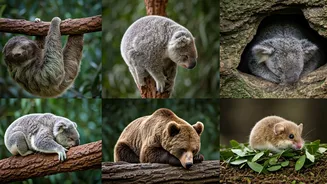








Sloths: Masters of Downtime
Sloths are famous for their slow movements, and their sleeping habits are no exception. These arboreal mammals spend a staggering 14-16 hours a day sleeping.
Their diet, primarily consisting of low-energy leaves, contributes to their slow metabolism. This, in turn, influences their need for extended periods of rest. The sloth’s lifestyle revolves around conserving energy. They conserve energy by moving very little and only venturing from their perch to find food. This adaptation enables them to survive on a diet that provides minimal sustenance. Sloths also have specialized adaptations that allow them to sleep comfortably in trees, including strong claws for gripping branches. Their camouflaged fur offers protection from predators, allowing them to sleep in relative safety.
Koalas: Eucalyptus Naptime
Koalas, primarily found in Australia, are synonymous with sleep, typically sleeping for about 20 hours daily. Their sleep is directly connected to their diet of eucalyptus leaves. These leaves are tough to digest and are low in nutritional value. The digestion process of eucalyptus leaves requires an extended period, which drains their energy levels. To conserve energy, koalas spend most of their time resting. Their digestive system is specifically adapted to break down the eucalyptus leaves, but it still requires a lot of energy. Koalas also have unique adaptations like a low metabolic rate and a sedentary lifestyle, enabling them to sleep for extended periods. This is an essential survival strategy given their food source.
Owls: Nocturnal Nappers
Owls, famed for their nocturnal habits, spend a significant amount of time sleeping during the day. Their daily sleep duration varies depending on the species and environment, but on average, owls sleep around 10-12 hours per day. Since they are nocturnal hunters, owls have evolved to sleep during the day to conserve energy and avoid the intense daylight. Owls have specialized adaptations that make them expert hunters at night, including exceptional eyesight and hearing. The sleep is critical for their survival, allowing them to be alert and ready for hunting as dusk sets in. Their daytime sleep protects them from the dangers of the day while also allowing them to recuperate from their nightly activities.
Lions: King-Sized Snoozes
Lions, the kings of the savanna, are known for their long sleeping hours, typically sleeping between 18-20 hours a day. Lions must conserve their energy. Their hunting style, which involves bursts of intense activity followed by periods of rest, is a major factor in their sleep needs. They spend the majority of their time resting, which helps them recuperate from their hunting activities. They also sleep to conserve energy and avoid the heat of the day. The social structure of lion prides also plays a role in their sleep patterns. While some lions are awake and on guard, the others sleep. This ensures the pride’s safety and allows the other members to rest after a hunt.
Bats: Nighttime Sleepers
Bats are another group of animals known for their extensive sleeping habits, often sleeping up to 20 hours a day. Like owls, their sleep patterns are determined by their nocturnal behavior. Bats have a high metabolic rate, and sleep helps them conserve energy after their nighttime activities. Bats have specialized adaptations, like the ability to hang upside down, which allows them to sleep in various places. Their sleep also provides a critical opportunity for them to digest the insects or fruits they eat. The amount of sleep depends on various factors, including the type of bat and their environment. Their daytime sleep contributes to their nocturnal lifestyle and survival.