






Craftsmanship's Climate Control
Modern architectural endeavors across India are witnessing a remarkable revival of traditional craft, extending far beyond mere decorative applications.
Architects are now skillfully integrating these ancient techniques into the very fabric of building design, particularly for passive climate control. This approach leverages centuries-old wisdom embedded in practices like intricate stone masonry, the use of terracotta ornamentation, and the clever design of ventilated jali screens. These structures are emerging as vibrant testaments to local knowledge, demonstrating that time-honored craftsmanship is pivotal for developing urban environments that are both sustainable and perfectly attuned to their specific locations. The result is a new generation of buildings that are not only visually captivating but also inherently performative in their environmental response, proving that tradition holds potent solutions for contemporary challenges.
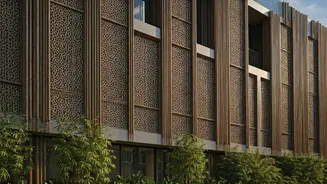
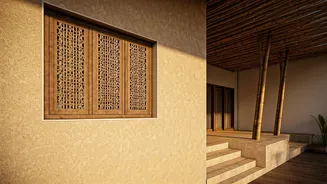
Jali: Breathable Facades
The iconic jali screens, a hallmark of Mughal and Rajput architectural traditions, historically served a dual purpose: to beautifully filter harsh sunlight while simultaneously facilitating natural air circulation. Today's architects are reinterpreting these intricate patterns, crafting them from materials like modern concrete and metal, alongside traditional stone. These re-imagined jali facades are instrumental in creating buildings that are remarkably energy-efficient, maintaining comfortable internal temperatures while preserving occupant privacy. This application showcases how a design element from the past can be ingeniously adapted to meet contemporary needs for sustainability and passive cooling, reducing reliance on artificial climate control systems and contributing to a more comfortable living or working environment.
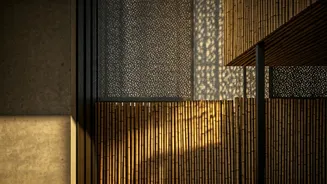
Bamboo: Eco-Friendly Structure
Drawing inspiration from the rich legacy of bamboo craftsmanship in India's northeastern regions, architects are increasingly incorporating this versatile material into sustainable modern designs. Bamboo's inherent qualities—its lightness, rapid renewability, and impressive durability—make it an ideal choice for structural frameworks, elegant facade elements, and robust roofing systems. Its adoption not only champions eco-friendly construction practices but also connects contemporary buildings to a long-standing vernacular building tradition, offering a compelling alternative to conventional materials and promoting a more environmentally conscious approach to building.
Brickwork's Artistic Touch
The art of traditional brick craftsmanship has profoundly influenced several noteworthy modern architectural projects, with the innovative work of architect Laurie Baker standing as a prime example. His distinctive approach to brick patterns and the emphasis on exposed masonry techniques vividly illustrate how fundamental craft practices can yield structures that are not only aesthetically pleasing but also remarkably responsive to climate. This method celebrates the inherent beauty and thermal properties of brick, showcasing a direct link between simple, hands-on craft and the creation of comfortable, climate-aware buildings that resonate with a sense of place.
Lime Plaster: Healthy Walls
Historically, traditional Indian construction frequently utilized lime plaster, a material celebrated for its ability to allow walls to 'breathe' and effectively regulate indoor humidity levels. Contemporary architects are actively rediscovering and reviving this natural building material. Its resurgence is driven by a desire to foster healthier indoor environments, free from the potential issues associated with synthetic materials, and to implement more sustainable construction methodologies. The use of lime plaster contributes to buildings that are not only more ecologically sound but also provide superior occupant comfort and well-being through natural moisture management.
Stone Carving's Detail
India's profound heritage of intricate stone carving, exemplified by masterpieces like the Rani ki Vav stepwell, continues to inspire and inform contemporary architectural detailing. Modern architects are integrating this ancient artistry by employing carved stone panels and textured surfaces. These elements introduce a rich sense of depth, texture, and artisanal craftsmanship to current structures. The meticulous work of stone carving not only enhances the visual appeal of buildings but also pays homage to India's rich sculptural traditions, adding a unique layer of cultural narrative and sophisticated detail to the modern built environment.
Terracotta: Earthy Facades
The ancient craft of terracotta pottery has provided a powerful muse for contemporary architectural facades. Today, terracotta tiles and panels are being integrated into modern buildings, offering both excellent insulation properties and a distinctive, earthy aesthetic. This is particularly evident in regions like Kolkata, where the enduring traditions of terracotta temple architecture continue to exert a significant influence on modern design sensibilities. The use of terracotta connects new constructions to a timeless material palette, imbuing them with warmth, character, and a deep-rooted cultural identity.