





Essential Ingredients Gathering
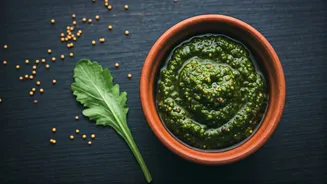
To craft the quintessential Bihari sarso ki chutney, a few core ingredients form its robust foundation. You'll need about two tablespoons of yellow mustard
seeds, often referred to as 'sarso', which provide the signature pungent kick. Complementing this are four to five cloves of garlic, lending their aromatic depth, and two green chillies, introducing a welcome heat. For those who enjoy a subtle sweetness and a bit of texture, a small onion can be finely chopped and added. Crucially, one tablespoon of fresh lemon juice is essential for balancing the sharp flavors, along with salt adjusted to your personal taste. A small amount of water, typically two to three tablespoons, is needed to achieve the right consistency, and a tablespoon of mustard oil (sarso ka tel) is reserved for the finishing touch, a flavorful 'tadka'. These components, when brought together correctly, promise an unforgettable condiment.
The Soaking Ritual
The initial step in preparing authentic Bihari sarso ki chutney involves a crucial soaking period for the mustard seeds. Take your two tablespoons of yellow mustard seeds and place them in a small bowl. Cover them with enough water to fully submerge the seeds. Allow them to soak for approximately 30 minutes. This duration is key; it softens the seeds, making them easier to grind into a smooth paste. More importantly, soaking helps to mellow their intense, sharp bitterness, ensuring the final chutney is potent but pleasantly palatable, rather than overwhelmingly harsh. Once the soaking time is complete, the seeds will be noticeably plumper and less rigid, ready for the next stage of transformation.
Grinding the Base
Following the essential soaking period, the next vital phase is the grinding of the softened mustard seeds. After draining away the soaking water thoroughly, combine the mustard seeds in a grinding vessel. Add the peeled garlic cloves and the green chillies to the same vessel. Begin grinding, aiming for a paste that is slightly coarse rather than entirely smooth. A small addition of water, just a tablespoon or two, may be necessary during this process to aid in achieving the desired thick yet smooth consistency. The goal is a vibrant, pungent paste that isn't too runny, maintaining a substantial body that will hold its own when served alongside other dishes.
Flavor Augmentation
Once the primary paste of mustard seeds, garlic, and chillies is prepared, it's time to introduce elements that enhance its complexity and character. If you opt to include onion, ensure it is very finely chopped before mixing it into the paste. This addition brings a subtle crunch and a delicate sweetness that beautifully complements the pungency of the mustard. Following this, season the mixture with salt to taste. For a touch of acidity and brightness, add one tablespoon of lemon juice. Alternatively, a bit of raw mango pulp can be used for a similar tang. Lightly blend these additions into the paste, ensuring they are well incorporated without overmixing, which could alter the desired texture.
The Finishing Tadka
The final, defining step in creating the authentic Bihari sarso ki chutney is the preparation of the 'tadka', or tempering. In a small pan, heat one tablespoon of mustard oil until it just begins to emit smoke. This indicates the oil is hot enough to release its full aroma and flavor. Immediately pour this smoking hot mustard oil directly over the prepared chutney mixture. The hot oil will sizzle and cook some of the raw elements, infusing the entire condiment with its distinctive, pungent fragrance. Give the chutney a good stir to ensure the 'tadka' is evenly distributed. This aromatic infusion is what truly elevates the chutney, making it ready to be served fresh with your favorite meals.