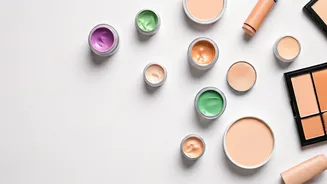

Understanding Color Correction
Color correction is a makeup technique that uses specific hues to counteract skin imperfections. The principle is based on the color wheel: colors opposite
each other cancel each other out. For instance, green neutralizes redness, while peach or orange tones address dark circles, particularly those with a blue or purple undertone. Color correctors come in various forms, including liquids, creams, sticks, and powders, each suitable for different skin types and application preferences. This method allows you to create a perfect canvas before applying foundation or concealer, ensuring a more even and natural-looking finish, especially if you have hyperpigmentation, redness, or dark spots. These products are designed to make your skin look more radiant.
Combatting Redness with Green
Green color correctors are your allies against redness, which can be caused by conditions like rosacea, acne, or general skin sensitivity. Green pigments work by counteracting the red tones, creating a more balanced complexion. When selecting a green corrector, consider your skin tone; lighter skin tones may benefit from lighter green shades, while deeper skin tones can use deeper, more pigmented greens. Application is key: apply a thin layer of the green corrector to the areas with redness, then blend it gently. You can then apply a foundation that matches your skin tone over the corrected area. This helps to neutralize the redness while ensuring your skin tone looks consistent.
Say Goodbye to Dark Circles
Dark circles are a common concern, often appearing under the eyes. Color correctors, especially those with peach or orange undertones, can effectively address these. The color you choose depends on the shade of your dark circles. Peach correctors work best on lighter skin tones with blue or purple undertones, while orange correctors are better suited for medium to deep skin tones. To apply, gently pat a small amount of the corrector under your eyes, then blend with a makeup sponge or your fingers. Use a concealer that matches your skin tone over the corrected areas to achieve a flawless finish.
Addressing Dullness with Lavender
Lavender color correctors can brighten the complexion and counteract sallow or yellow undertones. If your skin appears dull or lacks radiance, a lavender corrector can bring life back to your face. Lavender shades add a touch of brightness and help to even out the skin tone, creating a more luminous appearance. Use it before applying foundation or concealer for a visible improvement. These are especially useful on areas with discoloration and enhance the vibrancy of the skin. Apply a thin layer to the affected areas, and blend gently before applying your foundation.
Choosing the Right Products
The beauty market offers a wide variety of color correctors, and selecting the right one depends on your needs and preferences. Consider the formula: liquid correctors offer buildable coverage, while creams are ideal for drier skin. Sticks are excellent for spot correction, and powders can set your look. Look for products that are easy to blend and long-lasting to ensure you're getting the most out of your purchase. Start with a small amount of product; you can always add more. Consider your skin type when choosing a color corrector, opting for lighter formulas for oily skin and richer formulas for dry skin to avoid enhancing textures.
How to Apply Effectively
The key to successful color correction lies in the application technique. Start with clean, moisturized skin. Apply your color corrector sparingly to the areas you want to address. Then, use a damp makeup sponge or your fingertips to blend the product seamlessly into your skin. Avoid over-applying, as this can make the correction look obvious. After blending, set the corrector with a light layer of translucent powder to ensure it stays in place. Follow up with foundation and concealer as needed. Always remember that the goal is to create a natural, even-toned base before applying the rest of your makeup.