


The Quantum Revolution
The tech world often overuses words like "revolutionary" and "game-changing," but quantum computing might actually warrant such descriptors. This nascent
technology holds the potential to fundamentally alter our world, ushering in an era of unprecedented innovation. Modern finance, for instance, heavily relies on public-key cryptosystems, sophisticated codes that secure everything from online banking to vast financial transactions. These systems are so robust that breaking them with today's computers would take longer than the universe has existed. However, a functional quantum computer could shatter these defenses, factoring the very numbers that make these cryptosystems unbreakable, and potentially compromising financial data in mere hours. Despite the immense promise, a significant hurdle remains: we are still grappling with how to build a truly useful quantum computer, and even if its feasibility is a certainty. Science journalist Adam Becker delves into the complex world of quantum computing, investigating whether it will truly transform medicine, materials science, and cybersecurity, or if the industry is investing heavily in a far-fetched dream.
Unsolved Mysteries Beckon
Beyond the immediate impact of quantum computing, other profound scientific challenges loom, promising to reshape our understanding of the universe and mathematics. One such enigma is the Riemann hypothesis, a complex mathematical conjecture that has eluded proof for a staggering 167 years. So formidable is this problem that even leading mathematicians often steer clear of attempting its solution, despite a substantial million-dollar reward for its resolution. Scientific American staff reporter Joseph Howlett sheds light on why this potentially world-altering problem remains largely untouched, exploring the immense difficulties that deter even the most brilliant minds from tackling it. This pursuit of abstract truth, while seemingly distant, has the potential to unlock breakthroughs in fields ranging from cryptography to fundamental physics, illustrating how unresolved questions can drive scientific progress.
New Era of Lunar Exploration
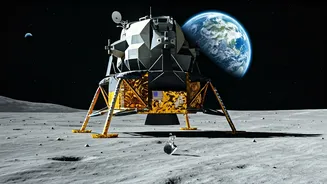
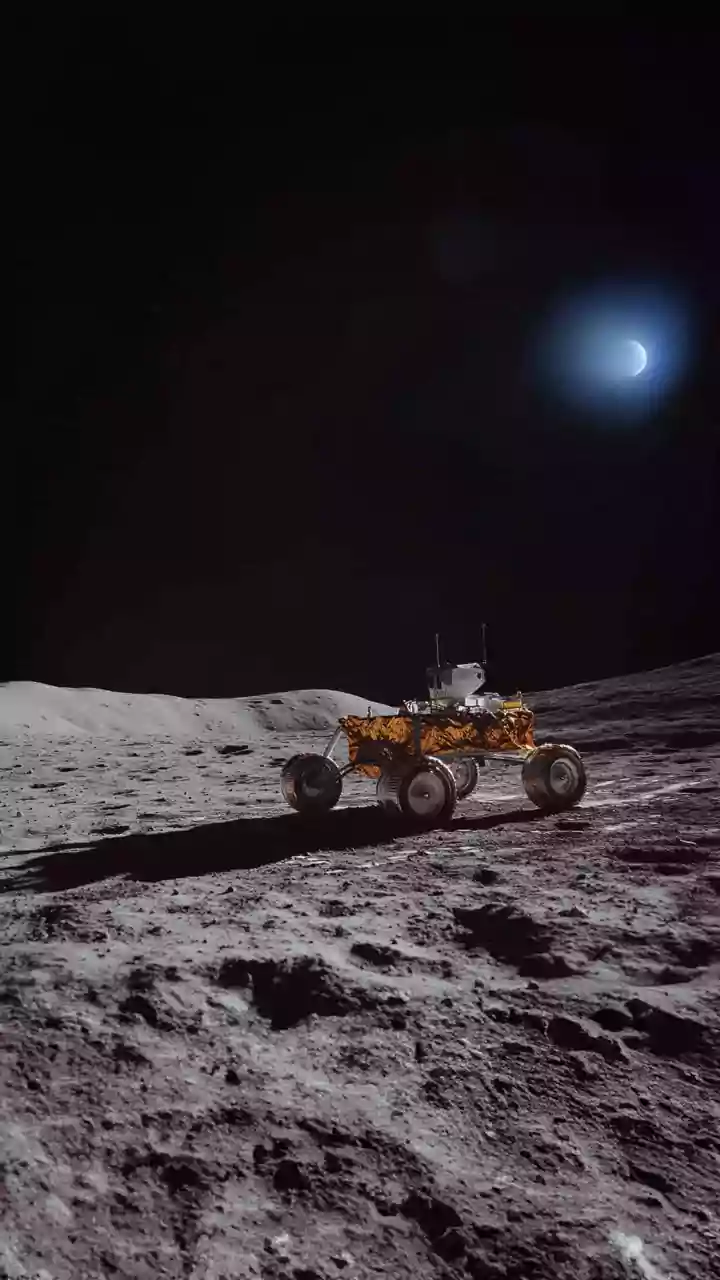
In a remarkable feat of human endeavor, recent events have reignited our ambition for lunar exploration and expanded the horizons of space. Over an intensive 11-day period in April, a significant mission successfully transported humans back to the Moon, reaching distances farther from Earth than ever before. Journalist Nadia Drake details how this triumphant expedition heralds a new epoch in our engagement with the Moon, suggesting a renewed focus on lunar objectives. Furthermore, our own Joe Howlett elaborates on the future implications of these lunar missions, postulating that they will serve as a pivotal catalyst for advancements in astronomy. In a related development, volcanologist and science writer Robin George Andrews explores the intriguing prospect of NASA establishing a fission reactor on the lunar surface within the next five years, explaining the rationale behind this ambitious plan and why it is a practical, rather than fantastical, undertaking.
Echoes of the Roman Empire
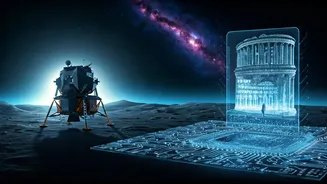
Shifting our gaze from the future to the distant past, an extraordinary digital project is fundamentally altering our comprehension of the Roman Empire. Archaeologist Tom Brughmans guides readers through this innovative mapping initiative, which meticulously reconstructs the vast network of Roman roads. By integrating extensive data, Brughmans and his team have produced the first high-resolution digital map of this ancient infrastructure. The findings reveal that this intricate road system may have spanned an astonishing 300,000 kilometers, facilitating the movement of troops, sustenance, cultural exchanges, and even diseases across a territory comparable in scale to the modern European Union. This endeavor not only illuminates the logistical prowess of the Roman Empire but also demonstrates how contemporary technology can resurrect and clarify our understanding of historical civilizations, offering a tangible connection to our ancient heritage.