





Grandeur Along Andrássy
Budapest's Andrássy Avenue, conceived in 1872, stands as a testament to Hungary's newfound autonomy and ambition. This broad boulevard, rivaling the Champs-Élysées,
was a symbol of political vision and commercial growth, fueled by immigrants who contributed to the city's burgeoning economy and monumental architecture. Today, it's lined with palatial apartment blocks, echoing its past glory. The Drechsler Palace, a magnificent neo-Gothic structure at No. 25, exemplifies this era's opulence. Now home to a luxury hotel, it buzzes with contemporary life, its modern interior a vibrant contrast to the historic facade, incorporating subtle nods to local culture, such as references to ballet dancers and Hungary's chess prowess, while also celebrating its connection to the legendary magician Houdini. The renovation and transformation of such historic buildings into high-end accommodations reflect Budapest's ongoing resurgence and appeal to a discerning clientele.
Ruin Bars and Renaissance
The historic Jewish quarter of Budapest remains a vibrant hub, particularly known for its iconic "ruin bars." These unique establishments emerged in derelict buildings during the late 1990s and early 2000s, offering a space for uninhibited, creative expression and affordable entertainment, reminiscent of New York's Lower East Side in the 1970s. They represented a 'second renaissance' for the city, a period of freedom and artistic vitality. However, the authentic spirit has evolved, with many now catering primarily to tourists, leading to a perception of artificiality. Despite this shift, the legacy of the ruin bars highlights Budapest's capacity for reinvention. For those seeking a more off-the-beaten-path experience, hidden gems like Bar Bizarre and its adjoining restaurant Ensō (now reborn as a new culinary venture with the same chef) offer innovative dining in less-trafficked areas, showcasing the city's evolving gastronomic landscape with surprising and delightful fusion dishes.
Heroes' Square & Városliget's Future
At the end of Andrássy Avenue lies Heroes' Square, a site steeped in Hungarian history, featuring monuments to figures who achieved fame through often challenging victories. The square also holds poignant significance for modern Hungarian history, having hosted a massive rally in 1989 for the reburial of Imre Nagy, a pivotal moment that contributed to Viktor Orbán's rise. Adjacent to the square is Városliget (City Park), which, like the city's historic M1 subway line, dates back to 1896. Once a place of grand celebrations, the park had fallen into disrepair but is now undergoing a significant transformation through the Liget Budapest Project. This ambitious cultural initiative, backed by substantial government investment, aims to create a modern oasis of culture and leisure. It has introduced daring modernist museums, restored historic structures, and introduced charming new playgrounds, signaling a bright future for this expansive green space.
Cultural Hubs Emerge
The Liget Budapest Project has brought forth several striking new cultural institutions. The Museum of Ethnography, with its innovative meadow-topped roof, is a notable addition. The project's crown jewel, however, is the House of Music Hungary, designed by Sou Fujimoto. Its architecture, inspired by light and sound waves, creates a subtly enchanting atmosphere. Inside, visitors can experience a unique 'sound dome,' a musical planetarium offering an immersive auditory and visual journey. This emphasis on music is fitting, given Hungary's rich musical heritage. Budapest is also home to Müpa (Palace of Arts), a modern cultural complex housing the Béla Bartók National Concert Hall, renowned for its exceptional acoustics. The city's classical music scene thrives, with the Hungarian National Philharmonic Orchestra being a world-class ensemble. Beyond large venues, intimate musical experiences can be found in restored historic buildings like the Rumbach Synagogue, which now serves as a multi-functional cultural space.
Echoes of History and Resilience
Budapest's Jewish heritage is profoundly significant, with the city once known as 'Judapest' due to its large Jewish population who integrated deeply into Hungarian society. While they fared better than many during WWII, their history is marked by immense suffering. A powerful reminder is the 'Shoes on the Danube Promenade,' a memorial of 60 pairs of iron shoes honoring victims forced into the river during the winter of 1944-45. The Rumbach Synagogue, a masterpiece designed by Otto Wagner in 1868 with striking Moorish arches, miraculously survived periods of neglect and damage. Following extensive restoration, it reopened in 2021, not only as a place of worship but also as a cultural venue, fostering a new generation's engagement with its heritage and continuing its role in the city's cultural life. The city's resilience is mirrored in the restoration of such significant landmarks.
Riverside Grandeur and Unity
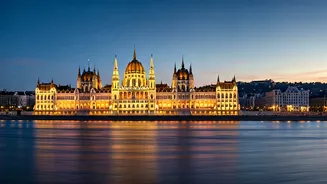
The Four Seasons Hotel Gresham Palace stands as a magnificent example of early 20th-century Art Nouveau architecture, originally built as a grand headquarters. Its intricate leaded glass and wrought iron details have been meticulously preserved and restored. Overlooking the Danube, the hotel offers breathtaking views of the iconic Széchenyi Chain Bridge. This bridge, opened in 1849, was instrumental in uniting the formerly separate cities of Buda and Pest, officially forming Budapest in 1873. The bridge's enduring beauty and engineering prowess are celebrated. Perched above the bridge and the river is the Buda Castle complex, a symbol that embodies Budapest's rich and complex history. Both the castle and the bridge have undergone recent refurbishments, reflecting a city-wide effort to honor and preserve its past while embracing its future, a dynamic that visitors can appreciate without needing to take sides in ongoing cultural dialogues.