






Playful Nips and Trust
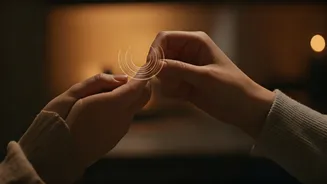
That impulse to playfully nip your partner might seem odd, but it's deeply rooted in our evolutionary past. Psychologists refer to this as 'playful aggression,'
drawing parallels to grooming rituals observed in primates. A 2023 study highlights how social touch, including these gentle bites, stimulates the release of oxytocin and dopamine. These neurochemicals are crucial for forging strong pair bonds and reinforcing affection. When you engage in this type of tactile communication, you're sending a potent, albeit intense, signal of affection and trust in a non-threatening manner. It signifies a profound level of vulnerability, showcasing your most primal self to someone you completely trust, paradoxically leading to reduced stress for both individuals involved. This act is a unique way of communicating deep connection and security within the relationship.
Comfortable 'Realness'
Every long-term relationship eventually reaches a 'Comfort Threshold,' a point where societal niceties give way to genuine authenticity. While politeness is a social norm, love often thrives on 'realness.' When individuals feel comfortable enough to pass gas in front of their partner without significant inhibition, it signifies a low level of self-consciousness. This act demonstrates a deep sense of ease and trust, indicating that you can present your unvarnished, even messy, self without fear of judgment. It's a powerful testament to the security and acceptance found within the relationship, allowing for a more uninhibited and honest connection to flourish.
The 'Baby Voice' Connection
That endearing, high-pitched voice you might adopt when speaking to your partner isn't necessarily about being childish; it's a sophisticated psychological cue designed to elicit a nurturing response. This vocal pattern mirrors 'infant-directed speech' (IDS), where parents naturally raise their vocal pitch to capture an infant's attention, foster emotional connection, and aid language development. Research suggests that in romantic relationships, this similar acoustic mechanism triggers the release of oxytocin and dopamine, mirroring the brain's response to parental care. This vocal shift creates a palpable sense of being cherished and secure for both partners, deepening their emotional bond.
Scent as Security
The urge to deeply inhale your partner's hair or familiar scent is more than just a romantic gesture; it's an evolutionary instinct related to 'scent-guarding.' Building on the work of evolutionary psychologists like Helen Fisher, our biological wiring prompts us to identify and connect with our partner's unique scent. This olfactory engagement serves as a natural sedative, demonstrably lowering cortisol levels, the body's primary stress hormone. When feeling stressed, the brain subconsciously seeks out this specific 'scent profile' to self-regulate and restore equilibrium. It's a primal reassurance, signaling safety and belonging, reinforcing the feeling that your partner is your 'home.'
Clothing as Comfort
Borrowing or 'stealing' your partner's clothing, especially an oversized hoodie, goes far beyond a mere fashion choice. It functions as a 'wearable hug,' providing comfort during periods of separation. The scent of your partner, including their pheromones, lingers on the fabric, offering a tangible sense of their presence and reducing feelings of anxiety. This act is also a subtle, territorial gesture, a subconscious signal that you are keeping them close even when physically apart. Far from being simple theft, this behavior is a highly effective coping mechanism for attachment systems, serving as a form of self-soothing and emotional regulation.