





Optimal Visiting Seasons
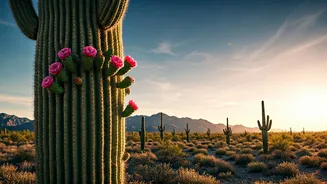
While Saguaro National Park welcomes visitors year-round, the park truly shines during the spring months of April and May. This is when the desert flora
puts on a spectacular show, with a dazzling array of cactus flowers in vibrant hues of magenta, red, white, and yellow, creating a breathtaking spectacle against the arid landscape. The surrounding native trees and wildflowers also join this floral parade, making it a visually stunning period. For those who prefer milder temperatures, the winter months offer pleasant conditions, with average daytime temperatures hovering around the mid-60s Fahrenheit. However, it's advisable to steer clear of July, as this period often coincides with the monsoon season, which can bring unpredictable flash floods to the desert floor. The park experiences its peak visitor numbers from November through March, so if you prefer a more tranquil experience, consider visiting slightly off-peak.
Top Hiking Trails
Saguaro National Park offers a diverse range of hiking experiences catering to all levels. For an easily accessible trek with significant rewards, the Signal Hill Trail in the West District is highly recommended. This short, 0.3-mile trail is famous for its ancient Hohokam petroglyphs, dating back to the 13th century, etched into boulders. Hikers can opt for this short loop or extend their journey on a longer path. Another beginner-friendly option is the Freeman Homestead Nature Trail in the East District, a one-mile loop that educates visitors about the area's history and plant life, featuring an old homestead foundation and a dense saguaro grove. For a moderate challenge, the Sendero Esperanza Trail in the West District allows hikers to ascend to a ridge offering panoramic views or continue towards Wasson Peak, the district's highest point, with trail lengths varying between 3.4 and eight miles. The Cactus Forest Trail in the East District is a relatively flat, 2.5-mile path that cuts through the park. This trail is unique as it's open to hikers, bikers, and horses, and it's the only trail within the Cactus Forest where cycling is permitted.
Engaging Park Activities
Enhance your Saguaro National Park adventure with various activities beyond hiking. Embarking on a guided tour, whether by Jeep, e-bike, or on foot, can significantly enrich your understanding and appreciation of the park's unique ecosystem. Throughout the year, the park service offers free ranger-led programs, including short garden walks, captivating sunset hikes, and more extensive explorations of the cactus forest. For cycling enthusiasts, the scenic Cactus Forest Drive in the East District presents an eight-mile paved, one-way loop with gentle downhill sections, ideal for a leisurely cruise. The West District also boasts the Bajada Loop Drive, a six-mile gravel path suitable for bikers. Witnessing a desert sunset is a quintessential Saguaro experience. Popular vantage points include Javelina Rocks Overlook and Future Generations Overlook, offering spectacular views as the sun dips below the horizon. Following sunset, the park provides an exceptional opportunity for stargazing due to its minimal light pollution. To truly immerse yourself, take a late afternoon or sunset hike among the towering saguaros, capturing the unique desert vistas and flora with your camera.
Accommodations and Dining
While Saguaro National Park itself does not offer lodging or dining facilities, the surrounding Tucson area provides ample options. For a distinctive stay, consider Tucson's historic dude ranches, such as Tanque Verde Ranch near the East District or Red Barn Ranch near the West District, known for their memorable experiences. Traditional hotels like Loews Ventana Canyon Resort and The Ritz-Carlton, Dove Mountain are conveniently located within a short drive. Travelers seeking a rental property, especially those focusing on the East District, might find the Saguaro Springs Casitas appealing; this dog-friendly property features eight furnished villas and casitas and a swimming pool. For camping enthusiasts, the East District offers six wilderness campgrounds requiring a permit and a hike-in for all supplies, with no amenities like showers or running water. RV travelers will need to seek accommodations outside the park, with Tucson KOA and Desert Sands RV Park being recommended options. Culinary delights abound in Tucson, a UNESCO City of Gastronomy. Saguaro Corners, a long-standing establishment since 1956 near the East District, is praised for its great food and inviting patio, especially its carne asada fries. El Charro Café, recognized as Tucson's oldest Mexican restaurant and credited with the invention of the chimichanga, offers a traditional northern Mexican menu with a local twist across its various locations. For a quick breakfast, especially before exploring the West District, Tanias 33 is a popular choice for its Sonoran and vegan Mexican dishes, including various burritos perfect for a meal on the go.
Navigating and Preparation
Saguaro National Park is conveniently accessible via Tucson International Airport (TUS), which hosts seven major airlines and offers direct flights to numerous U.S. cities. Phoenix Sky Harbor International Airport (PHX) is another viable option, approximately a 90-minute drive away. When driving, it is crucial to use specific addresses for navigation rather than relying solely on general map locations. For the Rincon Mountain District (Saguaro East), the address is 3693 S. Old Spanish Trail, Tucson, Arizona 85730, and for the Tucson Mountain District (Saguaro West), it is 2700 N. Kinney Road, Tucson, Arizona 85743. To enter the park, an America the Beautiful Pass, an annual pass, or a standard entrance pass is required; these can be purchased online. Standard passes range from $15 to $25 and are valid for seven days across both districts. Visitors must carry adequate water and food, as there are no concessions within either park section. Familiarizing yourself with the Sonoran Desert's ecological diversity is highly recommended. This 'world's wettest desert' hosts a remarkable array of cacti, including saguaro, cholla, prickly pear, and barrel cacti, as well as the rare cristate saguaro. It's wise to carry tweezers, a large pick comb, and a multitool for removing any stray cactus spines. Keep an eye out for the park's diverse wildlife, such as reptiles, including Gila monsters and various snakes, and over 350 species of birds like hawks, woodpeckers, and quail.