





Spot the Hallmark
The most immediate way to gauge silver's authenticity is by examining it for a hallmark, a tiny stamp indicating its composition. Look for markings like
'999' or '.999' for Fine Silver (99.9% pure), commonly found on investment items like coins and bars. '925' signifies Sterling Silver, the standard for most jewelry, meaning it's 92.5% silver. Older European pieces might bear '900' or '800' marks. Be wary of 'EPNS', which stands for Electroplated Nickel Silver – a clear sign of a base metal with a thin silver coating. These marks are usually subtly placed on the inside of rings, clasps, or the underside of decorative items, serving as your first clue to its genuineness.
The Magnet's Verdict
Silver itself is not magnetic, making a magnet a surprisingly effective tool for detecting fakes. Procure a strong rare-earth magnet, such as a neodymium one, and bring it close to your silver item. If the magnet is attracted to the piece, it's almost certainly not pure silver, likely containing an iron or steel core. For silver bars, a more nuanced test involves tilting the bar at a 45-degree angle and sliding the magnet down its surface. Genuine silver exhibits a unique resistance to the magnet's pull, causing it to descend at a noticeably slower pace due to magnetic field interaction. This 'drag' effect is a telltale sign of authentic silver.
Rapid Ice Melt
Silver possesses an exceptional ability to conduct heat, a characteristic that can be leveraged in a simple test. Place an ice cube directly onto the surface of your silver item, whether it's a coin or a flat piece. Due to silver's superior thermal conductivity, the ice cube will begin to melt almost instantly upon contact, significantly faster than it would on a typical household surface. When you hold the silver object, you'll immediately feel how cold it has become. This rapid heat transfer, causing the ice to melt so quickly, is a strong indicator of the metal's high silver content.
The Resonant Ring
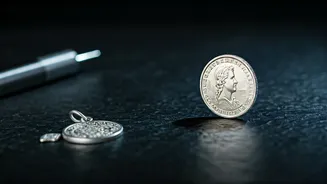
The auditory quality of silver can also reveal its authenticity. Unlike base metals, which produce a dull, flat sound when struck, pure silver possesses a distinct 'ring'. To perform this test, gently balance a silver coin on the tip of your finger and tap it lightly with another coin. A genuine silver piece will emit a clear, high-pitched 'ping' that resonates for a few seconds, much like a small bell. For those interested in a more scientific approach, specialized smartphone applications can even analyze the specific sound frequencies generated by coins to help verify their composition.
Cautious Acid Etching
For an absolutely definitive confirmation, though one that carries a slight risk of damaging the item, the nitric acid test is employed, commonly by professionals. This method involves making a minuscule scratch on an inconspicuous area to expose the metal beneath any plating. A drop of specialized testing acid is then applied. The color change of the acid provides the answer: bright red typically indicates Fine Silver, while a dark crimson suggests Sterling Silver. Brown hues point to 80% silver, but a green reaction signals a base metal or plating. It's crucial to note that for valuable or antique items, this test should be avoided. In such cases, consulting a professional jeweler for advanced testing methods like X-ray scanning is the safest approach.