







The Satellite-to-Phone Revolution
Amazon's significant move to acquire Globalstar, a company renowned for its satellite communication infrastructure, heralds a new era of connectivity.
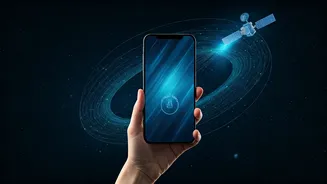
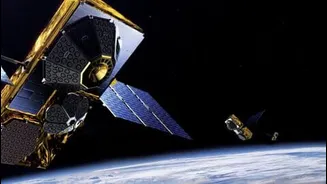
This strategic acquisition is poised to integrate Globalstar's existing network of 24 low-Earth orbit (LEO) satellites with Amazon's own burgeoning fleet. The primary objective is to enable direct-to-device (D2D) satellite services, allowing smartphones and other devices to connect to the internet and make calls even when traditional cellular networks are unavailable. This initiative is a critical step in Amazon's ambition to extend its service reach, especially into areas that are currently lacking reliable communication options. The deal, valued at approximately $11.57 billion, grants Amazon access to Globalstar's established satellite operations, infrastructure, and crucial spectrum licenses, paving the way for the launch of its D2D services anticipated in 2028. This integration promises enhanced speed and reliability, ensuring users remain connected to vital contacts and services, irrespective of their geographical location. Panos Panay, Amazon's senior vice president of devices and services, emphasized the synergy, stating that the combination would yield faster, more dependable service across a wider geographical spread.
Understanding D2D Satellite Services
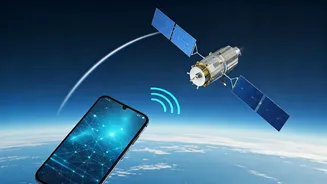
Direct-to-device (D2D) satellite services offer a powerful solution to the limitations of terrestrial mobile networks, which often struggle to provide coverage in remote or challenging terrains like vast oceans, dense forests, or rugged mountains. Unlike conventional mobile systems that rely on ground-based Base Transceiver Stations (BTSs) to process and route signals, D2D networks utilize satellites orbiting the Earth to perform these functions. LEO satellites, positioned between 160 and 2,000 kilometers above the Earth, are particularly well-suited for mobile connectivity due to their proximity, which results in lower latency compared to geostationary satellites. To ensure continuous coverage, these LEO satellites often operate as large constellations. Each LEO satellite is equipped with transmitter and receiver antennas that emit multiple beams, utilizing lower frequency bands (sub-GHz, L-band, and S-band) to cover specific geographical areas, akin to how multiple cell towers enhance ground coverage. When a mobile device experiences a weak or no signal from a terrestrial tower, it can seamlessly connect to a passing LEO satellite. This satellite then relays the signal, either directly or via inter-satellite links, to a ground-based mobile tower, thus establishing the connection and extending communication reach.
Market Growth and Key Players
The direct-to-device (D2D) satellite market is experiencing significant investment, with projections indicating that spending on D2D satellite capacity will reach between $6 billion and $8 billion by 2026. This surge is driven by the anticipated launch of over 1,000 D2D-capable satellites by the end of the same year. Deloitte Global's 'TMT Predictions 2026' report suggests that the majority of this expenditure, between 85-90%, will fund the deployment of new satellites, with the remaining 10-15% allocated to replacing existing ones. Concurrently, end-user spending on LEO satellite communication services is forecast to hit $14.8 billion globally in 2026, reflecting a substantial 24.5% increase from 2025, according to Gartner analysts. Many satellite communication companies are opting for strategic partnerships or acquisitions to leverage existing mobile infrastructure and spectrum, thereby bridging the gap between satellite and terrestrial networks. A crucial element in this ecosystem is the availability of radio spectrum from terrestrial network providers. Several companies are emerging as key players in the D2D space. Starlink has already rolled out its Starlink Mobile service in countries like the US, Canada, and Australia, collaborating with mobile carriers such as T-Mobile. KDDI, a Japanese telecom firm, announced the world's first international roaming connection via Starlink Mobile in March 2026. AST SpaceMobile is preparing to launch its D2D service with six satellites in LEO, reportedly borrowing spectrum from partners like Verizon and AT&T. Skylo aims to provide D2D services using existing geostationary satellites and its cloud platform, coupled with roaming agreements. In India, state-owned BSNL partnered with Viasat to launch its D2D satellite service in 2024, successfully conducting trials for text messaging via a geostationary satellite. Apple's early investment in Globalstar, taking a 20% stake in 2024 for $1.5 billion, positions it as a potential significant beneficiary, securing continued access to satellite connectivity for its devices without operating the network itself.
Navigating D2D Challenges
Despite the promising advancements in direct-to-device (D2D) satellite services, several significant challenges must be addressed for widespread adoption and reliable operation. While companies like Starlink and Lynk Global have initiated commercial D2D services, and AST SpaceMobile, backed by a consortium of terrestrial operators, possesses potential technical advantages, the inherent limitations of satellite networks require careful consideration. One critical issue is traffic prioritization, especially during emergency situations. Satellite networks possess a finite capacity, which is considerably less than that of terrestrial towers. In the event of a large-scale disaster, operators will need to implement robust mechanisms to prioritize critical communications, deciding which users receive service when capacity is severely limited. Furthermore, D2D connectivity typically performs best under clear, open skies, meaning performance can be hampered by obstructions. The speeds offered are also limited, and the process of connecting to a satellite can be more power-intensive for devices, potentially draining batteries faster. Network resilience against widespread disasters and disruptions remains a concern, as connectivity still relies on terrestrial gateways. Regulatory hurdles, particularly concerning spectrum policies and device certifications, could also impede the smooth rollout of D2D services. The US Federal Communications Commission (FCC), for instance, indicated a need to review Amazon's acquisition of Globalstar, underscoring the ongoing regulatory scrutiny in this nascent field. The FCC's stance, however, suggests a supportive approach aimed at fostering innovation and competition in the direct-to-cell technology domain.