






Booster Lands, Mission Falls Short
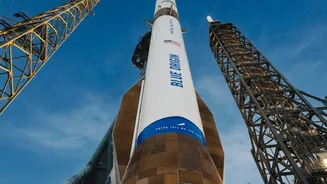
The much-anticipated third mission of Blue Origin's New Glenn rocket, launched from Florida's Cape Canaveral Space Force Station, presented a dual outcome.
A major success was the controlled return and landing of the rocket's reusable booster, a critical step in the company's strategy for cost-effective space access. This component, designed for reuse, touched down approximately 10 minutes after liftoff, confirming its recovery capabilities. However, the mission's ultimate goal of deploying a valuable communications satellite into a specific orbit was not met. The rocket's upper stage experienced an issue during its burn, leading to the satellite being placed in an orbit significantly lower than planned, rendering it inoperable for its intended long-term service.
Satellite's Orbital Setback
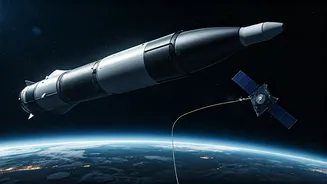
The payload for this mission was the BlueBird 7 satellite, intended to be a key component of a new space-based cellular broadband network. Upon separation from the launch vehicle, it was determined that the satellite's altitude was insufficient for sustained operations. Despite powering on, the satellite lacked the necessary altitude to utilize its onboard thrusters effectively for maneuvering and maintaining its operational orbit. Consequently, AST SpaceMobile, the satellite's owner, confirmed that the BlueBird 7 would be de-orbited. This outcome is a significant disappointment, as the satellite was designed to be a next-generation element of a constellation aiming to provide direct smartphone connectivity from space, similar to other emerging satellite internet services.
Reusable Rocket Milestone
The successful recovery of the New Glenn booster, notably named 'Never Tell Me the Odds' and having flown previously on the rocket's second mission, is a significant validation for Blue Origin's approach to launch vehicle reusability. This technology is central to reducing the exorbitant costs associated with space exploration and commercial launches. By demonstrating that a heavy-lift vehicle's booster can be reliably recovered and potentially repurposed, the company is making a strong case for its competitiveness in the high-stakes launch market. This aspect of the mission directly addresses the intensifying competition, particularly with SpaceX, by showcasing the potential for frequent and more economical access to space.
Market Competition Heats Up
This launch took place against a backdrop of fierce competition among private space companies, with significant rivalry evident between Blue Origin and SpaceX. The New Glenn rocket, with its substantial seven-meter nose cone, is engineered to accommodate larger and more voluminous payloads, positioning it for the upper echelons of the commercial launch market. Its ability to compete, especially in booster reusability, is a critical factor for securing lucrative contracts. The mission's mixed results highlight the inherent complexities and risks in spaceflight, even as companies race to support ambitious projects like NASA's Artemis program and future lunar endeavors, underscoring a dynamic and rapidly evolving global space sector.