

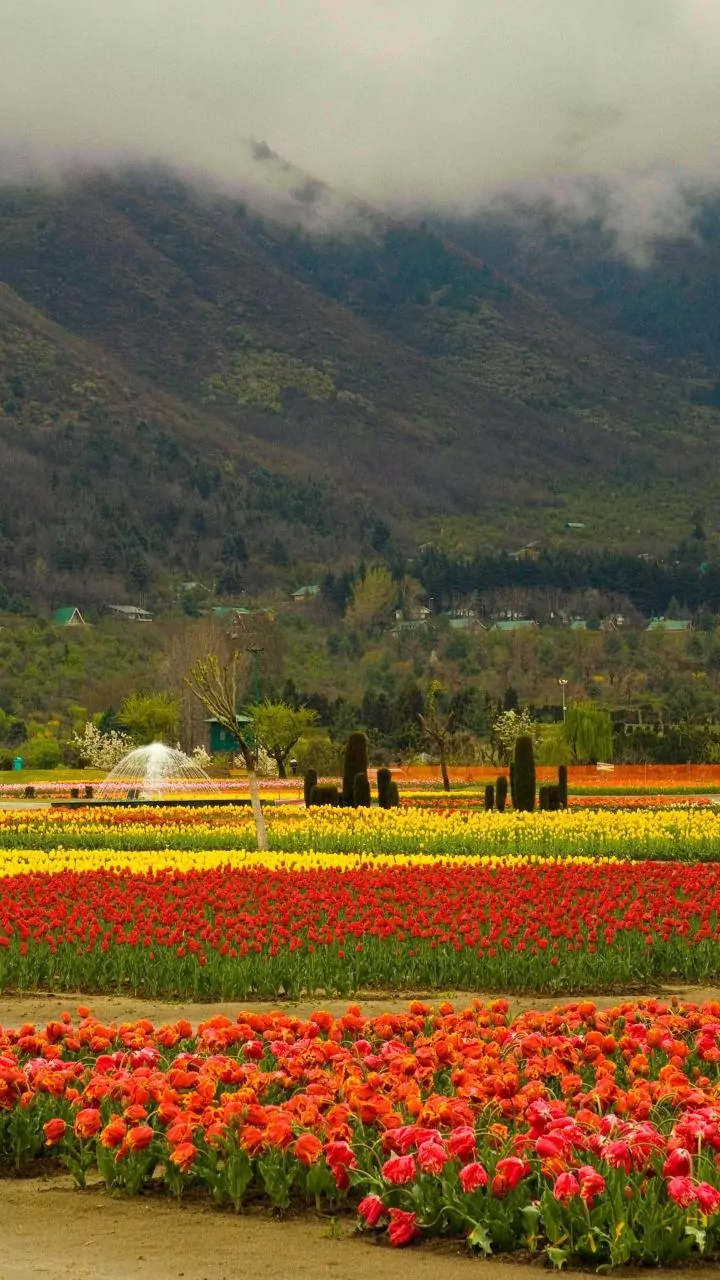




Unprecedented Floral Fascination
Asia's largest Tulip Garden, a renowned springtime spectacle in Kashmir, has experienced an overwhelming response since its inauguration on March 16, 2026.
In a mere fortnight, the garden has hosted an impressive 1.4 lakh visitors, a testament to its burgeoning allure. This remarkable footfall has positioned the garden as a significant draw, transforming the picturesque Kashmir Valley into a vibrant hub of floral tourism during the spring months. The earlier-than-usual opening, advanced by two weeks from its typical early April commencement, has clearly resonated with those eager to witness the kaleidoscope of colors, especially with the majestic Zabarwan Range and the serene Dal Lake providing a stunning natural backdrop.
A Symphony of Tulips
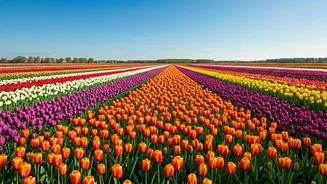
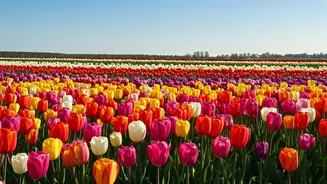
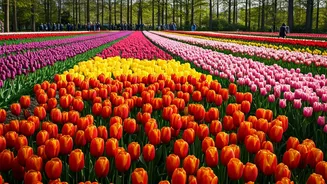
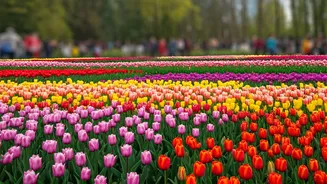
The garden, a vision brought to life, showcases an astonishing collection of approximately 1.8 million tulip bulbs, meticulously planted across 70 to 75 distinct varieties. By the close of March 27, the cumulative visitor count had reached a remarkable 140,000. Daily attendance consistently ranged between 4,000 and 5,000 individuals, a healthy mix comprising local residents, domestic travelers from across India, and an increasing number of international sightseers. This enthusiastic reception underscores the garden's success in drawing diverse crowds, eager to immerse themselves in its unparalleled floral display and serene ambiance. The careful curation of such a vast and varied collection ensures a visually rich experience for every visitor.
Boosting Tourism's Revival
The strategic decision to open the garden earlier than usual has proven instrumental in invigorating the tourism sector. Garden in-charge Imran Ahmad articulated the objective of making the spring season a prime attraction, thereby fostering a revival of tourism, an aim that has been largely achieved. During the holy month of Ramadan, the garden primarily attracted domestic tourists, with daily visitor numbers averaging between 4,000 and 5,000. Post-Eid celebrations saw a significant surge, with footfall escalating to 10,000-12,000 per day, comprising a substantial segment of local visitors (6,000 to 7,000) and a notable contingent of tourists (4,000 to 5,000). The burgeoning arrival of international tourists further strengthens this positive trend, with expectations of even greater numbers throughout April, signaling a robust recovery and growth in regional tourism.
A Visual Masterpiece
Visitors have effusively praised the garden, often describing it as a "visual masterpiece" and "heaven on earth." The meticulously terraced landscapes draw comparisons to the renowned flower gardens found in Europe, highlighting the international standard of its presentation. The inclusion of rare tulip varieties, specially imported from the Netherlands, alongside other beautiful blooms like hyacinths and daffodils, significantly elevates the garden's appeal. This diverse horticultural collection makes it an ideal spot for photography, particularly during the magical hours of sunrise and sunset, capturing the vibrant colors against the serene Kashmiri backdrop. Tourists like Avinash Mishra from Varanasi expressed their astonishment, stating the beauty far exceeded their expectations, while Harshita noted the remarkable vibrancy of the flowers even after their visit on March 18.
Dedication and Recognition
The extraordinary success of the Tulip Garden is the culmination of extensive preparation and tireless effort. For nearly six months, hundreds of dedicated gardeners worked diligently to ensure the garden was picture-perfect for its opening. This commitment to excellence has not gone unnoticed; the garden holds the esteemed recognition from the World Book of Records (London) as Asia's largest tulip garden. Beyond its aesthetic appeal, it continues to play an indispensable role in significantly boosting tourism and economic activity in the region, solidifying its position as a key attraction and a symbol of Kashmir's natural beauty and horticultural prowess.