



The Power of Repetition
Many of us experience a pang of guilt when re-wearing an outfit, fearing judgment or monotony. However, outfit repetition is not only a practical and economical
choice but also a crucial step towards a more sustainable fashion approach. Research indicates a strong correlation between frequent garment reuse and restyling with reduced consumption and more eco-conscious wardrobe habits. This aligns perfectly with environmental responsibility, challenging the notion that constant novelty is necessary. The pressure to appear different each time we step out is often an illusion, amplified by social media, which distorts reality. In truth, many style icons and fashionable individuals frequently re-wear their cherished pieces, making them appear fresh and intentional through clever styling. The key isn't owning more, but styling what you have more effectively, making outfit repeating a sign of smart fashion sense rather than a faux pas.
The 'One Thing' Rule
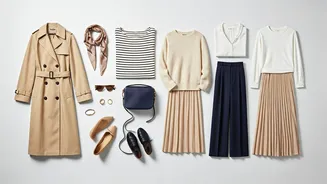
The transformative secret to refreshing your look without overhauling your entire wardrobe lies in a remarkably simple principle: change just one visible element. This approach negates the need for extensive wardrobe expansion or budget increases. For instance, if you donned your favorite black trousers and white shirt on Monday, wearing the same combination on Thursday but switching your footwear from trainers to ankle boots will create a distinctly different impression. Studies reveal that even subtle alterations in visible components significantly boost the perception of novelty, eliminating the need for entirely new items. Our brains are wired to register visual contrast rather than absolute newness. By shifting a single component, the entire ensemble is perceived as fresh and reimagined. This principle is also the foundation of capsule wardrobes, where consistent pieces yield endless combination possibilities by strategically altering one aspect at a time. Consider your core outfits as a blank canvas; the single change you make acts as the decisive brushstroke that revitalizes the entire composition, making it feel intentionally styled and distinct.
Defining the 'One Thing'
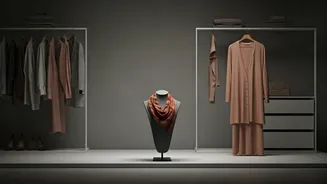
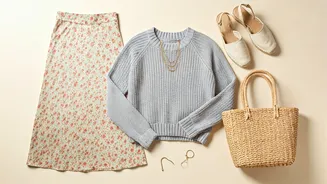
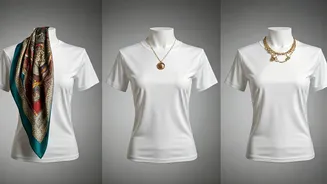
The brilliance of this styling strategy lies in its adaptable nature, allowing almost any visible component to serve as the point of variation. Several key elements offer the most impactful transformations. Firstly, footwear significantly influences an outfit's overall aesthetic; swapping white trainers for pointed flats can instantly elevate a casual midi dress, while heeled boots can make it evening-ready. As noted by style experts, shoes are a go-to for changing an outfit's mood without altering anything else. Secondly, outerwear, such as coats, blazers, or cardigans, often dominates the visual impression. Transitioning from a structured wool coat to a relaxed puffer or a leather jacket to a soft knit dramatically alters the look. Thirdly, accessories—including belts, bags, jewelry, scarves, and gloves—are powerful tools for change. A chunky necklace versus delicate chains, or a structured tote versus a crossbody bag, can make an ensemble feel entirely new. These details are often underestimated but carry significant visual weight. Lastly, silhouette adjustments, achievable without any additional purchases, can redefine a garment's character. Try tucking in a shirt that's usually worn loose, belting a dress that's typically uncinched, rolling sleeves, or cuffing trousers. Playing with proportions is a free yet effective method. Even changes in hairstyle or makeup can influence how an outfit is perceived, contributing to the overall fresh impression.
Psychology of Newness
The underlying effectiveness of the 'one-element swap' rule is deeply rooted in psychology. Observers rarely retain detailed recollections of an entire outfit worn previously; instead, they register a generalized impression. By altering a single visible component, you disrupt this existing impression sufficiently to make the look feel novel. Scientific findings confirm that individuals tend to recall broad impressions rather than precise details of repeated visual stimuli, including clothing. This psychological phenomenon directly validates why changing just one item can lead to an outfit being perceived as entirely new. Furthermore, this method significantly contributes to sustainable fashion practices. Rather than acquiring more clothing to avoid repetition, you maximize the utility and value of your existing wardrobe. It champions creativity and resourcefulness over excessive consumption. A common pitfall is the belief that one must change everything or nothing. This leads to avoiding favorite pieces due to recent wear or opting for less preferred items, which is counterproductive. The most stylish approach is to embrace your favorites and simply introduce small, intentional variations each time you wear them, ensuring both personal style and environmental consciousness.