




Launch Date & Time
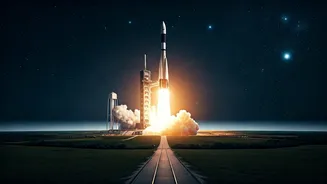
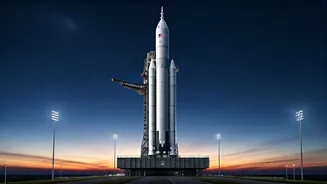
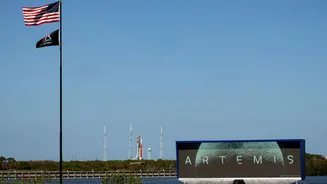
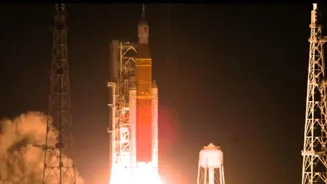
Mark your calendars for an extraordinary event: NASA's Artemis 2 mission is slated for launch as early as April 1, 2026. This pioneering voyage will send
a crew on a trajectory around the Moon, not for a landing, but to rigorously test the Orion spacecraft's capabilities. Should weather conditions prove unfavorable on the initial date, NASA has contingency launch windows available between April 2 and April 6, 2026. The projected liftoff time on April 1 is set for 6:24 p.m. ET, offering a spectacular evening spectacle for viewers worldwide. This mission signifies a crucial step in humanity's return to lunar exploration after a hiatus of over fifty years, building upon the legacy of the Apollo missions.
Viewing the Launch
Witnessing the dawn of a new lunar age is made accessible through multiple viewing platforms. NASA is providing a comprehensive, free livestream of the entire event on its dedicated streaming service, NASA+. For those who prefer broader accessibility, the launch coverage will also be broadcast live on NASA’s official YouTube channel. Additionally, viewers can tune in via Amazon Prime, ensuring that this historic moment reaches a vast global audience. These options allow enthusiasts and the general public alike to follow the countdown and experience the thrill of liftoff as the Artemis 2 crew begins their ambitious journey around the Moon.
Meet the Crew
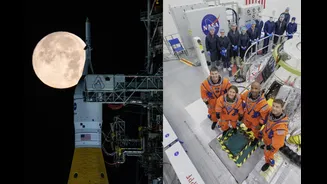
The Artemis 2 mission is not only historic for its objectives but also for the groundbreaking crew embarking on this celestial journey. Leading the mission are NASA astronauts Reid Wiseman, Victor Glover, and Christina Koch, alongside Canadian Space Agency astronaut Jeremy Hansen. This quartet is poised to make history in several ways: Christina Koch will be the first woman to travel to the vicinity of the Moon, Victor Glover will be the first Black astronaut to venture on such a mission, and Jeremy Hansen will be the first Canadian to orbit the Moon. Together, they represent a significant step forward in diversity and inclusion in space exploration, and they are the first humans to travel near the Moon since the Apollo 17 mission in 1972.
Mission Duration & Goals
The Artemis 2 mission is designed as a 10-day expedition, focusing on critical testing and data gathering rather than a lunar surface landing. The primary objective is to thoroughly evaluate the Orion spacecraft's life support systems, navigation, and overall performance in the deep space environment. This flyby will provide invaluable insights into how prolonged space travel, especially beyond low Earth orbit, impacts the human body and mind. The data collected will be instrumental in refining protocols and developing essential interventions to safeguard the health and well-being of astronauts on future, more extended missions, including subsequent lunar landings and potential journeys to Mars.