





Economic Wake-Up Call
The Indian economy is currently facing a critical juncture, prompting a national appeal to reconsider international travel plans. With foreign exchange
reserves declining from $728 billion in February 2026 to approximately $691 billion by April, and the Indian Rupee weakening to ₹95 against the US Dollar, citizens are being encouraged to prioritize domestic travel. Each international trip represents a outflow of foreign currency, impacting India's financial stability. For instance, when 1.43 crore Indians traveled abroad for leisure in 2025, it contributed to a drain on these vital reserves. This economic scenario, coupled with a projected current account deficit of $84.5 billion for 2026, highlights the significance of keeping capital within the country. By opting for destinations like Kerala or Rajasthan, travelers directly contribute to the Indian economy, fostering internal circulation of funds rather than their dissipation into global markets.
Global Turmoil & Travel Costs
The global geopolitical landscape is significantly influencing the cost and feasibility of international travel. Ongoing conflicts in West Asia have necessitated the rerouting of flight paths to avoid volatile zones. This adjustment leads to substantially longer flight durations and a marked increase in fuel consumption, directly impacting the price of Aviation Turbine Fuel (ATF). Consequently, airlines are facing higher operational costs, with some, like Air India, scaling back their summer flight schedules. This rise in airfare, alongside a weaker rupee, makes every dollar-denominated expense abroad, from visa fees to everyday purchases, nearly 20% more costly than just a few months ago. These escalating expenses, driven by international instability, serve as another compelling reason for travelers to explore the diverse offerings within India.
Shifting Travel Sentiments
The Prime Minister's call to action, combined with economic pressures, is visibly reshaping consumer travel preferences. Industry leaders are observing a discernible shift away from international leisure travel, with inquiries for outbound trips experiencing a decline of 10 to 15 percent since March. This pivot is attributed to a confluence of geopolitical uncertainties, inflationary trends, and rising travel expenses. Experts predict that instead of a general reduction in travel, there will be a redistribution of demand, with a significant surge in interest for domestic exploration. This trend signifies an opportunity for India to showcase its own array of luxury experiences and adventure possibilities, moving away from solely relying on international appeal.
Embracing Domestic Gems
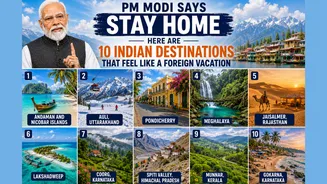
The 'Vocal for Local' campaign is revitalizing interest in India's rich and varied landscapes, promoting 'premium domestic' tourism as the new trend. Destinations ranging from the tranquil houseboats of Dal Lake in Kashmir to the verdant tea gardens of Meghalaya are gaining prominence. Travelers are now increasingly drawn to exploring the lesser-known treasures of the Northeast or the spiritual circuits of South India. This conscious choice to explore domestic beauty offers more than just financial savings on currency exchange rates; it actively contributes to job creation within local communities, bolsters India's tourism infrastructure, and plays a crucial role in strengthening the Indian Rupee. In essence, opting for local travel is a direct investment in the nation's economic resilience and cultural richness during times of global uncertainty.