

Geological Marvels & Iconic Vistas
Grand Teton National Park showcases a dramatic landscape shaped by geological forces over millennia. The Teton Range, a relatively young formation within
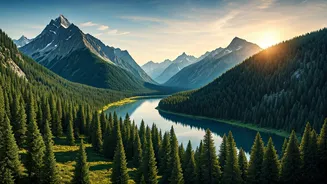
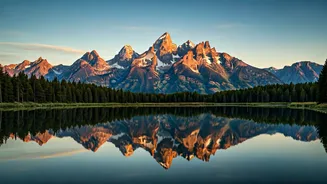
the Rocky Mountains at only 10 million years old, dramatically ascends from the Jackson Hole valley. These peaks, etched by ancient glaciers, present one of the most striking natural panoramas in the United States. Despite their youth, the mountains are composed of some of North America's oldest rocks, dating back an astonishing 2.7 billion years. The sheer scale, with peaks exceeding 13,000 feet rising abruptly from the valley floor, evokes a profound sense of awe. Historically, these mountains were known as Pilot Knobs to fur trappers, recognizable from great distances. The peak Teewinot, meaning 'many pinnacles' in the indigenous language, hints at the region's ancestral heritage. The nearby town of Jackson, with its 19th-century homesteading history, solidifies the valley's reputation as 'The Last of the Old West.' Visitors are captivated by the expansive plains, rugged cliffs, and vibrant fields of balsamroot flowers, cementing the park's status as a symbol of the American West.
Adventure & Leisure Activities
Grand Teton offers a wealth of activities catering to both adrenaline junkies and those seeking a more relaxed experience. Aspiring mountaineers can tackle historic climbing routes, while backpackers can explore alpine meadows bursting with wildflowers. Winter enthusiasts can enjoy challenging backcountry skiing. For a gentler pace, the park provides excellent opportunities for scenic biking, photography, and canoeing. The Snake River, along with numerous lakes and streams, offers a tranquil backdrop for these pursuits, all framed by the imposing Grand Teton mountain range. While smaller than its neighbor, Yellowstone, Grand Teton delivers equally spectacular mountain scenery and abundant wildlife. It's common to spot elk, moose, pronghorn, and bison simply by traversing the park. The park's diverse terrain allows for year-round enjoyment, with specific seasons offering unique advantages for different activities.
Best Times & Viewing Spots
The peak tourist season in Grand Teton National Park falls in July and August, bringing the largest crowds. For a more serene visit with cooler temperatures, consider May, September, or October. While winter limits many services and road access, it provides a unique opportunity for experiencing the landscape. Spring, particularly, can be magical when certain park roads reopen to non-motorized traffic like cyclists and skaters before vehicle access resumes in May. For unparalleled photographic opportunities, rising early to witness the sunrise is highly recommended, as the Teton range faces east, creating a spectacular display. Oxbow Bend, a short walk from a designated parking area, offers particularly breathtaking views, with reflections of the Grand Teton mirrored on the calm surface of the Snake River. Another recommended vantage point is the Snake River Overlook, made famous by Ansel Adams' 1942 photograph, which beautifully captures the river's curve against the backdrop of the Tetons.
Premier Hiking Trails
Grand Teton National Park boasts a variety of hiking trails suited for all levels of fitness. For an accessible and rewarding experience, the trail to Taggart Lake, starting from the Taggart Lake Trailhead, leads to a picturesque picnic spot where the mountains are beautifully reflected in the water. This moderate, roughly three-mile round-trip hike ascends about 300 feet and crosses charming bridges, winding through groves of quaking aspens. For those wanting to extend their trek, an additional loop to Bradley Lake is easily incorporated, making it a 5.6-mile journey to both bodies of water. These trails remain popular even in winter. More strenuous adventures await those who follow Cascade Creek upstream. This route offers numerous viewpoints, including Inspiration Point and Hidden Falls. The 9.8-mile out-and-back path can be extended into an overnight trip (permits required) to reach Lake Solitude, a 14.1-mile expedition. To reduce the strenuous four-mile round-trip hike back, a boat shuttle service operates on Jenny Lake.
Exceptional Wildlife Encounters
Grand Teton National Park is a haven for diverse wildlife, offering abundant opportunities for observation. Within the park's expansive natural settings, from the slopes of Mt. Moran to the shores of Jackson Lake, various species thrive. Look for elk and pronghorn grazing in the sagebrush near Timbered Island, just south of the Jenny Lake Visitor Center. Moose and bison are frequently seen in wooded areas near popular overlooks, such as Oxbow Bend along the Snake River. Overhead, bald eagles and osprey are common sights. The park's unique terrain also harbors smaller creatures; along glacially carved trails, hikers might encounter yellow-bellied marmots and hear the distinctive chirps of pikas, small mammals related to rabbits, who diligently collect wildflowers and grasses to store for winter sustenance. Remember to maintain a safe distance: at least 100 yards from bears and wolves, and 25 yards from all other wildlife, including bison and pronghorn.
Expert Insights & Tips
For an optimal wildlife viewing experience in Grand Teton, getting an early start is highly recommended. Dawn is when birds and other animals are typically most active. For instance, an early morning excursion might reveal elk, moose, and pronghorn. Exploring the park by paddling on one of its many lakes offers an expansive and immersive perspective of the surrounding landscape. Canoes and kayaks are available for rent from various outfitters. It's generally advised to paddle in the morning before afternoon winds pick up. The Tetons' steep mountain faces attract seasoned mountaineers and climbers. However, many high-altitude trails can be challenging for novice hikers due to the steep gradients and elevation. World-class fly fishing is available, particularly in the Snake River and Jackson Lake. Other top activities include hiking, rafting, horseback riding, and wildlife viewing. The Teton Crest Trail, a 40-mile path along the mountain range's spine, is a sought-after destination for backpackers, typically taking three to five days to complete, and requires permits applied for six months in advance.
Family Fun & Lodging
From mid-June through September, Grand Teton National Park hosts a variety of free interpretive programs at locations like Jackson Lake Lodge and Colter Bay Village. These programs, led by naturalists, offer insights into the park's wildlife, including birds of prey and large mammals. Ranger-led hikes, wildlife viewings, and campfire talks are also conducted daily throughout the summer at various visitor centers. For family-friendly adventures, guided rafting tours on the Snake River are available from outfitters. These tours typically cover a gentle 10-mile stretch of the river, lasting two to three hours, with knowledgeable guides sharing information about the park's history and pointing out local fauna like white pelicans and beavers. Fall offers particularly stunning scenery for these floats, with trees displaying golden foliage. Lodging options within the park include the upscale Jackson Lake Lodge and the more rustic Colter Bay Cabins. Numerous campsites are also available, with reservations typically needed six months ahead. Outside the park, the town of Jackson provides a wide array of hotels, restaurants, and entertainment, serving as a convenient basecamp.
Essential Planning & Access
Grand Teton National Park is situated in northwestern Wyoming, near the Idaho border, accessible via three main entrances: Moose, Antelope Flats, and Granite Canyon. Its close proximity to Yellowstone National Park, connected by the John D. Rockefeller, Jr. Memorial Parkway, makes it a popular addition to multiday trips exploring both parks. Be prepared for rapidly changing weather conditions in the Rocky Mountains; packing layers and a rain jacket is essential for all outdoor activities. When hiking at higher elevations, starting early allows for a return below the treeline by noon to avoid potentially severe afternoon thunderstorms. Grand Teton is home to both black and grizzly bears, and carrying bear spray is strongly recommended for hikers. Pets are permitted but must be leashed at all times and are restricted from many areas, including trails and backcountry. Accessibility varies; while some facilities are accessible, trail options for wheelchair users are limited, though the paved path connecting Jackson to Jenny Lake offers a more inclusive experience.