






Tragic Loss in Ahmedabad
A deeply sorrowful event unfolded in Ahmedabad, where two young girls tragically succumbed to severe vomiting after eating dosa made from commercially
prepared fermented batter. Their parents also fell critically ill and required hospitalization. This incident has prompted authorities to collect samples of the batter from the vendor for thorough investigation by the Food and Security Laboratory (FSL). The family's grandfather recounted that his son purchased the batter on April 1st, and shortly after consumption, the family began experiencing extreme sickness. The youngest child, a 3-month-old, passed away on April 3rd, followed by her 4-year-old sister. Their parents are currently under medical care. This devastating occurrence highlights the critical importance of food safety, especially concerning pre-prepared food items that are a common part of daily Indian cuisine.
Understanding 'Khiru' Batter
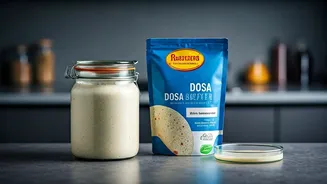
'Khiru' refers to a traditional fermented batter, a staple in Gujarati culinary practices, utilized for preparing popular South Indian delicacies such as dosa, idli, and uttapam, as well as the local handvo. Its foundation is typically a carefully balanced blend of rice and skinless urad dal, which undergoes a fermentation process. This fermentation, usually lasting between 4 to 5 hours or even overnight, is essential for achieving the characteristic light and airy texture required for these dishes to turn out perfectly. The age-old technique of fermentation, when executed correctly, not only enhances flavor but also contributes to the digestibility and potential gut-health benefits often associated with these fermented foods. However, when this process is compromised, as suspected in the Ahmedabad incident, it can lead to severe health risks.
Risks of Store-Bought Batter
Experts strongly advise heightened vigilance regarding food consumption, particularly during warmer months, and emphasize the potential dangers associated with store-bought food items. Such products, often exposed and handled without stringent hygiene protocols, carry an increased risk of adverse health effects that can be life-threatening. Key concerns include contamination, as batters left uncovered can quickly harbor bacteria, leading to stomach infections or food poisoning if not stored or handled with utmost care, especially when refrigeration is inadequate. Over-fermentation, particularly in heat, can render the batter excessively sour, causing acidity, bloating, or indigestion. Furthermore, some packaged or open batters might contain added preservatives or stabilizers, which, with regular consumption, may not be ideal for long-term gut health. Unhygienic handling during preparation, even at vendor stalls, can introduce bacteria, leading to gas formation and discomfort, especially for those with sensitive digestive systems. The quality of ingredients is also a critical factor; unlike home preparation where ingredients are thoroughly washed, the cleanliness of raw materials used in commercial batters cannot always be guaranteed, potentially leading to severe digestive issues.
Crafting Your Own Khiru
Making your own khiru at home offers a reassuring way to control ingredients and hygiene. To prepare it, you will need 1 cup of rice (regular or idli rice), ¼ cup of urad dal (skinless split black gram), 1–2 tablespoons of poha (flattened rice), ½ teaspoon of fenugreek seeds, salt to taste, and sufficient water. Begin by washing the rice thoroughly and soaking it separately. In parallel, wash and soak the urad dal and fenugreek seeds together, adding the poha to the rice soaking mixture. Allow these to soak for a period of 4 to 6 hours, or ideally overnight. Subsequently, grind the urad dal mixture until it achieves a light and fluffy consistency. Next, grind the rice to a slightly coarse texture. Combine both ground mixtures in a large bowl, add salt, and mix everything well. Cover the bowl and let it ferment in a warm place for approximately 8 to 12 hours, or overnight. Ensure the batter is properly covered throughout this process. Once fermented, your khiru is ready for use. For later use, store it in a clean, airtight container in the refrigerator.