






A Thriving Space Sector
The global space economy has surged to an impressive $626 billion, demonstrating a new era of expansion. This significant figure highlights the increasing
importance and potential of space-related activities. Numerous factors contribute to this growth, including advancements in satellite technology, increased private sector involvement, and rising governmental investments in space programs. This financial upswing reflects not just the value of current space activities but also the promise of future innovation and exploration, attracting investment and fostering advancements across various sectors, from communication to national security and scientific research. The remarkable valuation indicates that the space industry is becoming a more integral and influential aspect of the global economy, driving technological innovation and economic growth.
Antenna's Orbital Success
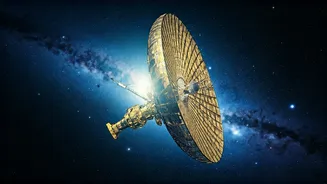
A pivotal achievement in space technology has been the successful in-orbit deployment of the Oxford Space Systems' Wrapped Rib Antenna on the CarbSAR mission. This particular antenna represents a significant advancement in space-based communication and observation systems. Its design allows it to be efficiently launched and deployed in the harsh environment of space. The successful implementation on the CarbSAR mission marks a validation of the antenna's robust design and functionality. This in-orbit deployment confirms that the technology is now functioning correctly, opening possibilities for enhanced data collection and communication capabilities for future missions. The success is an important step forward, as this antenna's features support higher bandwidth communications, critical for several space applications.
Addressing Space Debris
The Saudi Space Agency played a key role in addressing the global concern of space debris. At the Space Debris Conference, the agency unveiled the winners of the global ‘DebriSolver’ competition. This competition aimed to find innovative solutions for handling the growing threat of space debris, a significant challenge for the sustainability of space activities. Space debris consists of non-functional objects orbiting Earth, which could collide with operational satellites, creating more debris. The agency's announcement of the DebriSolver winners highlights a global focus on mitigating these risks. By promoting cutting-edge technologies and concepts for debris removal and management, this competition is a crucial step towards securing the space environment for future generations and continuous space exploration.