





A River's Dual Identity
India boasts a vast network of rivers, each with its own character and significance. While names like the sacred Ganga and the majestic Brahmaputra are
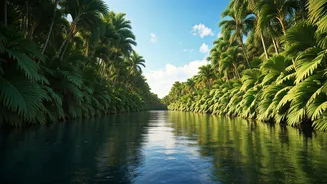
widely recognized, a particular river in the south holds a distinct, European-inspired moniker: India's English Channel. This unusual nickname belongs to the Mahe River, a relatively small but historically pivotal river situated in the northern part of Kerala. Known locally in Malayalam as the Mayyazhi River, its journey begins in the verdant Western Ghats, where it gathers strength from numerous hill streams. Spanning approximately 50 to 55 kilometers, the Mahe River carves its path through regions of Wayanad and Kannur before ultimately merging with the Arabian Sea close to Mahe, a small administrative enclave belonging to the union territory of Puducherry. This confluence of geography and historical context is what gives the river its remarkable identity.
Colonial Echoes and Boundaries
The unique nickname for the Mahe River stems directly from its role during the colonial era. At that time, the area of Mahe itself was under French administration, while the surrounding territories were part of British India. Consequently, the Mahe River naturally emerged as a demarcation line, separating these two European colonial powers, much in the same way the English Channel historically divided France and Great Britain. This geographical and political division is the direct inspiration for its famous sobriquet. The river's drainage basin covers an area of about 394 square kilometers, with the majority lying within Kerala. During the monsoon season, its volume increases significantly as its various tributaries contribute to its flow. Upon reaching its mouth, the river forms a beautiful estuary where its freshwater mixes with the saltwater of the Arabian Sea, creating an environment rich in nutrients that supports fish farming and sustains the local communities.
Strategic Importance and Literary Fame
Historically, the Malabar coast was a major hub for the lucrative trade of black pepper and other spices. The French strategically utilized the mouth of the Mahe River as a port to anchor their ships and safeguard the valuable merchandise being transported via the Arabian Sea trade routes. To protect their interests and ward off any potential incursions from the British, fortifications and watchtowers were erected on the hilltops overlooking the river, highlighting its significant strategic value during that period. Beyond its historical significance, the Mahe River holds a special place in the heart of Malayalam literature. The celebrated author M. Mukundan masterfully captured the essence of this region and its people in his acclaimed novel, "Mayyazhippuzhayude Theerangalil" (On the Banks of the Mahe River). Through his narrative, he beautifully depicted the social tapestry of a community profoundly shaped by the influences of French rule and the subsequent struggle for independence, cementing the river's cultural legacy.