







The Illusion Explained
Optical illusions are captivating visual tricks that play with our perception, designed to playfully challenge how our brains interpret images. They aren't
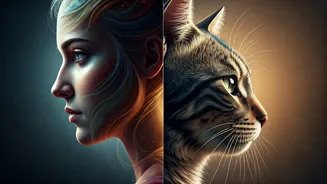
a diagnostic tool for psychological conditions, but the very first element your eyes register in such an image can offer a unique window into your current mindset and your inherent approach to processing information. Consider it a fun, albeit informal, way to get a snapshot of your cognitive preferences. The specific illusion we're exploring involves a dramatic seaside cliff scene, which, upon closer inspection, reveals two hidden forms. These are cleverly concealed within the natural contours and shadows of the landscape: a distinct human face and the outline of a cat. The challenge lies in allowing your gaze to settle naturally without forcing an interpretation, and noting which of these figures you detect first. This initial recognition is key to understanding the subsequent personality insights.
Seeing the Face
If your initial glance at the cliffside illusion immediately brought the human face into focus, it suggests your mind is predisposed to grasping the broader context. You're not someone who merely observes individual elements; instead, you're adept at spotting overarching patterns, weaving narratives, and discerning underlying connections, often without conscious effort. Your investigative nature is prominent; you're driven by a need to understand the 'why' behind things, preferring not to accept information at its surface level. Intuition often guides your decisions, acting as your internal compass. You possess a keen ability to sense subtle shifts in atmosphere or detect minute details that might elude others, particularly in complex projects. This inclination translates into a problem-solving mindset where creativity is not confined to artistic pursuits but is a fundamental aspect of your daily life. When confronted with obstacles, you instinctively look for alternative pathways and hidden opportunities, much like finding a secret door when faced with a seemingly insurmountable wall.
Spotting the Cat
Conversely, if the feline form was the first thing that captured your attention in the illusion, it points towards a strong appreciation for stability and a preference for serene environments. While others might be occupied with deciphering intricate patterns, your cognitive processes tend to gravitate towards the concrete, the steadfast, and the tranquil. You often serve as the stable anchor in your social circles, perceived as the reliable and unflappable individual who remains composed amidst chaos. A comfortable routine appeals to you, providing a sense of security and predictability. Your emotional landscape is often a private one; you might be introverted or simply someone who guards their innermost feelings closely. While you experience emotions deeply, there's no inherent need to openly display them. Your responses are characteristically thoughtful and measured; you're unlikely to react impulsively or impulsively. Instead, you tend to pause, process information deliberately, and articulate your thoughts when you feel fully prepared to do so.
Why These Tests Matter
It's important to acknowledge that these kinds of personality tests, while entertaining and thought-provoking, function more like a lighthearted check-in with oneself than a definitive psychological assessment. They are akin to finding a personalized horoscope for your visual perception rather than receiving a clinical diagnosis. In a world that often dictates how we should think and perceive, engaging with simple exercises like this serves as a valuable reminder that individual perspectives are diverse and valid. Your interpretation of an image, whether it's a 'face' or a 'cat,' reflects your unique viewpoint, and appreciating these differences is key. The true value lies in self-reflection: does the result resonate with your current feelings or aspirations? Sometimes, spotting the 'cat' might reflect a subconscious yearning for peace during a hectic period, while seeing the 'face' could signify readiness for new endeavors. Ultimately, the most insightful part is contemplating the result and perhaps sharing it with others, discovering how differently others perceive the very same visual information.