






A Tiny Marvel Unveiled
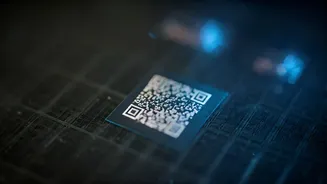
In a remarkable display of scientific precision, researchers have successfully engineered a QR code that defies conventional size expectations, measuring
even smaller than the diameter of a single human hair. This groundbreaking achievement has captured global attention and has been officially recognized by Guinness World Records for its unprecedented minuteness. The technological leap signifies a substantial advancement in our ability to manipulate and create intricate structures at incredibly small scales. This development is more than just a novelty; it underscores the rapid evolution of technology, where innovations continue to shrink in size while expanding in capability and impact on our daily lives.
The Science Behind It
The creation of this record-breaking QR code is a testament to cutting-edge nanotechnology and meticulous engineering. A dedicated team at TU Wien in Austria employed a highly sophisticated technique to achieve this microscopic feat. They utilized a thin film composed of chromium nitride, a material known for its unique properties. Using a focused ion beam, a precision instrument capable of manipulating matter at the atomic level, the researchers precisely etched and shaped the chromium nitride film. This process resulted in a QR code that spans an astonishingly small area of just 1.977 square micrometers, a dimension that highlights the extraordinary level of control and detail achievable in modern scientific endeavors and materials science.
Implications and Future
This development transcends mere miniaturization; it represents a significant stride in our capacity to work with materials on an atomic scale. The creation of such ultra-small yet functional structures opens up a vista of potential applications across various fields. In data storage, for instance, microscopic QR codes could allow for exponentially denser information packaging. For security purposes, their minuscule size could enable covert marking of sensitive items, making them incredibly difficult to detect or tamper with. Furthermore, this advancement pushes the boundaries of nanotechnology, paving the way for even more sophisticated devices and functionalities in areas like advanced manufacturing, medical diagnostics, and the development of novel materials. It's a clear indicator of what future scientific innovation might hold.