





The Umami Awakening
A subtle yet significant transformation is reshaping Indian kitchens, moving beyond just heat and spice to embrace umami as a core flavor element. For
years, umami was perceived as an external culinary concept, but Indian chefs are now skillfully unearthing and utilizing the nation's inherent treasure trove of ingredients and time-honored techniques that naturally amplify this savory taste. This movement, beautifully captured in the chef-curated cookbook 'Discovering Umami in Indian Cuisine,' featuring contributions from culinary luminaries like Ajay Chopra, Shipra Khanna, and Guntas Sethi, offers a compelling preview of Indian gastronomy's trajectory towards 2026. These reimagined recipes are not just about innovation; they represent a thoughtful reevaluation of indulgence, positioning umami as a pivotal layer in the creation of contemporary Indian dishes that are both cleaner and more profoundly flavorful.
Nihari's Deeper Soul
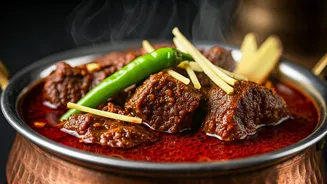
Chef Ajay Chopra breathes new life into Nihari, a dish celebrated for its patient preparation and aromatic complexity. His approach begins with a meticulously roasted spice blend—cumin, coriander, cloves, cardamom, mace, nutmeg, and star anise—infused with a whisper of bay leaf and a judicious touch of MSG to amplify its inherent savoriness. The mutton is first seared to perfection and then allowed to slow-simmer in ghee until the meat becomes exceptionally tender, with collagen melting into the broth. The stew achieves a luxurious, velvety texture thanks to the addition of atta or besan, while kewra water imparts a delicate floral fragrance. The resultant meat is fork-tender, and the gravy delivers a robust spice profile without feeling heavy. For an optimal experience, this Nihari is best served alongside kulcha or sheermal, with a final squeeze of lime and slivers of ginger providing a bright, balanced finish. Chopra's insight is that slow braising and warm spices build aroma, and a small amount of MSG enhances umami, which allows for reduced salt while maintaining a rich, clean taste.
Butter Chicken's Umami Twist
Chef Shipra Khanna reinterprets the beloved Butter Chicken, infusing it with a pronounced umami character while preserving its comforting essence. She begins by marinating chicken thighs in yogurt and then grilling them to achieve a delicate smokiness and appealing char. The sauce's foundation is built upon butter and sesame oil, sautéing ginger and garlic before developing into a rich tomato reduction. The inclusion of tomato paste sharpens the sauce's structure, and white miso paste adds significant depth. A measured pinch of MSG further boosts the savory notes, while fresh cream is added to soften the edges. Kasuri methi provides a fragrant finish. This sauce envelops the chicken without being heavy and presents beautifully on the plate. It pairs excellently with butter naan or steamed rice. The flavor profile is intensely rich yet remarkably clean, offering a lingering finish that avoids excessive saltiness, making it suitable for both casual family gatherings and more elaborate dining occasions. Khanna emphasizes that grill smoke, tomato reduction, and kasuri methi offer familiar taste cues, while white miso and a hint of MSG elevate umami, enabling reduced sodium without sacrificing richness.
Gucchi's Earthy Elegance
Chef Altamsh Patel presents a sophisticated take on the prized Kashmiri Morel mushroom, or 'gucchi,' a delicacy renowned for its rarity and profound earthy flavor. This dish is a testament to Patel's passion for mushrooms and his deep respect for Kashmir's culinary heritage, reimagined with a contemporary flair. The morels are meticulously stuffed with a rich mixture comprising creamed yogurt, reduced milk, finely chopped nuts, and a selection of aromatic spices. They are then gently cooked in a tandoor, imparting a subtle smokiness. The dish is artfully served atop a textured bed of finger millet ('nachni') and walnut 'soil,' providing a delightful contrast in mouthfeel and added depth. A final flourish of truffle oil enhances the dish's overall aroma and complexity, creating an experience that harmonizes tradition with modern culinary sensibilities. Patel notes that ingredients like miso can subtly enhance umami, contributing to a layered and intentional flavor profile that aligns with the sophistication of contemporary Indian cuisine.
The Broader Culinary Shift
What unites these inventive dishes is more than just sophisticated cooking methods; it's the underlying intention driving them. Indian cuisine is undergoing a profound evolution, moving beyond its traditional emphasis on spice or richness to prioritize depth, balance, and precision in flavor. Umami, a taste component already present naturally in elements like slow-cooked meats, fermented foods, ripe tomatoes, and mushrooms, is now being consciously amplified and celebrated as a key defining flavor. This conscious shift signifies the future direction of Indian food – one that remains firmly grounded in its rich traditions while simultaneously being refined and sharpened to cater to a more nuanced and globally-attuned palate, promising exciting culinary experiences for years to come.