






The Fungal Menace
Damping-off disease is a swift and devastating fungal affliction that can wipe out young seedlings before they even have a chance to truly establish themselves.
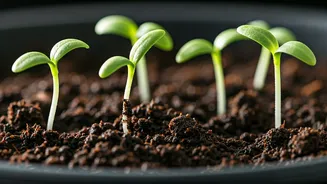
This condition is caused by opportunistic fungi that are commonly found in soil. These microscopic organisms lie dormant, waiting for the perfect environmental conditions to proliferate. Unfortunately for gardeners, the very circumstances that encourage seeds to germinate and seedlings to grow – warmth, ample moisture, and humidity – are precisely what these fungi need to flourish. When these conditions are met, the fungi attack the tender base of the seedling's stem, right at the soil line. This can result in seeds rotting before they even sprout, a phenomenon often mistaken for poor seed quality. If seedlings do emerge, their stems become weak, waterlogged, and eventually collapse, leading to their demise. The critical challenge with damping-off is that once the symptoms become visible, it's already too late to save the affected plant. Therefore, the focus for any gardener must be on proactive prevention rather than reactive treatment.
Cinnamon's Faint Hope
The gardening community often suggests cinnamon as a natural remedy to combat damping-off disease, and there's a kernel of truth to its supposed efficacy. Cinnamon does possess mild anti-fungal properties, primarily due to a compound called cinnamaldehyde. Scientific studies, often conducted in controlled laboratory settings, have demonstrated that this compound can inhibit the growth of certain fungi. The theory is that sprinkling cinnamon powder on the soil surface could offer a protective barrier against these pathogens. However, when it comes to practical application in a home garden, relying solely on kitchen cinnamon is not a foolproof strategy. The concentration of active anti-fungal agents in the amount typically used by home gardeners is significantly lower than what is effective in laboratory conditions. Experts caution that while cinnamon might offer a slight, supplementary benefit and is unlikely to cause harm, it cannot overcome poor growing conditions. If your seedling environment is excessively wet or lacks adequate airflow, a dusting of cinnamon will not be enough to prevent the fungi from taking hold and destroying your plants. It's best viewed as an additional layer of support, not the primary solution.
Fortifying Against Fungi
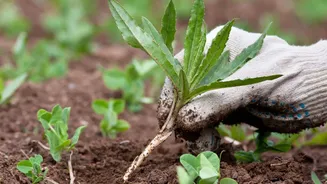
To truly safeguard your seedlings from the destructive effects of damping-off disease, the key lies in meticulously managing the growing environment to disfavor fungal proliferation. Several crucial practices, recommended by gardening experts, form the foundation of effective prevention. Firstly, it's imperative to utilize a high-quality, well-draining potting mix specifically designed for seed starting, rather than reusing old soil or using garden soil, which can harbor fungal spores. Ensuring your containers are thoroughly cleaned before use is also vital; a solution of one part white vinegar to one part water is effective for sanitizing, preventing the transfer of pathogens. Prioritizing good airflow around your seedlings is paramount, as this prevents the soil surface from remaining consistently damp. This leads to another critical aspect: watering from the bottom. This method keeps the soil surface drier, unlike top-watering which creates the moist microclimate at the stem base where damping-off is most likely to occur. Avoid the temptation to overwater; the soil should be moist, not waterlogged. Furthermore, thinning out weaker seedlings early on is an important, albeit difficult, step. This reduces overcrowding, which creates humid pockets and poor air circulation, essentially a breeding ground for fungi. Finally, consider adding a thin layer of vermiculite or coarse sand on top of the soil after sowing. This material helps the surface dry more rapidly and creates a physical barrier that is less conducive to fungal growth at the crucial stem base.