







The Unseen Threat
Sugarcane, a vital crop, presents a unique challenge for disease detection due to its dense and tall growth. Infections often take root in the interior
of fields, areas inaccessible to manual inspection and often missed by conventional aerial surveys. This hidden vulnerability poses a significant risk to crop yields and global food security. Compounding this issue, rising global temperatures accelerate the life cycles of pathogens and expand the reach of pests, making early and accurate detection more critical than ever. Traditional methods struggle to identify these nascent infections effectively, leaving farmers at a disadvantage in protecting their valuable crops from common ailments like red rot, smut, wilt, and ratoon stunting.
AI's Butterfly Solution
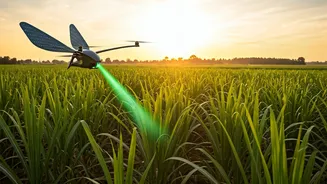
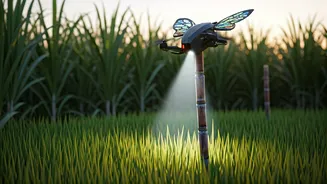
Addressing this critical gap, researchers have engineered a remarkable butterfly-shaped AI-powered flying robot. This innovative device is designed to navigate through the intricate sugarcane stalks, capturing high-resolution images of individual leaves. Its advanced AI algorithms process these images in real-time to identify various diseases, while integrated GPS technology precisely tags the coordinates of any infected plants. This capability allows for unprecedented early detection, significantly outpacing traditional methods. The robot's close-range imaging provides detail unattainable by standard overhead drones, ensuring that even subtle signs of disease are recognized promptly. This technology aims to provide farmers with actionable intelligence, guiding them directly to the problem areas within their fields.
Digital Field Mapping
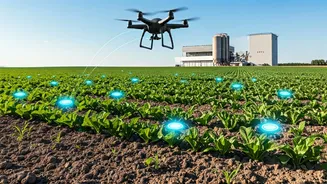
The data collected by the AI robot is seamlessly integrated into a user-friendly web and mobile platform, which generates a dynamic digital map of the field. This map visually represents disease distribution through heatmaps, highlighting areas of high infection. Farmers can also track disease trends over time and receive timely alerts, empowering them to implement targeted treatment strategies. Instead of resorting to broad, often wasteful, applications of pesticides or fungicides across entire fields, this precision approach allows for localized interventions. This not only conserves resources and reduces costs but also minimizes the environmental impact by limiting chemical runoff into the soil and water systems, contributing to healthier ecosystems and more sustainable farming practices.
From Ground Up
The development of this unique flying robot involved an iterative design process. Initially conceived as a ground-based vehicle, the project evolved to incorporate an aerial design inspired by the flight mechanics of butterflies and birds. This transition was driven by a desire to optimize cost-effectiveness, enhance maneuverability, and improve overall coverage within the agricultural landscape. The resulting lightweight flying device offers a compelling blend of efficiency and performance. The researchers have also secured a patent for this groundbreaking technology, with support from India's Ministry of Micro, Small, and Medium Enterprises, underscoring its potential impact on rural entrepreneurship and agricultural innovation.
Broader Agricultural Impact
While developed for sugarcane, the potential applications of this butterfly-inspired AI robot extend far beyond individual farms. Agritech companies could leverage this technology to offer sophisticated crop monitoring services, providing valuable insights to a wider range of agricultural clients. Furthermore, sugar mills and research institutions could utilize the generated data for more accurate yield forecasting and streamlined supply chain planning. The system's ability to provide detailed, location-specific crop health information opens avenues for enhanced agricultural management and resource allocation across the industry. With successful field tests completed and a patent pending, this technology is poised for commercial deployment in the coming years, promising to reshape how crop diseases are managed globally.