Former President Trump voiced strong concerns about the Supreme Court's impending decision on his tariff policies. He warned of massive financial repercussions, potentially causing significant chaos for the U.S. economy and international trade. Let's delve into the details of the situation and the potential outcomes.
Tariffs' Potential Fallout
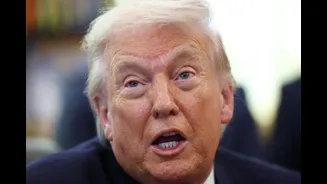
Donald Trump expressed worries that the Supreme Court's verdict on his administration's tariff policies could lead to substantial economic harm. He used strong language, indicating that a negative ruling might "screw" the country, creating a "complete mess" with possible costs in the trillions of dollars. These comments were made before the court's decision, which would determine the legality of tariffs imposed under his administration. Trump's concerns centered around the financial burdens, including the need to reimburse hundreds of billions of dollars. This excludes the amounts required by countries and companies that had invested in factories and equipment to bypass the tariffs. He emphasized that once all investments were considered, the total could reach trillions of dollars, potentially making it nearly impossible for the country to manage the repayments. He also indicated that resolving such a situation would not be simple or quick, highlighting the complex nature of the issue and the potential delays in calculating the amounts to be paid and the recipients.
Court's Legal Battle
The Supreme Court's decision in the case of Learning Resources v. Trump would address a critical question: whether a U.S. president possesses the authority to implement tariffs using emergency powers under the International Emergency Economic Powers Act (IEEPA), without securing approval from Congress. This ruling held substantial implications for Trump's so-called "Liberation Day" tariffs and would impact the direction of global trade policies. A ruling against the administration could invalidate all tariffs and subsequent rate increases. The administration would then have to either reverse these measures or face court orders preventing their collection. Trump could explore reinstating similar tariffs through options like Section 301 or Section 232, though these actions would necessitate new investigations, public justification, and potentially delay the process. Such a ruling against the use of emergency powers could undermine recently negotiated trade agreements with major partners, including the European Union, Japan, South Korea, and the United Kingdom, extending repercussions beyond the U.S.