







The Productivity Paradox
In our hyper-connected world, there's an unrelenting emphasis on maximizing every moment, leading many to feel perpetually busy and even burnt out. This
societal push towards constant productivity often overshadows the simple, calming satisfaction derived from activities that don't directly contribute to goals or tangible achievements. While the pursuit of efficiency is lauded, neglecting moments of quietude and aimless engagement can be detrimental. Interestingly, a growing appreciation for 'purpose-free curiosity' is emerging, offering a counter-balance. Engaging in activities without an agenda can surprisingly enhance focus, foster deeper thinking, and unlock novel ideas. The act of simply 'being' or pursuing a hobby devoid of a specific outcome allows the mind to freely wander, nurturing creativity and preventing mental stagnation. This shift acknowledges that human beings, despite their complex cognitive abilities, also require periods of unstructured downtime to truly thrive and avoid the pitfalls of chronic exhaustion.
Hobbies Without Agendas
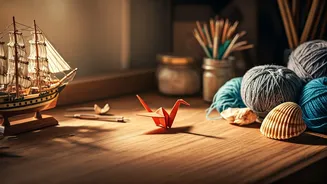
Remember the simple joys of childhood hobbies like collecting intriguing rocks, observing the intricacies of birds, or meticulously building card towers? These activities, often deemed 'useless' in adulthood, offered a pure sense of engagement and relaxation. In an era dominated by digital content consumption, the profound pleasure found in such low-stakes pursuits has often been forgotten. While our brains are naturally wired for complex problem-solving and constant innovation, we also possess a deep need for respite and unstructured activity, much like the natural world around us. Denying ourselves these moments of 'joblessness' can accumulate significant mental fatigue, contributing to the burnout so many experience. Having an activity to anticipate that isn't tied to a checklist or a grand life ambition provides a vital emotional reset and a source of personal joy that is entirely disconnected from external validation or achievement.
The Psychology of 'Useless' Learning
Engaging in hobbies that seem to have no practical application can offer unexpected psychological benefits. For instance, an artist delving into scientific theories or a finance professional attending art exhibitions might find these seemingly unrelated pursuits provide an emotional anchor during turbulent times. This 'useless' learning builds a reservoir of diverse knowledge, offering a source of comfort and perspective when life becomes unpredictable. Beyond emotional regulation, the simple act of acquiring knowledge out of pure curiosity, with no pressure or expectation of immediate application, yields a quiet sense of accomplishment. These seemingly random facts and insights can also serve as engaging conversation starters, fostering genuine connections with others that transcend superficial discussions about productivity or career aspirations. Ultimately, pursuing knowledge for its own sake offers a unique form of reward and personal growth, unburdened by the need for tangible outcomes.
Joy Over Results
Often, we derive more genuine satisfaction from activities when our primary objective is enjoyment and self-connection, rather than striving for perfect outcomes or rushing to complete tasks. The modern definition of 'productivity,' heavily influenced by capitalist ideals, has often equated a fulfilling life with constant output and strategic advancement. However, a truly rich existence encompasses more than just effective habits, networking, and investments; it includes the quality of our conversations, the silent moments we permit ourselves, and the participation in calming, seemingly 'useless' activities that contribute to our overall happiness. The innocent delight of doing something purely for the pleasure it brings, without the pressure to improve or achieve, is a feeling often associated with childhood. Yet, adults arguably need this detachment the most. Therefore, when you find yourself engaged in an activity like people-watching or collecting unique items, resist the urge to overanalyze it. Even what appears to be wasted time is, in fact, a period of subconscious processing and personal enrichment, contributing to a more authentic and human experience.